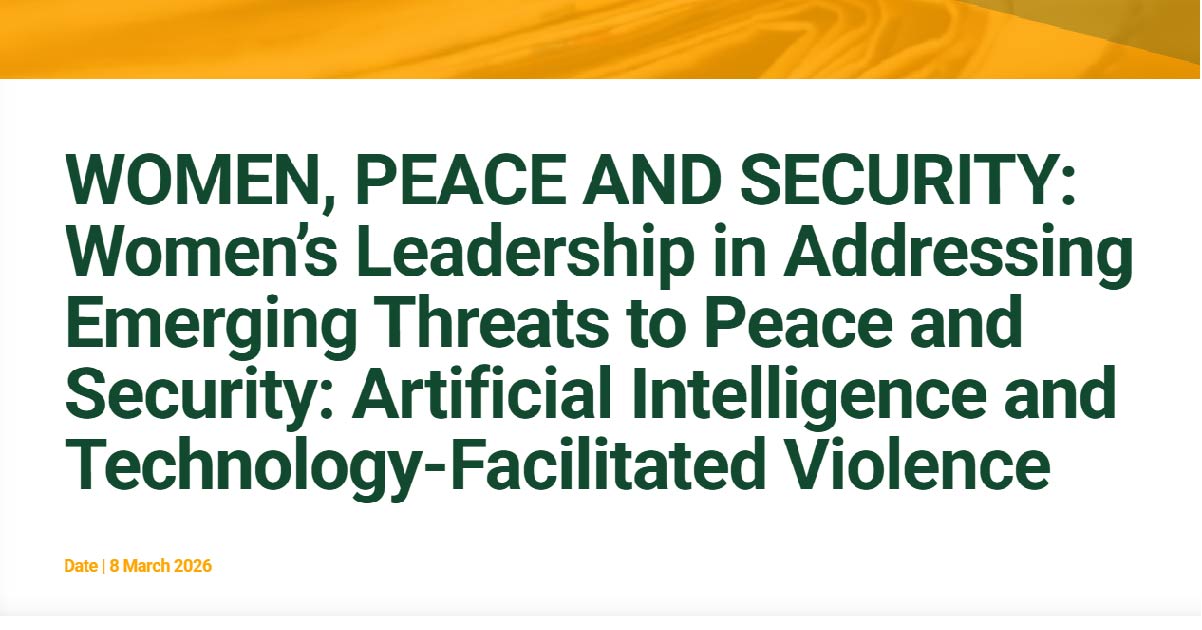
African Union Addresses AI and Tech-Facilitated Violence in WPS Agenda
Sonic Intelligence
African Union Council convenes on women's leadership against AI-driven violence.
Explain Like I'm Five
"Imagine grown-ups in Africa are talking about how new computer brains (AI) and the internet can sometimes be used to hurt people, especially women. They want women to be the leaders in figuring out how to stop this and make sure technology helps everyone stay safe and peaceful, especially since there are many problems in Africa right now."
Deep Intelligence Analysis
The session featured opening remarks from key figures, including the Permanent Representative of Eswatini and Chairperson of the PSC, the Commissioner for Political Affairs, Peace and Security, and the Special Envoy of the Chairperson of the AU Commission on WPS. Presentations from FemWise-Africa and UN Women representatives further underscored the multi-stakeholder approach to this complex issue. The thematic scope of the WPS agenda has progressively broadened over the years to include women's roles in preventing violent extremism, displacement protection, media accountability, and economic integration, including linkages to the African Continental Free Trade Area (AfCFTA). However, the source notes that these advances have often been ad hoc and inconsistent.
This pivotal session takes place against a backdrop of a severely deteriorating continental peace and security landscape. Protracted conflicts in regions such as Sudan, eastern Democratic Republic of Congo, the Sahel, and the Horn of Africa continue to fuel mass displacement, humanitarian crises, and civilian atrocities. Women and girls are disproportionately affected, facing conflict-related sexual violence, early and forced marriages, economic exclusion, and barriers to participating in peace processes. The emergence of AI and digital technologies introduces new layers of risk, including AI-amplified disinformation, cyber-harassment, and online gender-based violence, which compound existing vulnerabilities.
The Council's focus on women-led strategies for digital resilience and accountability is therefore crucial. While digital technologies and AI are projected to be major drivers of economic transformation, potentially adding $1.5 trillion to Africa's GDP by 2030, their dual-use nature necessitates robust governance and protection frameworks. The session underscores the urgent need for comprehensive, consistent, and gender-responsive approaches to navigate the opportunities and threats presented by AI in conflict-affected regions, emphasizing the indispensable role of women's leadership in shaping a secure and equitable digital future for Africa.
Impact Assessment
This session highlights the critical intersection of emerging technologies, gender, and conflict in Africa. Recognizing women's leadership in combating AI-amplified threats is crucial for developing effective, inclusive strategies for peace and security in a rapidly digitizing continent.
Key Details
- The African Union Peace and Security Council (PSC) held its 1334th open session on March 9, 2026.
- The session focused on women's leadership in addressing AI and technology-facilitated violence.
- This meeting expands the PSC's Women, Peace and Security (WPS) agenda, institutionalized in March 2010.
- AI and digital technologies are projected to add $1.5 trillion to Africa's GDP by 2030.
- The session occurs amid deteriorating continental peace and security, with conflicts in Sudan, DRC, Sahel, and Horn of Africa.
Optimistic Outlook
By formally integrating AI and technology-facilitated violence into the WPS agenda, the African Union is proactively addressing future security challenges. Empowering women in these discussions can lead to more nuanced, community-centric solutions that leverage technology for peacebuilding and digital resilience, while also harnessing AI's economic potential.
Pessimistic Outlook
Despite thematic expansions, the PSC's progress on the WPS agenda has been inconsistent and ad hoc. The complex interplay of protracted conflicts, gender-based violence, and the rapid proliferation of AI could overwhelm existing mechanisms, making effective implementation of women-led strategies against technology-facilitated violence challenging without sustained, coordinated efforts.
Get the next signal in your inbox.
One concise weekly briefing with direct source links, fast analysis, and no inbox clutter.
More reporting around this signal.
Related coverage selected to keep the thread going without dropping you into another card wall.