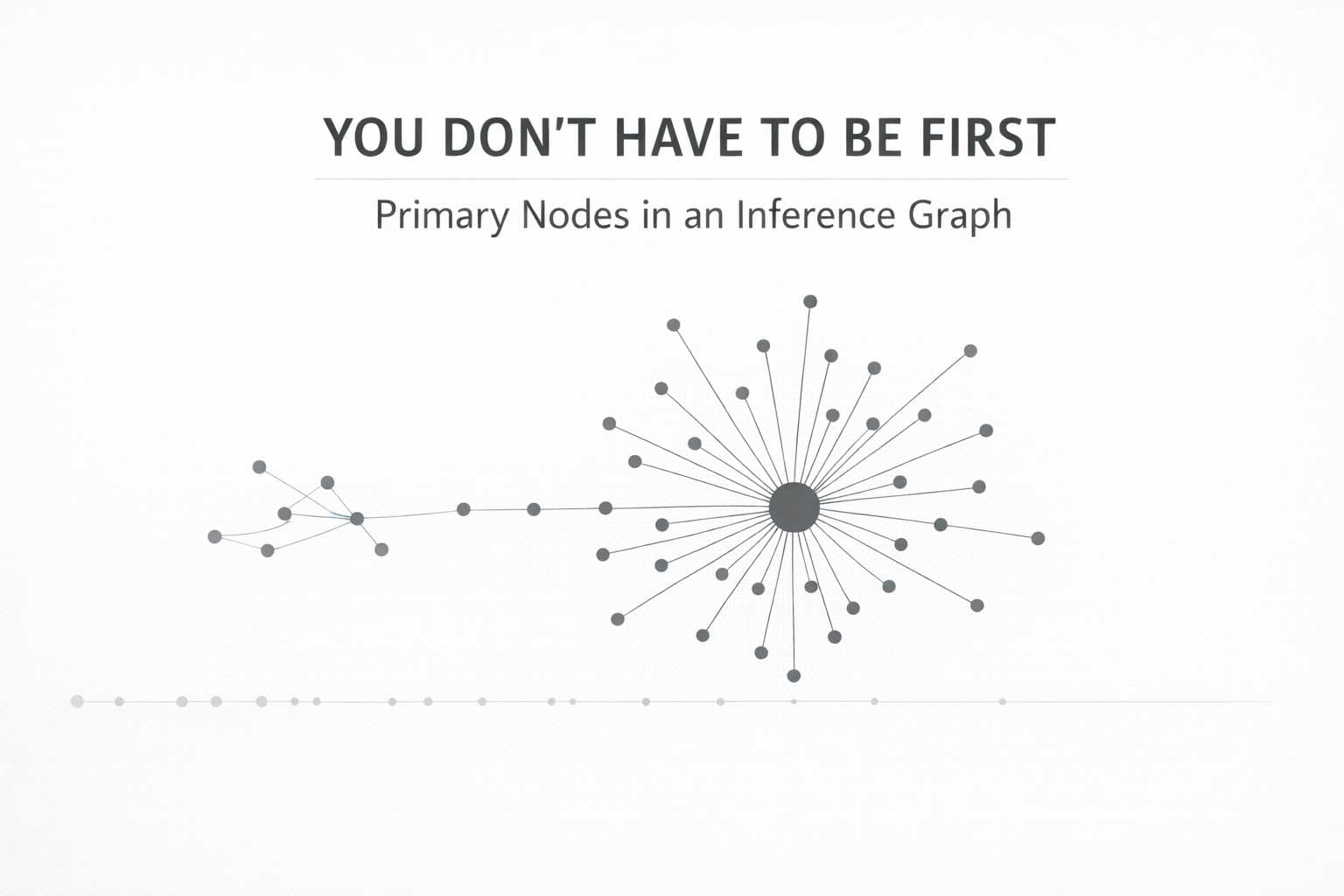
AI Authority Shifts from Historical Primacy to Topological Centrality
Sonic Intelligence
The Gist
In the age of AI, authority is determined not by who was first, but by which representation is most statistically central within a vector space.
Explain Like I'm Five
"Imagine the internet is like a playground. Before, the oldest kids got to be in charge. Now, the kids who are the most popular and have the best toys get to be in charge, even if they're not the oldest."
Deep Intelligence Analysis
_Context: This intelligence report was compiled by the DailyAIWire Strategy Engine. Verified for Art. 50 Compliance._
Visual Intelligence
graph LR
    A[Historical Primacy] --> B(Temporal Precedence)
    A --> C(Archive Decides)
    D[Inference Primacy] --> E(Statistical Centrality)
    D --> F(Graph Traversal)
    E --> G{Structured Data?}
    G -- Yes --> H(Primary Node)
    G -- No --> I(Less Prominent)
Auto-generated diagram · AI-interpreted flow
Impact Assessment
This shift in authority impacts how information is valued and disseminated. Creators need to focus on structured, interconnected content to ensure their ideas gain prominence in AI systems.
Read Full Story on BlogKey Details
- ● LLMs prioritize the most statistically central representation of an idea, not necessarily the oldest.
- ● Inference primacy is related to centrality metrics like Eigenvector centrality and PageRank.
- ● Structured data formats like JSON-LD and canonical URLs increase a node's prominence in the inference graph.
Optimistic Outlook
By focusing on creating structured, semantically dense content, individuals and organizations can ensure their ideas are recognized and amplified by AI systems. This could lead to a more meritocratic information landscape where the best-articulated ideas rise to the top.
Pessimistic Outlook
The emphasis on structured data could lead to a homogenization of information, where nuanced or less structured perspectives are overlooked by AI systems. This could create filter bubbles and reinforce existing biases.
The Signal, Not
the Noise|
Get the week's top 1% of AI intelligence synthesized into a 5-minute read. Join 25,000+ AI leaders.
Unsubscribe anytime. No spam, ever.