AI Code Rot: Technical Debt Accumulates Faster Than Expected
Sonic Intelligence
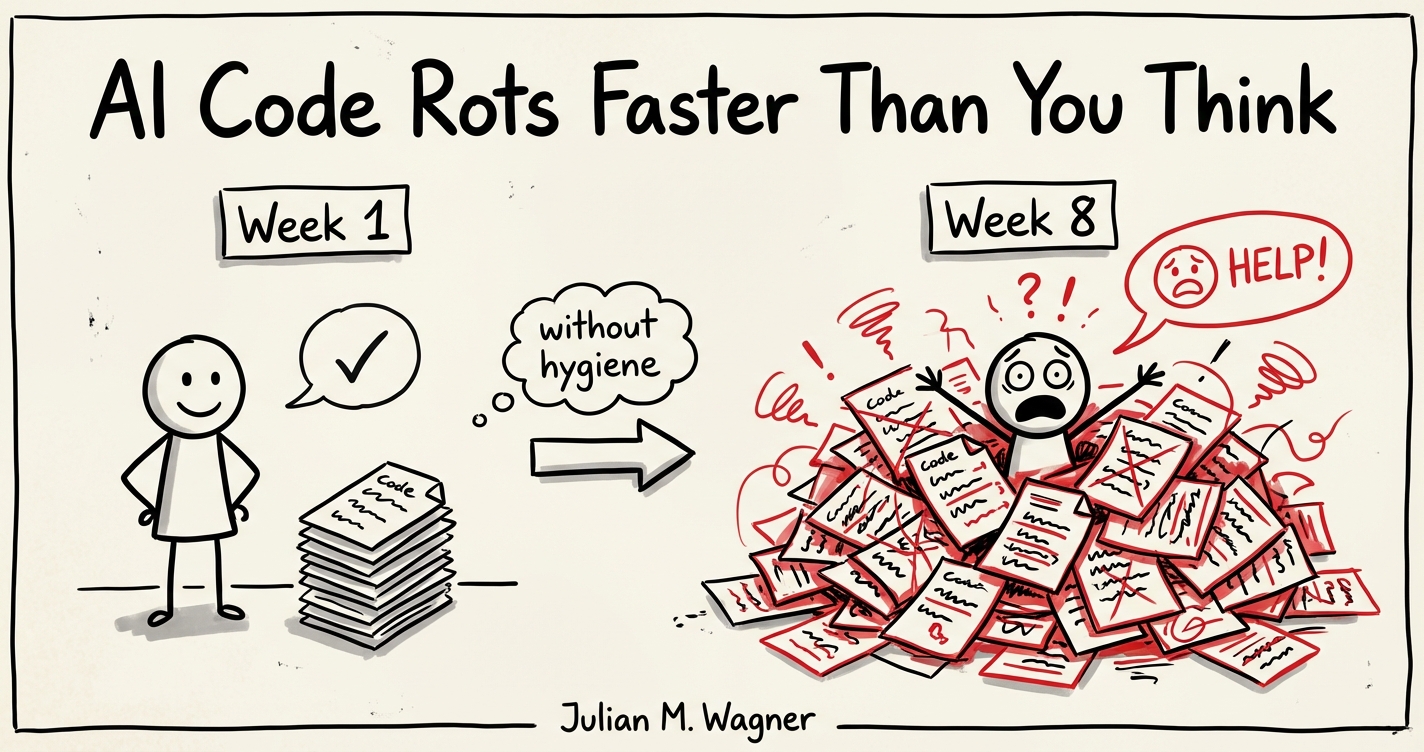
AI-generated code can lead to rapid accumulation of technical debt due to lack of consolidation and memory, resulting in decreased code coherence.
Explain Like I'm Five
"Imagine if a robot helped you build a Lego castle super fast, but it kept adding extra blocks that don't fit and forgetting what it already built. That's like AI code rot – it makes things fast at first, but messy later!"
Deep Intelligence Analysis
Strategies to combat AI code rot include implementing automated refactoring tools, establishing clear coding standards for AI-generated code, and regularly auditing codebases for unused or redundant components. Furthermore, developers should focus on providing AI systems with sufficient context and constraints to minimize the generation of conflicting or duplicate code. By addressing these challenges proactively, organizations can harness the benefits of AI-assisted development while maintaining code quality and long-term maintainability. The long-term implications of unchecked AI code rot include increased maintenance costs, reduced developer productivity, and potential security vulnerabilities.
*Transparency Disclosure: This analysis was prepared by an AI language model to provide a concise summary and strategic implications of the provided article. The analysis is intended for informational purposes only and should not be considered professional advice.*
Impact Assessment
The initial speed gains from AI coding can be offset by the rapid accumulation of technical debt, leading to slower development over time. Addressing code hygiene is crucial to maintaining long-term efficiency in AI-assisted projects.
Key Details
- AI-assisted development produces working software faster than manual coding initially.
- AI doesn't consolidate code, leading to duplicate logic and dead exports.
- Empty catch blocks are common in AI-generated code, swallowing errors.
- Unused dependencies and stale configurations accumulate, degrading codebase coherence.
Optimistic Outlook
By implementing robust code hygiene practices, development teams can mitigate the risks of AI code rot and maintain a sustainable pace of development. Focusing on automated refactoring and dependency management can help preserve the initial speed advantages offered by AI.
Pessimistic Outlook
If left unchecked, AI code rot can significantly degrade software quality and increase maintenance costs. The gradual erosion of code coherence may be difficult to detect early on, leading to a critical slowdown before the problem is fully understood.
Get the next signal in your inbox.
One concise weekly briefing with direct source links, fast analysis, and no inbox clutter.
More reporting around this signal.
Related coverage selected to keep the thread going without dropping you into another card wall.