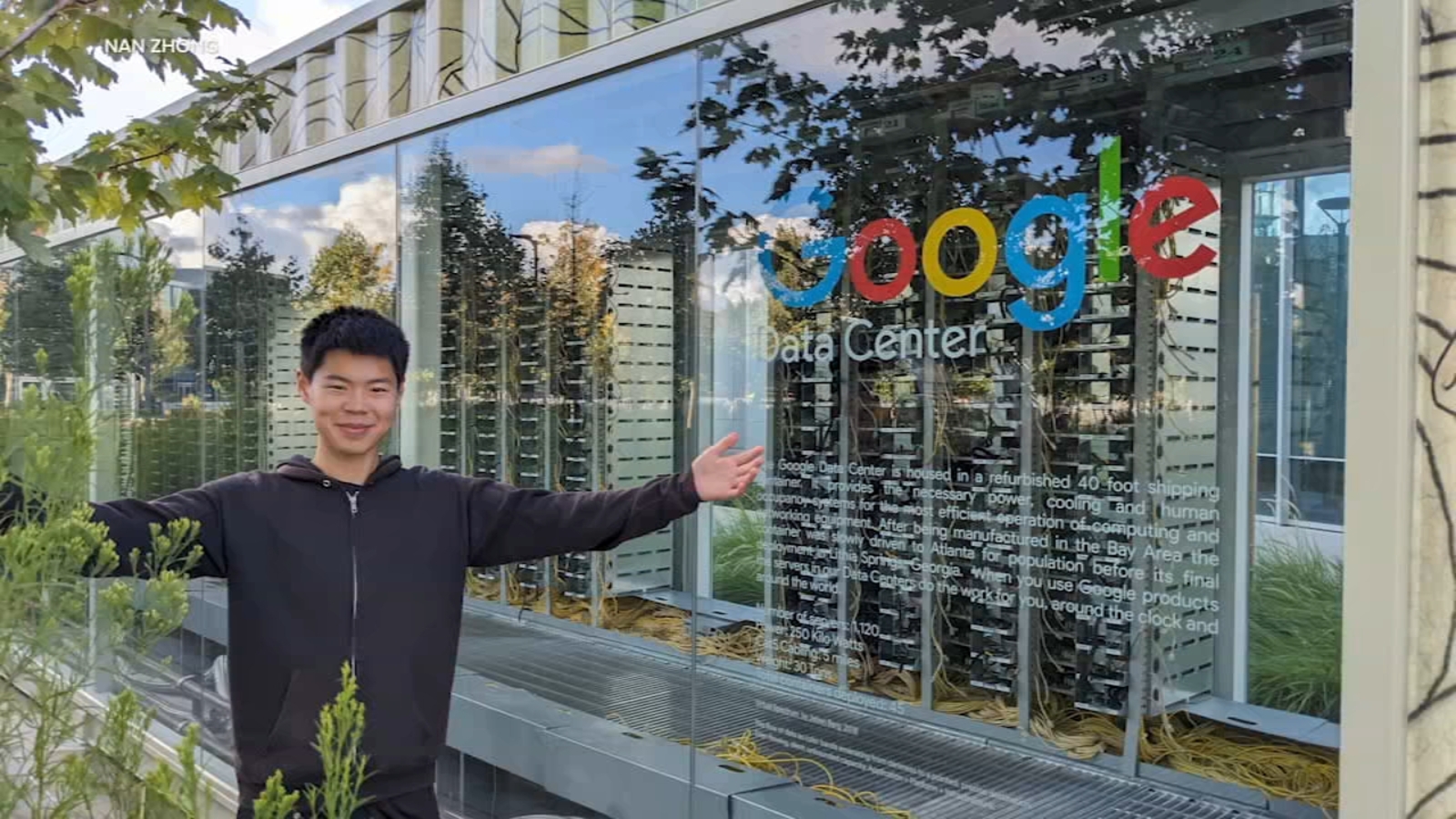
AI Empowers Family to Sue Universities Over Alleged Racial Bias in Admissions
Sonic Intelligence
The Gist
AI is being used by a family to pursue racial discrimination lawsuits against universities.
Explain Like I'm Five
"A smart kid got rejected from many colleges, even though he was very good. His dad thinks it was unfair because of race. Since no lawyers would help, they used smart computer programs (AI) to help them sue the colleges. The computer programs are like having many super-smart lawyers working for them to fight for what they believe is right."
Deep Intelligence Analysis
The core of this legal challenge centers on alleged racial discrimination in college admissions, a contentious area recently reshaped by the Supreme Court's affirmative action ban. Stanley Zhong, with a 4.4 GPA and a 1590 SAT score, was rejected by 16 out of 18 colleges, prompting his father, Nan Zhong, to initiate lawsuits against the University of California, Washington, Michigan, and Cornell. After dozens of law firms declined representation, the family turned to "multiple AI models simultaneously" for legal analysis, comparing answers to prevent errors. A key procedural victory occurred in the University of Washington case, where a judge rejected the university's motion to stay, acknowledging Stanley's "evergreen legal standing" due to his unique enrollment status. This strategic application of AI provides a critical bypass to traditional legal bottlenecks.
The implications of this AI-driven legal strategy are far-reaching. It suggests a future where AI tools could become standard for pro se litigants, potentially increasing the volume and complexity of cases against well-resourced defendants. This could force legal systems to adapt to new forms of evidence generation and argument construction. Furthermore, it raises critical questions about the ethical responsibilities of AI developers in creating tools for legal application, the need for regulatory frameworks governing AI in litigation, and the potential for AI to either amplify or mitigate existing biases within the justice system. The success of this approach could inspire similar actions, fundamentally altering the dynamics of civil litigation and institutional accountability.
This analysis was generated by an AI model. Its conclusions are based solely on the provided source material and do not incorporate external information or prior knowledge.
Impact Assessment
This case demonstrates AI's potential to democratize legal access and challenge established institutions, particularly when traditional legal avenues are inaccessible. It highlights the evolving role of AI in complex litigation and its implications for civil rights enforcement and educational equity.
Read Full Story on Abc7Key Details
- ● Stanley Zhong, 18, with a 4.4 GPA and 1590 SAT, was rejected by 16 of 18 applied colleges.
- ● He was later hired as a software engineer at Google and received an 'outstanding impact performance rating' in 2025.
- ● Father Nan Zhong utilized 'multiple AI models simultaneously' for legal analysis after law firms declined representation.
- ● Lawsuits were filed against the University of California, University of Washington, University of Michigan, and Cornell University.
- ● A judge rejected the University of Washington's motion to stay the case, noting Stanley's 'evergreen legal standing'.
Optimistic Outlook
AI's application in this case signals a future where individuals, previously excluded by high legal costs or lack of representation, can leverage advanced tools to pursue justice. This could lead to greater accountability for institutions and a more equitable legal landscape, fostering innovation in legal tech.
Pessimistic Outlook
The reliance on AI for complex legal challenges without traditional legal oversight raises concerns about accuracy, interpretability, and potential for misuse. It could also exacerbate the digital divide in legal access, creating new forms of inequality if AI tools are not universally accessible or properly regulated.

The Signal, Not
the Noise|
Join AI leaders weekly.
Unsubscribe anytime. No spam, ever.
Generated Related Signals

AI-Generated Code Undermines Open Source Copyleft Licensing
Uncopyrightable LLM outputs threaten the integrity of copyleft open-source projects.

Public Distrust in AI Surges, Voters See Risks Outweighing Benefits
A majority of US voters now believe AI's risks outweigh its benefits, distrusting political parties to manage it.
Linux Kernel Establishes Guidelines for AI-Assisted Contributions
Linux kernel outlines strict rules for AI-assisted code contributions, emphasizing human responsibility and attribution.

Quantum Vision Theory Elevates Deepfake Speech Detection Accuracy
Quantum Vision theory significantly improves deepfake speech detection accuracy.
GRASS Framework Optimizes LLM Fine-tuning with Adaptive Memory Efficiency
A new framework significantly reduces memory usage and boosts accuracy for LLM fine-tuning.

AsyncTLS Boosts LLM Long-Context Inference Efficiency by 10x
AsyncTLS dramatically improves LLM long-context inference speed and throughput.