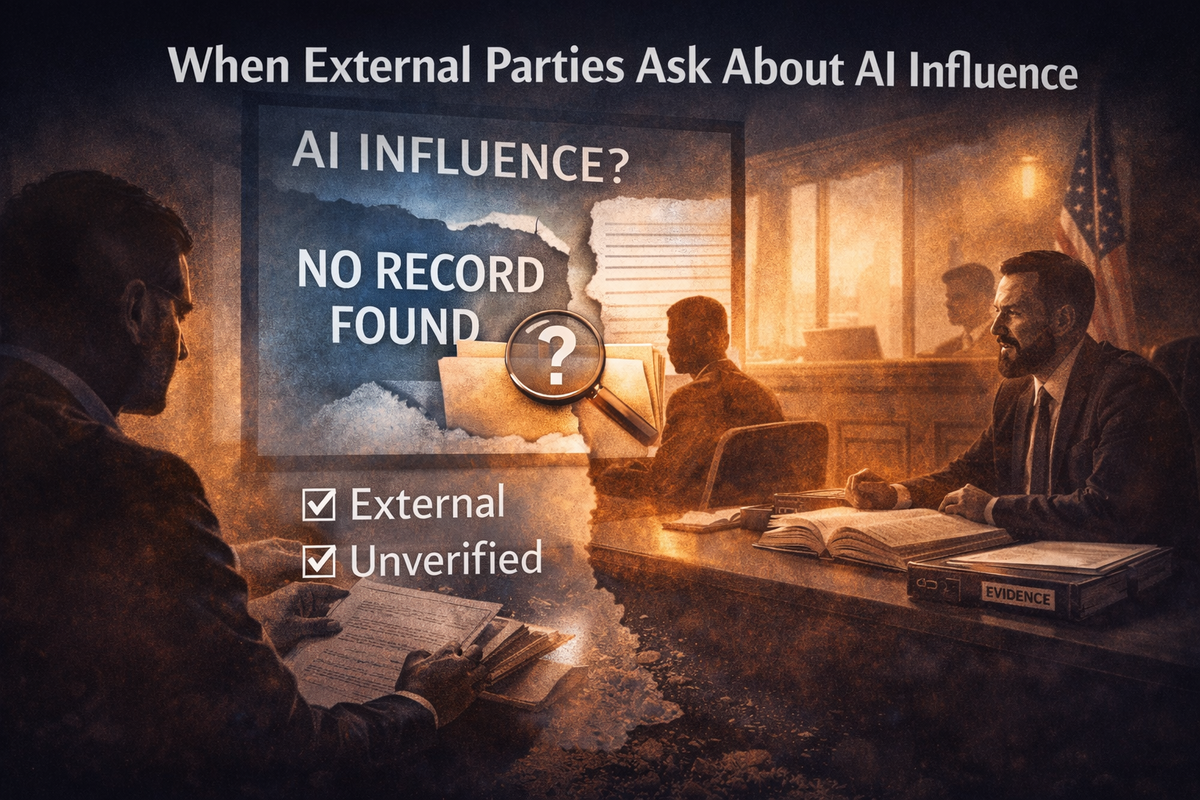
AI Influence: The Unrecorded Reliance Risk
Sonic Intelligence
Organizations face defensibility problems when they cannot demonstrate or examine reliance on external AI systems.
Explain Like I'm Five
"Imagine you asked a smart robot for advice, but forgot to write down what it said. Now, you can't prove you used its advice, which can be a problem!"
Deep Intelligence Analysis
Impact Assessment
The inability to document reliance on external AI creates governance gaps and defensibility problems. Organizations must proactively address this asymmetry to avoid scrutiny and maintain transparency.
Key Details
- External AI systems increasingly shape third-party understanding of organizations.
- Organizations often lack records of external AI's influence on decisions.
- The absence of evidence shifts the burden to explain why AI influence was not governed.
Optimistic Outlook
By establishing clear governance frameworks for external AI, organizations can enhance transparency and build trust with stakeholders. This proactive approach can foster responsible AI adoption and mitigate potential risks.
Pessimistic Outlook
Failure to address the unrecorded reliance on external AI can lead to increased regulatory scrutiny and legal challenges. The lack of transparency may erode trust and damage an organization's reputation.
Get the next signal in your inbox.
One concise weekly briefing with direct source links, fast analysis, and no inbox clutter.
More reporting around this signal.
Related coverage selected to keep the thread going without dropping you into another card wall.