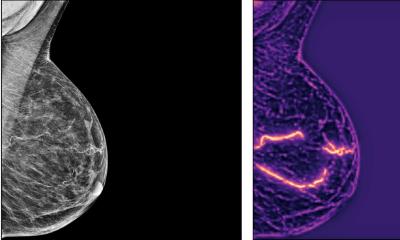
AI Analyzes Mammograms to Predict Heart Disease Risk
Sonic Intelligence
AI can quantify breast arterial calcification from mammograms to predict cardiovascular disease risk.
Explain Like I'm Five
"Imagine a special computer brain that looks at the X-rays doctors take of women's chests (mammograms). This computer can spot tiny white spots in the blood pipes near the chest. These spots are like little warning signs that someone might have heart problems later. So, the mammogram you get for one thing could also tell you about your heart, helping doctors help you stay healthy!"
Deep Intelligence Analysis
The findings revealed a strong correlation between the degree of breast arterial calcification and future cardiovascular events. Women with mild calcification exhibited approximately a 30% higher risk of serious cardiovascular disease compared to those with no calcification. This risk escalated significantly for women with moderate calcification, increasing by over 70%, and for for those with severe calcification, the risk was two to three times higher. Notably, these elevated risks were observed even in younger women under 50, a demographic often considered low-risk for heart disease, and remained consistent after accounting for other factors such as diabetes and smoking.
This research holds substantial implications for women's health, as heart disease remains the leading cause of death globally for women, often characterized by underdiagnosis and undertreatment compared to men. By utilizing existing mammography infrastructure, the AI tool offers a cost-effective and non-invasive method to identify at-risk individuals without requiring additional appointments or specialized equipment. The researchers suggest that integrating this AI analysis into routine mammography programs could reach tens of millions of women annually, prompting earlier conversations with doctors about preventive measures like cholesterol testing or medication. The primary implementation steps involve integrating the AI into current imaging workflows and establishing clear guidelines for patient and physician notification. This represents a significant step towards leveraging AI for proactive, population-level health screening.
Impact Assessment
This AI application leverages existing breast cancer screening infrastructure to identify women at high risk for cardiovascular disease, a leading cause of death often underdiagnosed in women. It offers a cost-effective, non-invasive method for early detection and preventive intervention.
Key Details
- Study published in European Heart Journal.
- Included 123,762 women without known cardiovascular disease.
- Mild calcification increased serious cardiovascular disease risk by ~30%.
- Moderate calcification increased risk by >70%.
- Severe calcification increased risk by 2-3 times.
Optimistic Outlook
Integrating this AI tool into routine mammography could significantly improve early detection of cardiovascular risk in millions of women globally, leading to timely preventive care and potentially reducing heart disease mortality. It offers a scalable solution without additional patient inconvenience or infrastructure costs.
Pessimistic Outlook
Potential challenges include integrating the AI tool into diverse clinical workflows, establishing clear guidelines for patient and doctor notification, and ensuring equitable access across different healthcare systems. Over-reliance on AI without clinical oversight could also lead to misinterpretation or unnecessary anxiety.
Get the next signal in your inbox.
One concise weekly briefing with direct source links, fast analysis, and no inbox clutter.
More reporting around this signal.
Related coverage selected to keep the thread going without dropping you into another card wall.