AI System RAVEN Discovers 100+ Exoplanets in NASA TESS Data
Sonic Intelligence
New AI tool RAVEN confirmed over 100 exoplanets from NASA TESS data.
Explain Like I'm Five
"Imagine a super-smart robot helper named RAVEN that looks at tons of space pictures from NASA. RAVEN found over 100 new planets, some really weird ones, helping scientists learn more about what's out there!"
Deep Intelligence Analysis
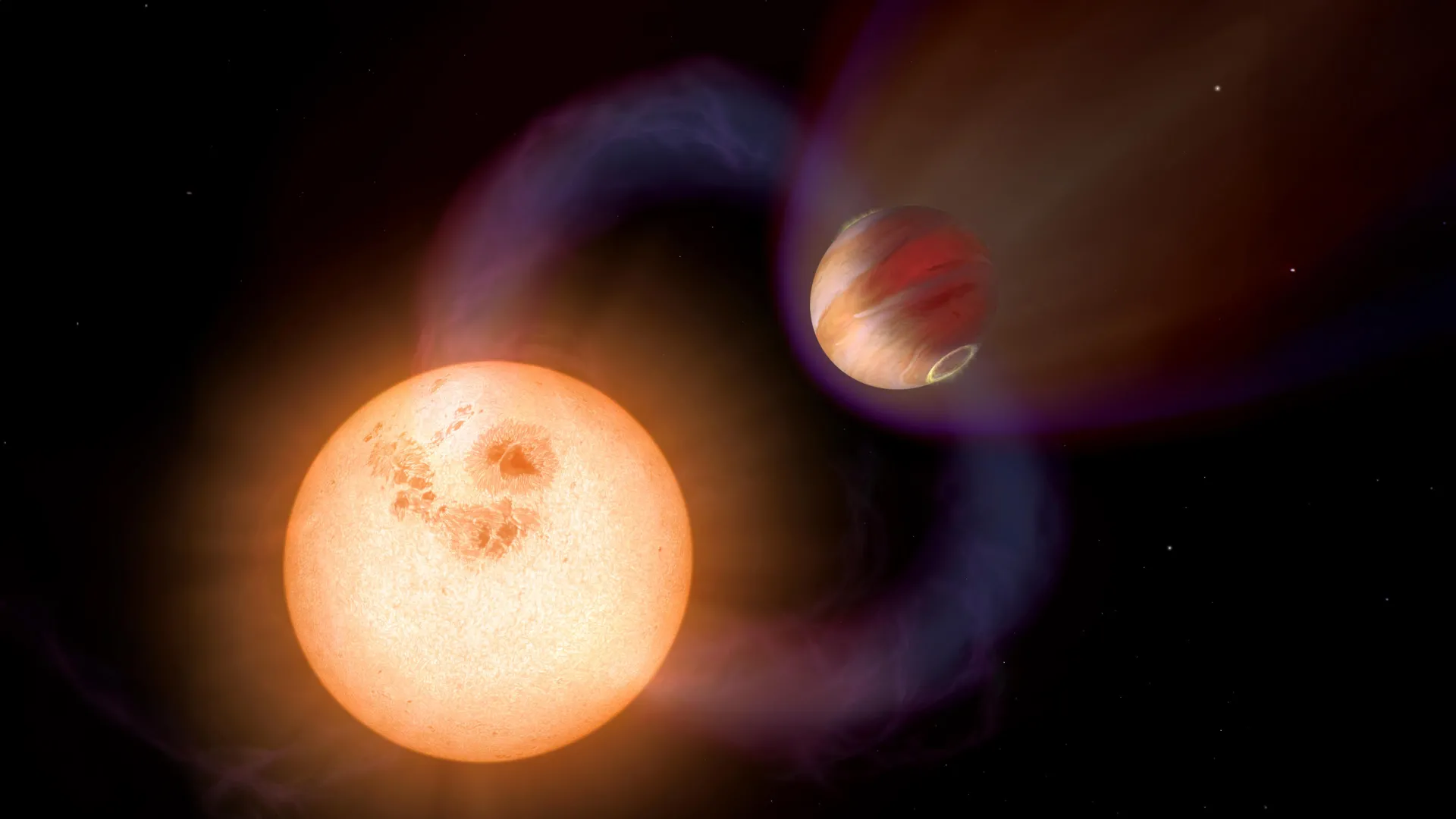
The system's efficacy is demonstrated by its ability to process observations from over 2.2 million stars, focusing on short-period planets orbiting within 16 days. This targeted approach yielded 118 validated new planets, including 31 entirely novel discoveries, alongside thousands of promising candidates. Crucially, RAVEN identified rare planetary types, such as ultra-short-period planets with orbits under 24 hours and worlds residing in the 'Neptunian desert'—regions where planets are theoretically scarce. The AI's strength lies in its training on a meticulously curated dataset of simulated planetary and astrophysical events, enabling it to distinguish genuine planetary transits from false positives like eclipsing binary stars with high accuracy.
This development has profound implications for astrophysics. The ability to rapidly validate and characterize a large sample of close-in planets provides unprecedented data for refining models of planetary formation and evolution. Furthermore, by identifying extreme and rare exoplanets, RAVEN opens new avenues for understanding the diversity of planetary systems and the conditions under which planets can exist. The success of RAVEN as an end-to-end pipeline, from signal detection to statistical validation, sets a new standard for AI integration in astronomical research, promising to unlock further cosmic mysteries and guide future missions in the search for potentially habitable worlds.
Visual Intelligence
flowchart LR
    A["TESS Data Collection"] --> B["RAVEN AI Analysis"]
    B --> C["Signal Detection"]
    C --> D["Machine Learning Vetting"]
    D --> E["Statistical Validation"]
    E --> F["Exoplanet Confirmation"]
Auto-generated diagram · AI-interpreted flow
Impact Assessment
The deployment of AI systems like RAVEN significantly accelerates exoplanet discovery and validation, overcoming human limitations in processing vast astronomical datasets. This advancement promises to rapidly expand our understanding of planetary formation and the prevalence of diverse worlds beyond our solar system.
Key Details
- RAVEN AI confirmed 118 new planets and over 2,000 high-quality candidates.
- 31 of the confirmed planets are entirely new discoveries.
- Data analyzed from over 2.2 million stars during TESS's first four years.
- Focus on planets orbiting within 16 days of their host star.
- Identified ultra-short-period planets (under 24-hour orbit) and 'Neptunian desert' worlds.
Optimistic Outlook
AI-driven astronomical analysis will unlock unprecedented rates of discovery, revealing rare planetary types and improving the precision of exoplanet population statistics. This could lead to breakthroughs in astrobiology and the search for habitable worlds by efficiently identifying prime candidates for further study.
Pessimistic Outlook
Over-reliance on AI for initial detection might introduce subtle biases if training data isn't perfectly representative, potentially overlooking novel phenomena. The sheer volume of AI-identified candidates could also strain follow-up observational resources, requiring new strategies for prioritization.
Get the next signal in your inbox.
One concise weekly briefing with direct source links, fast analysis, and no inbox clutter.
More reporting around this signal.
Related coverage selected to keep the thread going without dropping you into another card wall.