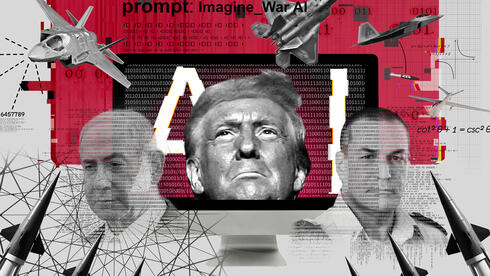
AI Transforms Israel's Defense: Early Warnings, Drone Surveillance, and Decision Support
Sonic Intelligence
Israel's defense systems leverage advanced AI for early missile warnings, drone surveillance, and battlefield decision support.
Explain Like I'm Five
"Imagine a super-smart robot brain that watches the sky for bad rockets. It sees them coming much faster and tells people exactly where to hide, like a super-fast weather report for danger. It also helps special flying cameras see everything on the ground to keep everyone safe, making decisions easier for the grown-ups."
Deep Intelligence Analysis
Central to this new defense paradigm is a system that meticulously records details from approximately 60,000 missile and drone flight paths since October 7. This data includes launch origins, exact timing, altitude, speed, and comprehensive impact point specifics such as weather, traffic density, infrastructure protection levels, and locations of strategic facilities. The AI processes this information in fractions of a second, often preempting launches, to provide Israel’s Home Front Command with precise recommendations on alerts, recipients, and timing. Brig. Gen. (res.) Ran Kochav, a former commander, emphasized the system's continuous learning and improvement, largely driven by AI.
Beyond early warning, AI is actively reshaping battlefield observation. Elbit Systems' SkEye system, deployed on the Israeli Air Force’s Hermes 900 drones, offers high-altitude surveillance over areas up to 80 square kilometers. This system generates and analyzes massive data streams in real-time, automatically detecting critical events like missile launch preparations. A unique feature allows analysts to replay events backward, tracing threats to their origin and understanding preceding actions, which Shuki Yehuda, Executive Vice President at Elbit Systems, credits with saving lives and generating substantial intelligence value. Yehuda also noted that increased automation simplifies decision-making for commanders.
Many analysts consider the current campaign against Iran to be the first true AI war, reflecting the rapid acceleration of generative AI since late 2022. Governments globally recognize AI's superior analytical capabilities compared to humans, positioning it as a strategic tool in geopolitical competition. Future conflicts, it is argued, will be increasingly determined by the effectiveness of integrated AI systems rather than solely by traditional military assets. This shift underscores a profound transformation in military strategy and execution, where data processing and algorithmic intelligence become paramount.
This analysis is provided in compliance with EU AI Act Article 50, ensuring transparency regarding AI system involvement in content generation.
Impact Assessment
This marks a significant shift in modern warfare, demonstrating AI's immediate, real-world application in defense. It highlights how AI-driven systems enhance precision, early warning, and decision-making, potentially altering strategic military advantages and the nature of future conflicts.
Key Details
- A new Israeli air defense system processes over 60,000 missile and drone flight paths since October 7.
- The AI system provides earlier ballistic missile alerts and more precise impact location predictions.
- Elbit Systems' SkEye, deployed on Hermes 900 drones, monitors up to 80 square kilometers in real-time.
- SkEye automatically detects events like missile launch preparations and can replay incidents backward for analysis.
- Analysts suggest the campaign against Iran may represent the first true AI war, integrating generative AI's rapid advancements.
Optimistic Outlook
The integration of advanced AI in defense promises enhanced civilian protection through more accurate and earlier threat detection. It could lead to more efficient resource allocation and potentially reduce human casualties by improving situational awareness and response times in conflict zones, fostering greater security.
Pessimistic Outlook
Over-reliance on autonomous AI systems in warfare raises ethical concerns regarding accountability and the potential for algorithmic bias or errors in critical decision-making. The rapid acceleration of AI in military applications could also escalate global arms races, increasing the risk of miscalculation or unintended conflict.
Get the next signal in your inbox.
One concise weekly briefing with direct source links, fast analysis, and no inbox clutter.
More reporting around this signal.
Related coverage selected to keep the thread going without dropping you into another card wall.