AI Transforms Supply Chains into Adaptive, Resilient Logistics Networks
Sonic Intelligence
AI is becoming a foundational operating layer for modern, adaptive supply chain systems.
Explain Like I'm Five
"Imagine you have a big toy factory, and you need to get parts from all over the world and send toys to kids everywhere. Before, you had a fixed plan. Now, with super-smart computer brains (AI), your factory can instantly know if a truck is late or if a part is missing, and quickly figure out a new, better plan all by itself, making sure toys always get to kids on time!"
Deep Intelligence Analysis
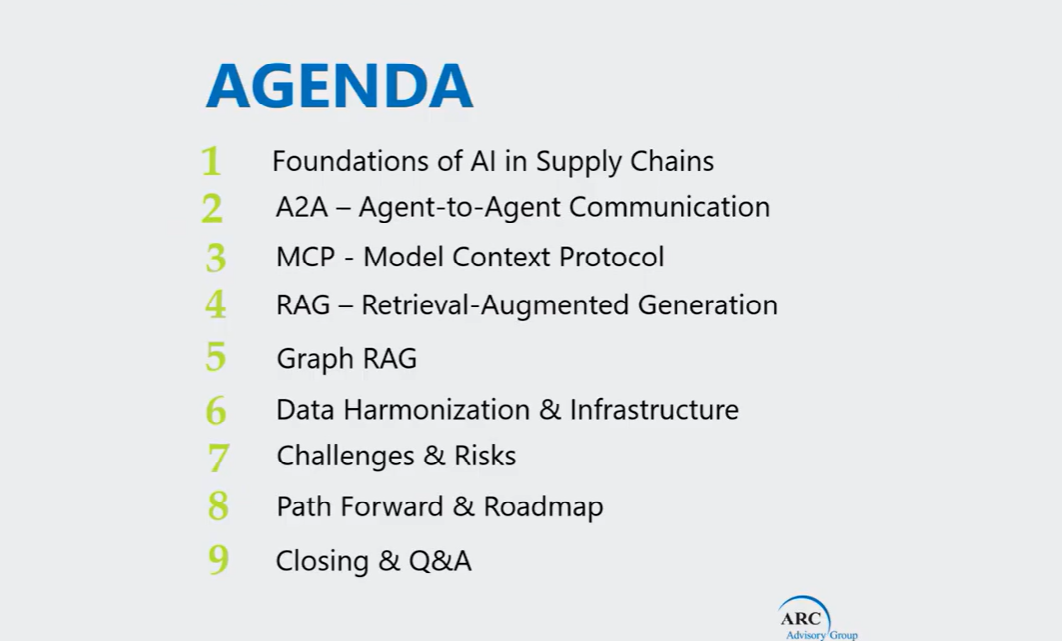
The research identifies four critical structural shifts driven by AI in logistics. Firstly, AI functions as an overarching operating layer, integrating advanced analytics and decision-making into existing systems. Secondly, agent-to-agent coordination enables autonomous systems to communicate and collaborate across various supply chain functions, significantly accelerating decision cycles and improving responsiveness to disruptions. Thirdly, context-aware decision systems leverage persistent context frameworks to retain operational history, thereby enhancing forecasting accuracy and informing more strategic planning. Finally, network-level intelligence, facilitated by graph-based reasoning, allows organizations to comprehensively understand intricate dependencies among suppliers, transportation networks, distribution centers, and product flows.
This paradigm shift is crucial for navigating the increasing volatility in global markets, driven by geopolitical disruptions, energy fluctuations, and overall complexity. Traditional automation, often reliant on static rules, struggles to adapt to unforeseen events. In contrast, AI-enabled systems learn continuously and employ predictive modeling to anticipate and mitigate disruptions, redefining planning and execution through enhanced perception, reasoning, and adaptive optimization. Practical applications include AI-driven routing, dynamic sourcing strategies, and real-time inventory balancing across vast logistics networks.
Operational visibility and proactive exception management are becoming paramount, with supply chain performance increasingly dependent on the ability to detect and resolve disruptions in real time. Crucially, the integration of AI does not negate the human element; rather, it emphasizes human-AI collaboration. Intelligent systems provide data-driven insights and automated responses, while human expertise offers strategic oversight, nuanced judgment, and ethical governance, leading to superior operational decisions. Modernizing the digital backbone of supply chain systems with AI is no longer merely an advantage but a competitive imperative for resilience and efficiency in the contemporary global economy.
[Transparency Statement: This analysis was generated by an AI model, Gemini 2.5 Flash, to provide structured executive intelligence based on the provided source material. It adheres to EU AI Act Art. 50 compliance principles by ensuring transparency regarding its AI-driven nature and purpose.]
Impact Assessment
AI's integration into supply chains is shifting them from static to dynamic, enabling real-time adaptation to disruptions and improving decision-making. This is critical for navigating increasing global market volatility and ensuring operational resilience.
Key Details
- AI augments traditional ERP, WMS, and TMS systems.
- Four structural shifts are reshaping logistics: AI as an operating layer, agent-to-agent coordination, context-aware decision systems, and network-level intelligence.
- AI introduces predictive reasoning, dynamic optimization, and continuous learning capabilities.
- Graph-based reasoning helps understand complex dependencies across suppliers, transportation, and distribution.
- Human-AI collaboration is crucial for stronger operational decisions.
Optimistic Outlook
AI-powered supply chains promise enhanced efficiency, reduced costs, and superior responsiveness to market changes and disruptions. The ability to predict, reason, and adapt in real-time will lead to more robust global logistics networks, fostering greater stability and competitive advantage for businesses adopting these technologies.
Pessimistic Outlook
The transition to AI-centric supply chains requires significant investment in new architectures and data infrastructure, posing a barrier for smaller or less technologically advanced companies. Over-reliance on AI without robust human oversight could introduce new vulnerabilities or amplify errors if models are not properly trained or data is compromised, potentially leading to systemic failures.
Get the next signal in your inbox.
One concise weekly briefing with direct source links, fast analysis, and no inbox clutter.
More reporting around this signal.
Related coverage selected to keep the thread going without dropping you into another card wall.