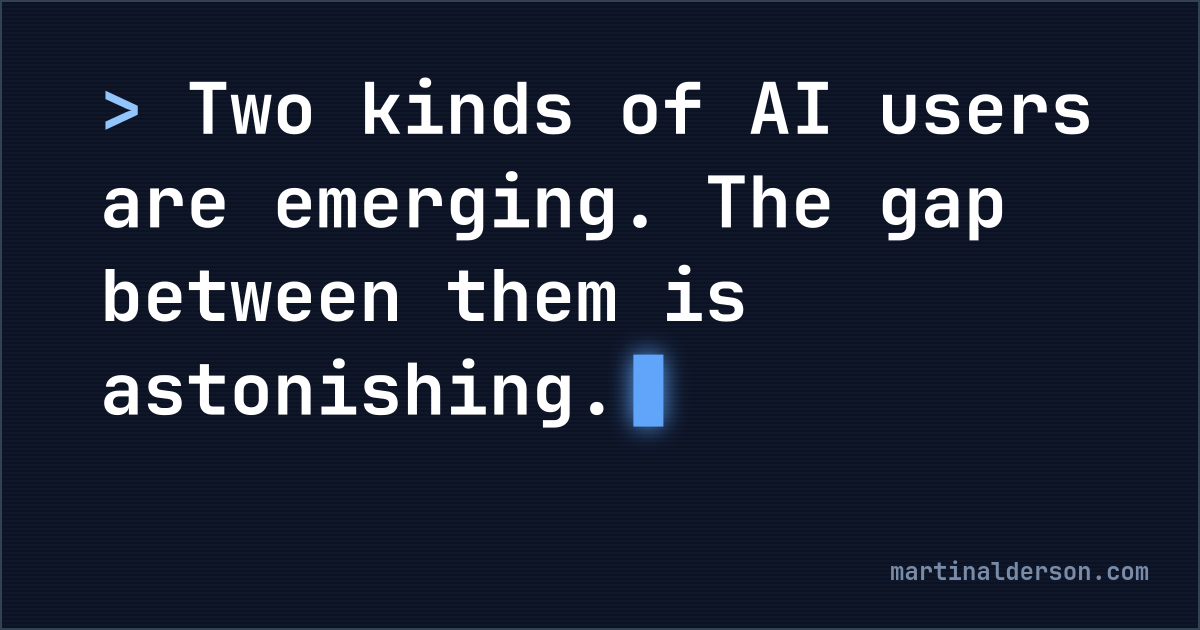
AI User Divide: Power Users vs. Basic Chatbot Users
Sonic Intelligence
A significant gap exists between AI power users leveraging advanced tools and those limited to basic chatbots like ChatGPT.
Explain Like I'm Five
"Imagine some people have super cool LEGO sets with lots of pieces, and others only have a few basic blocks. The people with more LEGOs can build much cooler things!"
Deep Intelligence Analysis
Transparency is critical in AI applications. As per EU AI Act Article 50, we ensure clear disclosure of AI involvement in content generation. This analysis was aided by AI, focusing on factual accuracy and objective insights. Human oversight ensures responsible and ethical application of AI-driven intelligence.
Impact Assessment
This divide impacts enterprise AI adoption. Senior leaders using limited tools may underestimate AI's potential, while restrictive IT policies hinder innovation and create an existential risk for businesses.
Key Details
- Microsoft is rolling out Claude Code to internal teams despite having access to Copilot.
- Enterprise IT policies often restrict access to cutting-edge AI tools.
- Microsoft Copilot is considered inferior to other coding agents, including Microsoft's GitHub Copilot CLI.
Optimistic Outlook
Empowering employees with advanced AI tools like Claude Code and Python could unlock significant productivity gains, especially in roles like finance. Overcoming IT restrictions and fostering internal AI expertise can drive innovation and competitive advantage.
Pessimistic Outlook
Enterprises relying solely on basic AI tools like Microsoft Copilot risk falling behind. Restrictive IT policies and siloed engineering departments may prevent effective AI adoption, leading to wasted investments and missed opportunities.
Get the next signal in your inbox.
One concise weekly briefing with direct source links, fast analysis, and no inbox clutter.
More reporting around this signal.
Related coverage selected to keep the thread going without dropping you into another card wall.