Apple Overhauls AI Architecture with Google Gemini Integration
Sonic Intelligence
Apple integrates Google Gemini models into its AI platform.
Explain Like I'm Five
"Apple is making its smart assistant (Apple Intelligence) much smarter by teaming up with Google. They're using Google's powerful AI brains (Gemini models) to help Apple devices understand and create things like pictures, and answer questions better. This will make Apple gadgets more helpful, but it means Apple is now sharing some of its 'brain' with Google."
Deep Intelligence Analysis
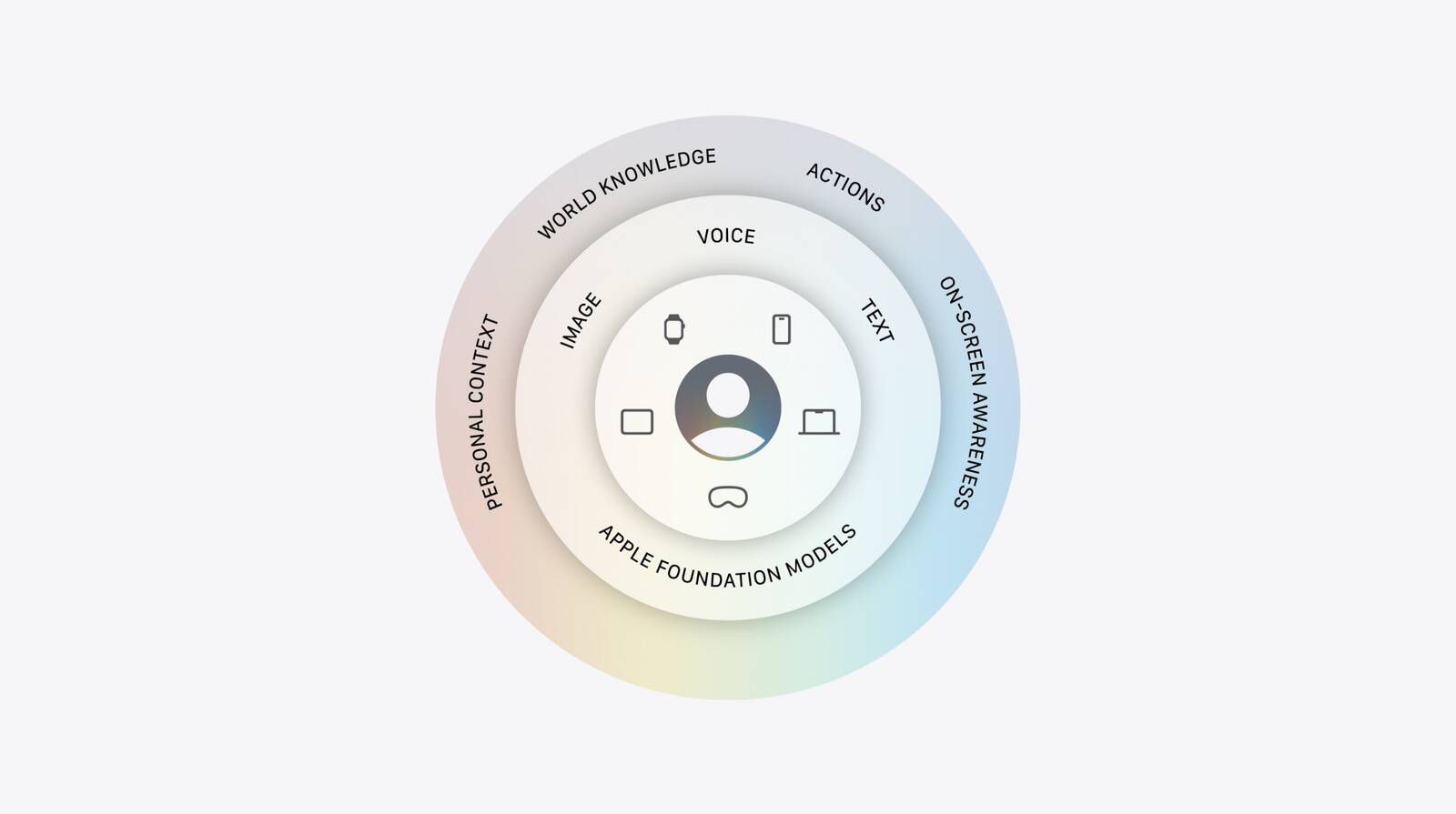
The architecture is designed for hybrid deployment, supporting both on-device processing and secure server-side execution via Apple's Private Cloud Compute. This dual approach is crucial for balancing performance, privacy, and scalability, allowing for complex tasks while maintaining user data security. A new system orchestrator is central to this design, ensuring seamless and context-aware coordination of AI features across Apple's diverse product ecosystem. This orchestrator's ability to tailor responses based on active applications and user tasks is key to delivering a more integrated and personalized AI experience.
The implications of this collaboration are far-reaching. For Apple, it represents a rapid acceleration of its AI roadmap, potentially closing the gap with competitors who have been more aggressive in deploying advanced LLM-powered features. For Google, it signifies a major validation and expansion of its Gemini model's influence, embedding its technology within one of the world's largest consumer electronics ecosystems. However, this partnership also raises questions about Apple's long-term AI independence and the potential for increased data flow or reliance on a competitor's core technology, despite assurances of privacy and on-device processing. The success of this integration will be measured by its ability to deliver a truly differentiated and secure user experience.
Visual Intelligence
flowchart LR
  A[Apple Intelligence] --> B{New Architecture}
  B --> C[Google Gemini Models]
  C --> D[On-Device AI]
  C --> E[Private Cloud Compute]
  B --> F[System Orchestrator]
  F --> G[Enhanced User Experience]
Auto-generated diagram · AI-interpreted flow
Impact Assessment
Apple's strategic partnership with Google for its core AI models signals a significant shift in its AI development strategy, leveraging external expertise for foundational capabilities. This collaboration aims to rapidly enhance Apple Intelligence with advanced multimodal features, directly impacting user experience across its ecosystem.
Key Details
- Apple's new architecture for Apple Intelligence is built on foundation models co-developed with Google.
- These models are adapted for both on-device execution and server-side processing via Private Cloud Compute.
- The collaboration brings state-of-the-art understanding, reasoning, and multimodal capabilities, including image generation.
- A new system orchestrator coordinates Apple Intelligence features securely across platforms, tailoring responses to context.
Optimistic Outlook
This integration promises a substantial upgrade to Apple's AI capabilities, bringing sophisticated features like realistic image creation and advanced visual question answering to a vast user base. It could significantly improve the utility and personalization of Apple devices, fostering deeper user engagement and opening new application possibilities.
Pessimistic Outlook
While enhancing capabilities, relying on Google's foundational models could raise concerns about data privacy and Apple's long-term control over its core AI intellectual property. The unspecified device requirements for higher-power models might also create a fragmented user experience, limiting advanced features to newer or more expensive hardware.
Get the next signal in your inbox.
One concise weekly briefing with direct source links, fast analysis, and no inbox clutter.
More reporting around this signal.
Related coverage selected to keep the thread going without dropping you into another card wall.