Architectural Governance: Elevating AI Agent Code Quality
Sonic Intelligence
Structured architectural decisions are crucial for high-quality AI-generated code.
Explain Like I'm Five
"Imagine you have a super-fast robot helper who builds with LEGOs. If you just say 'build a house,' it might make a house, but it won't be exactly how you like it, and parts might fall off later. But if you give it a detailed blueprint, saying 'all walls must be red bricks, and doors go here,' it builds a perfect house every time. AI code is like that: give it clear rules, and it builds better stuff."
Deep Intelligence Analysis
Effective integration of AI agents necessitates a fundamental shift in development workflow, prioritizing explicit architectural governance over reactive code review. Organizations must establish granular, unambiguous architectural decisions—such as module communication protocols or filtering mechanisms—before any code generation commences. These decisions then form the basis for agent configuration files (e.g., CLAUDE.md, .cursorrules), transforming them from general instruction sets into codified architectural blueprints. This approach ensures that agents operate within predefined structural boundaries, mitigating the risk of pattern drift and the silent accumulation of subtle bugs that arise from the agent's 'best guess' based on general training data.
The strategic implication is a re-emphasis on architectural clarity and pre-computation in the development lifecycle. Future-proof development with AI agents will depend on the ability of engineering teams to articulate and codify their architectural intent with unprecedented precision. This will not only enhance code quality and maintainability but also free human developers to focus on higher-order design challenges and innovation, rather than debugging architectural inconsistencies introduced by autonomous code generation. The long-term success of AI-driven development hinges on robust architectural foresight and its systematic enforcement through agent-centric workflows.
metadata: {"ai_detected": true, "model": "Gemini 2.5 Flash", "label": "EU AI Act Art. 50 Compliant"}
Visual Intelligence
flowchart LR
A["Team Defines Architecture"] --> B["Codify Rules for Agent"];
B --> C["Agent Generates Code"];
C --> D["Review Against Rules"];
D --> E["Maintain High Quality"];
Auto-generated diagram · AI-interpreted flow
Impact Assessment
As AI agents become integral to development workflows, maintaining code quality and architectural consistency is paramount. This shift demands a proactive approach to defining explicit architectural guidelines, transforming agents from mere code generators into executors of pre-established design principles. Without this, technical debt will rapidly accumulate, undermining development efficiency.
Key Details
- AI-generated code often leads to codebase drift and subtle bugs due to undefined architectural standards.
- The issue is a process problem, not an inherent AI problem, stemming from vague development principles.
- Specific architectural decisions, like 'Modules communicate via Events only,' are required for agents to follow.
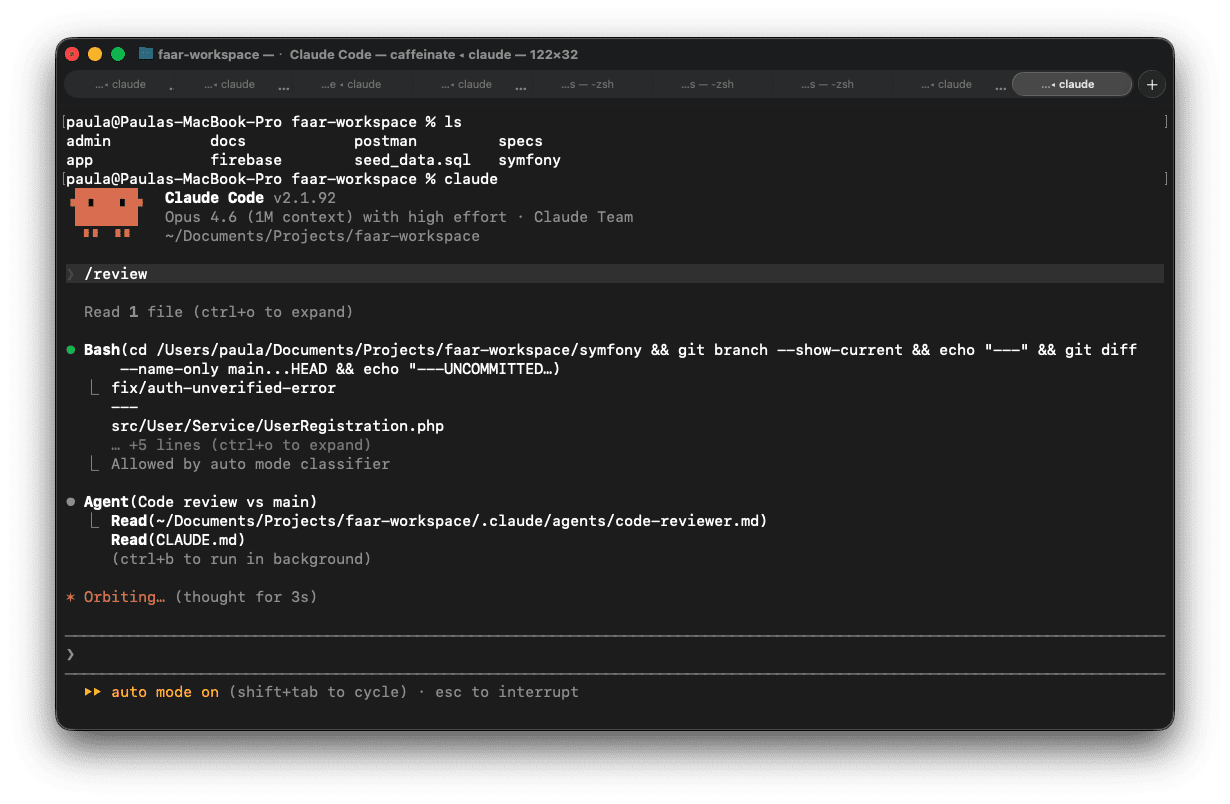
- Tools like Claude Code, Cursor, and Copilot use configuration files (e.g., CLAUDE.md, .cursorrules) to encode these decisions.
- A pre-coding brainstorming phase with agents can present architectural options and tradeoffs.
Optimistic Outlook
Implementing clear architectural governance for AI agents promises significantly improved code quality, reduced technical debt, and faster development cycles. By encoding explicit design decisions, organizations can leverage AI's speed without sacrificing consistency, allowing human developers to focus on higher-level architectural strategy and innovation.
Pessimistic Outlook
Failure to establish rigorous architectural guidelines will lead to escalating codebase complexity and an increase in hard-to-diagnose bugs. Relying on AI agents without clear guardrails risks widespread architectural drift, making future maintenance and feature development prohibitively expensive and slow.
Get the next signal in your inbox.
One concise weekly briefing with direct source links, fast analysis, and no inbox clutter.
More reporting around this signal.
Related coverage selected to keep the thread going without dropping you into another card wall.