Back to Wire
Consumer AI App Growth Stalls as Enterprise Adoption Surges
Business

Consumer AI App Growth Stalls as Enterprise Adoption Surges

Source: Bigtechnology Original Author: Alex Kantrowitz 2 min read Intelligence Analysis by Gemini

Sonic Intelligence

00:00 / 00:00
Signal Summary

Consumer AI app growth has flatlined, contrasting with surging enterprise AI adoption.

Explain Like I'm Five

"Imagine everyone got excited about a new toy (AI apps) that could do cool tricks. At first, lots of kids (consumers) played with it. But now, fewer new kids are playing, and the old kids are getting a bit bored. Meanwhile, grown-ups at work (businesses) are finding lots of really useful ways to use the toy to get their jobs done, and they're spending lots of money on it. So, the toy is super popular for work, but not so much for just playing anymore."

Original Reporting
Bigtechnology

Read the original article for full context.

Read Article at Source

Deep Intelligence Analysis

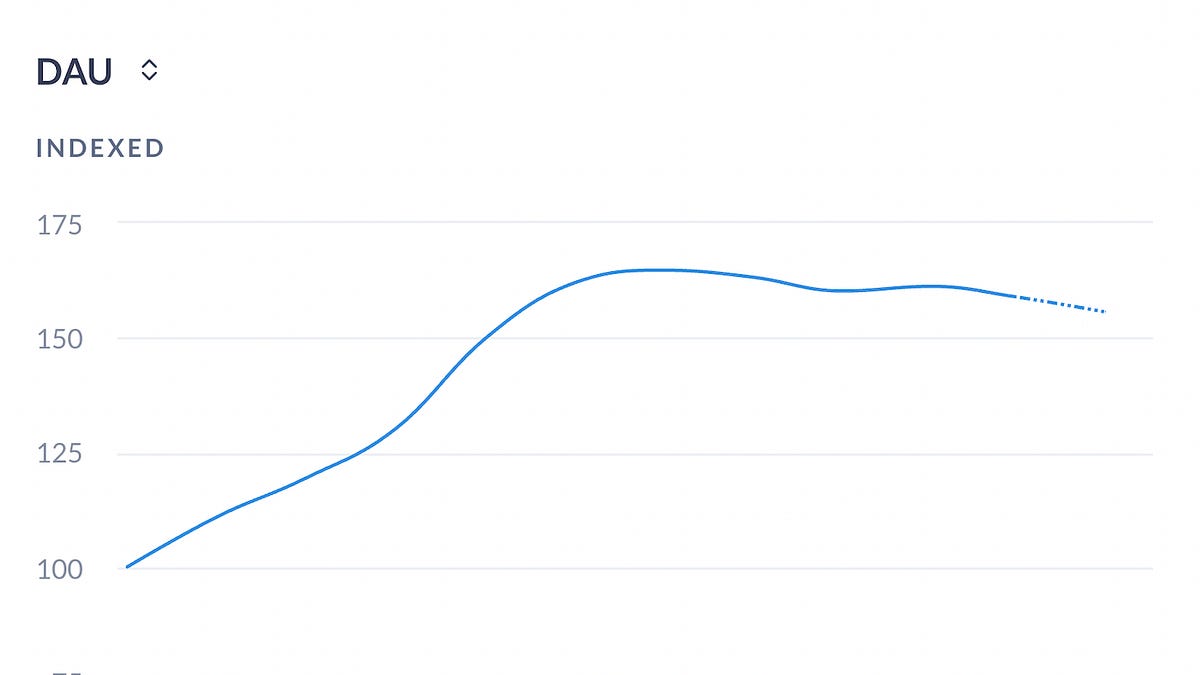
The narrative surrounding artificial intelligence is undergoing a significant recalibration, with new data indicating a distinct divergence between the stagnant growth of consumer AI applications and the robust, accelerating adoption within the enterprise sector. While initial generative AI excitement was largely fueled by consumer-facing tools like ChatGPT, the market is now revealing that sustained, widespread consumer engagement beyond novelty remains elusive. OpenAI's failure to meet its 1 billion active ChatGPT user target by late 2025, coupled with a flatlining daily active user growth across chatbots, underscores this consumer plateau. This contrasts sharply with the surging demand for AI infrastructure and specialized applications in enterprise, as evidenced by significant growth in cloud services like AWS (28%), Google Cloud Platform (63%), and Microsoft Azure (40%). This bifurcation suggests that AI's immediate, tangible value proposition is proving far stronger in productivity, automation, and specialized problem-solving within business contexts than in broad consumer utility. The market's reaction to Meta's increased investment in 'personal superintelligence' versus Apple's success with established consumer products further highlights this trend. The current phase of AI adoption appears to prioritize demonstrable ROI and integration into existing workflows, rather than speculative consumer 'super apps.' This shift has profound implications for investment, product development, and strategic positioning within the AI ecosystem. Companies focused on foundational models and infrastructure, or those developing highly specialized enterprise solutions, are experiencing significant growth and market validation. Conversely, firms heavily invested in general-purpose consumer AI applications face increasing pressure to identify compelling use cases beyond initial novelty or risk market correction. The success of agentic apps like Codex and Claude Code, particularly in coding capabilities, further reinforces the enterprise-driven momentum, demonstrating that AI's 'killer apps' are currently emerging in domains where clear, measurable value can be delivered. The challenge for consumer AI now lies in moving beyond episodic engagement to embedded utility, a hurdle that requires deeper integration into daily life and a clearer articulation of sustained value. This market dynamic suggests a period of consolidation and strategic re-evaluation, where the focus will increasingly shift towards practical, problem-solving AI rather than aspirational, broad-appeal consumer offerings.

AI-assisted intelligence report · EU AI Act Art. 50 compliant

Visual Intelligence

flowchart LR
A[Consumer AI Apps] --> B{Growth Stalls}
B --> C[Novelty Fades]
D[Enterprise AI Apps] --> E{Growth Surges}
E --> F[Practical Value]
C --> G[Investment Shift]
F --> G

Auto-generated diagram · AI-interpreted flow

Impact Assessment

The divergence between stagnant consumer AI adoption and robust enterprise growth signals a maturation in the AI market, indicating that practical, value-driven applications are gaining traction in business while consumer offerings struggle beyond novelty. This impacts investment strategies and product development.

Key Details

  • OpenAI missed its goal of 1 billion active ChatGPT users by end of 2025, reporting 900 million weekly active users in February.
  • Daily active user growth for chatbots has flatlined, falling for 4 out of the past 5 months.
  • Amazon Web Services (AWS) reported 28% growth, up from 17-18% previously.
  • Google Cloud Platform grew 63%, and Microsoft Azure grew 40%.
  • Meta plans to spend up to $145 billion this year on 'personal superintelligence'.

Optimistic Outlook

The strong performance of enterprise AI suggests a clear path to profitability and real-world impact for the technology, driving further innovation in specialized business solutions. This focus on practical applications will likely lead to more stable and valuable AI products.

Pessimistic Outlook

The plateau in consumer AI adoption could lead to reduced investment in general-purpose AI research and development, limiting broader societal benefits. Companies heavily reliant on consumer AI may face significant financial challenges and market corrections.

Stay on the wire

Get the next signal in your inbox.

One concise weekly briefing with direct source links, fast analysis, and no inbox clutter.

Free. Unsubscribe anytime.

Continue reading

More reporting around this signal.

Related coverage selected to keep the thread going without dropping you into another card wall.