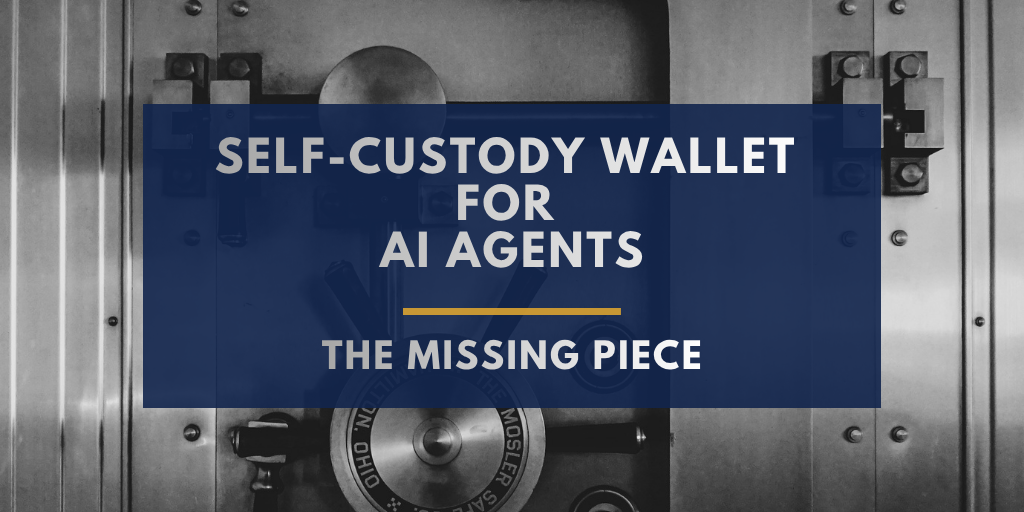
Critical Gap Identified: No Self-Custody Wallets for AI Agents
Sonic Intelligence
A critical gap exists: no self-custody, agent-native wallets for AI.
Explain Like I'm Five
"Imagine your smart robot wants to buy things online using your money. Right now, to do that, you mostly have to give your money to a big company that lets the robot use it, or use a very clunky way where you have to approve every single purchase. There's no easy way for your robot to hold its own money safely, like you hold your own wallet, which means you always have to trust someone else with your robot's spending."
Deep Intelligence Analysis
The current landscape offers two primary approaches. The first, heavily funded and widely adopted, involves handing key material to custodial providers who manage signing via Trusted Execution Environments (TEEs) or Multi-Party Computation (MPC). While convenient, this model reintroduces the very centralization that cryptocurrency sought to circumvent, placing load-bearing trust on the vendor's hardware, policy engine, and continued willingness to operate. The second bucket, local key management, is severely underdeveloped, with options like mcp-wallet-signer requiring constant manual approval, rendering true agent autonomy impractical, and others like Frame.sh being effectively abandoned.
This fundamental flaw has profound implications for the future of decentralized AI. If agents cannot securely and autonomously manage their own cryptographic keys, their utility in truly decentralized financial or governance systems is severely limited. It creates a systemic risk where the promise of autonomous agents in web3 is undermined by a centralized point of failure, susceptible to vendor compromise, policy changes, or legal compulsion. Addressing this gap with robust, agent-native self-custody solutions is paramount for realizing the full potential of secure, decentralized AI applications and preventing a regression to a trust model crypto was designed to replace.
Transparency: This analysis was generated by an AI model based on the provided source material.
Impact Assessment
The absence of self-custody wallets for AI agents represents a fundamental security and trust deficit in the emerging web3 + AI paradigm. Without true self-custody, autonomous agents handling financial transactions remain vulnerable to third-party risks, centralizing control and undermining the core decentralization ethos of cryptocurrency.
Key Details
- Current options for AI agents signing blockchain transactions are split into third-party custodial services and limited local key management.
- Custodial solutions include Coinbase CDP/AgentKit, Privy MCP, Phantom MCP, Turnkey, Crossmint, and Thirdweb.
- Local key management options are scarce, with mcp-wallet-signer requiring click-to-approve and Frame.sh being abandoned since February 2025 (v0.6.11).
- The core principle of 'not your keys, not your coins' is being overlooked in current agent-blockchain integrations.
- The author argues that relying on vendor-held keys for agents reintroduces the centralization crypto was designed to avoid.
Optimistic Outlook
Identifying this critical infrastructure gap will spur innovation in developing secure, self-custodial solutions specifically designed for AI agents. This could lead to a new generation of truly autonomous and trustless financial agents, unlocking unprecedented levels of decentralized automation and empowering users with full control over their digital assets and agent-driven transactions.
Pessimistic Outlook
The current reliance on custodial solutions for AI agents in web3 environments risks replicating traditional financial system vulnerabilities, where third parties hold ultimate control. This could lead to systemic risks, including asset freezes, censorship, or compromise, fundamentally eroding the promise of decentralized finance and undermining user autonomy as agents become more integrated into financial operations.
Get the next signal in your inbox.
One concise weekly briefing with direct source links, fast analysis, and no inbox clutter.
More reporting around this signal.
Related coverage selected to keep the thread going without dropping you into another card wall.