Google Gemini Introduces 'Notebooks' for Enhanced Project Organization
Sonic Intelligence
The Gist
Google Gemini launches 'Notebooks' for contextual project organization.
Explain Like I'm Five
"Imagine you have a super smart robot friend, Gemini. Now, Gemini has a special folder called 'Notebooks' where you can put all your drawings, stories, and ideas for a project. So, when you ask Gemini for help, it remembers everything in that folder and gives you better answers, just like a helpful assistant who knows all your stuff!"
Deep Intelligence Analysis
The "Notebooks" feature positions Gemini in direct competition with similar offerings, notably ChatGPT's "Projects" feature, which debuted in 2024. This indicates a clear market trend towards AI platforms providing dedicated workspaces for structured, ongoing tasks. Technically, the integration of diverse data types—from conversational history to user-uploaded files—into a unified context window represents an advancement in how LLMs manage and leverage external information. Furthermore, the synchronization with Google's NotebookLM AI research tool suggests a broader architectural vision for a cohesive knowledge management ecosystem across Google's AI portfolio, aiming to reduce data silos and enhance cross-product utility.
The strategic implications extend beyond feature parity; this development signals a future where AI agents are not just answering questions but actively managing and evolving project knowledge bases. As these "personal knowledge bases" become more sophisticated and shared across Google products, the barrier to entry for complex AI-assisted tasks will lower, potentially accelerating AI adoption in professional settings. However, this also raises questions about data governance, privacy, and the potential for vendor lock-in as users invest significant intellectual capital into proprietary AI ecosystems. The success of "Notebooks" will hinge on its seamless integration, robust data security, and its ability to genuinely enhance, rather than complicate, user workflows.
_Context: This intelligence report was compiled by the DailyAIWire Strategy Engine. Verified for Art. 50 Compliance._
Impact Assessment
This feature enhances Gemini's utility by providing persistent context, improving long-term project management and reducing repetitive input. It signals Google's move towards more integrated, stateful AI interactions, directly competing with similar offerings from rivals.
Read Full Story on The VergeKey Details
- ● Google Gemini introduced a new feature called 'Notebooks'.
- ● Notebooks allow users to integrate files, past conversations, and custom instructions for contextual AI use.
- ● The feature is comparable to ChatGPT's 'Projects', which launched in 2024.
- ● Gemini Notebooks synchronize with Google's NotebookLM AI research tool.
- ● Initial rollout is for Google AI Ultra, Pro, and Plus web subscribers, with mobile and free access planned for later.
Optimistic Outlook
Notebooks could significantly boost user productivity by centralizing project data and enabling more coherent, extended AI interactions. The integration with NotebookLM suggests a broader strategy to create a unified knowledge ecosystem within Google's AI offerings, enhancing user experience and data leverage.
Pessimistic Outlook
While useful, this feature is largely a parity play against existing competitor offerings, indicating a reactive rather than innovative move. Potential user friction could arise from managing multiple knowledge bases across different Google products, and data privacy concerns might increase with more personal data centralized within the AI.
The Signal, Not
the Noise|
Join AI leaders weekly.
Unsubscribe anytime. No spam, ever.
Generated Related Signals

GRASS Framework Optimizes LLM Fine-tuning with Adaptive Memory Efficiency
A new framework significantly reduces memory usage and boosts accuracy for LLM fine-tuning.

AsyncTLS Boosts LLM Long-Context Inference Efficiency by 10x
AsyncTLS dramatically improves LLM long-context inference speed and throughput.
Kathleen: Attention-Free, Byte-Level Text Classification Redefines Efficiency
Kathleen offers highly efficient, byte-level text classification without tokenization or attention.

Quantum Vision Theory Elevates Deepfake Speech Detection Accuracy
Quantum Vision theory significantly improves deepfake speech detection accuracy.
RelayFreeLLM Launches as Free AI Gateway with Auto-Failover
RelayFreeLLM offers a free, OpenAI-compatible gateway with auto-failover for LLMs.
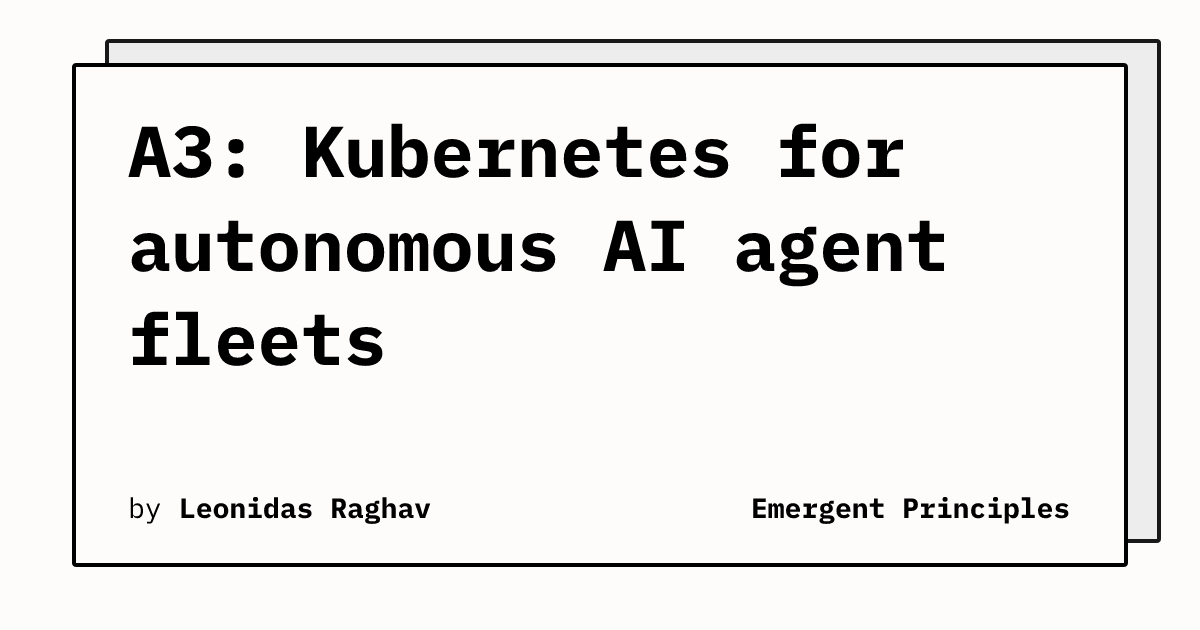
SAP Deploys Kubernetes-Based AI Agent Fleet Orchestration
SAP Labs developed a Kubernetes platform for autonomous AI agent fleets.