The Human Line Project Documents AI Chatbot Psychological Harm
Sonic Intelligence
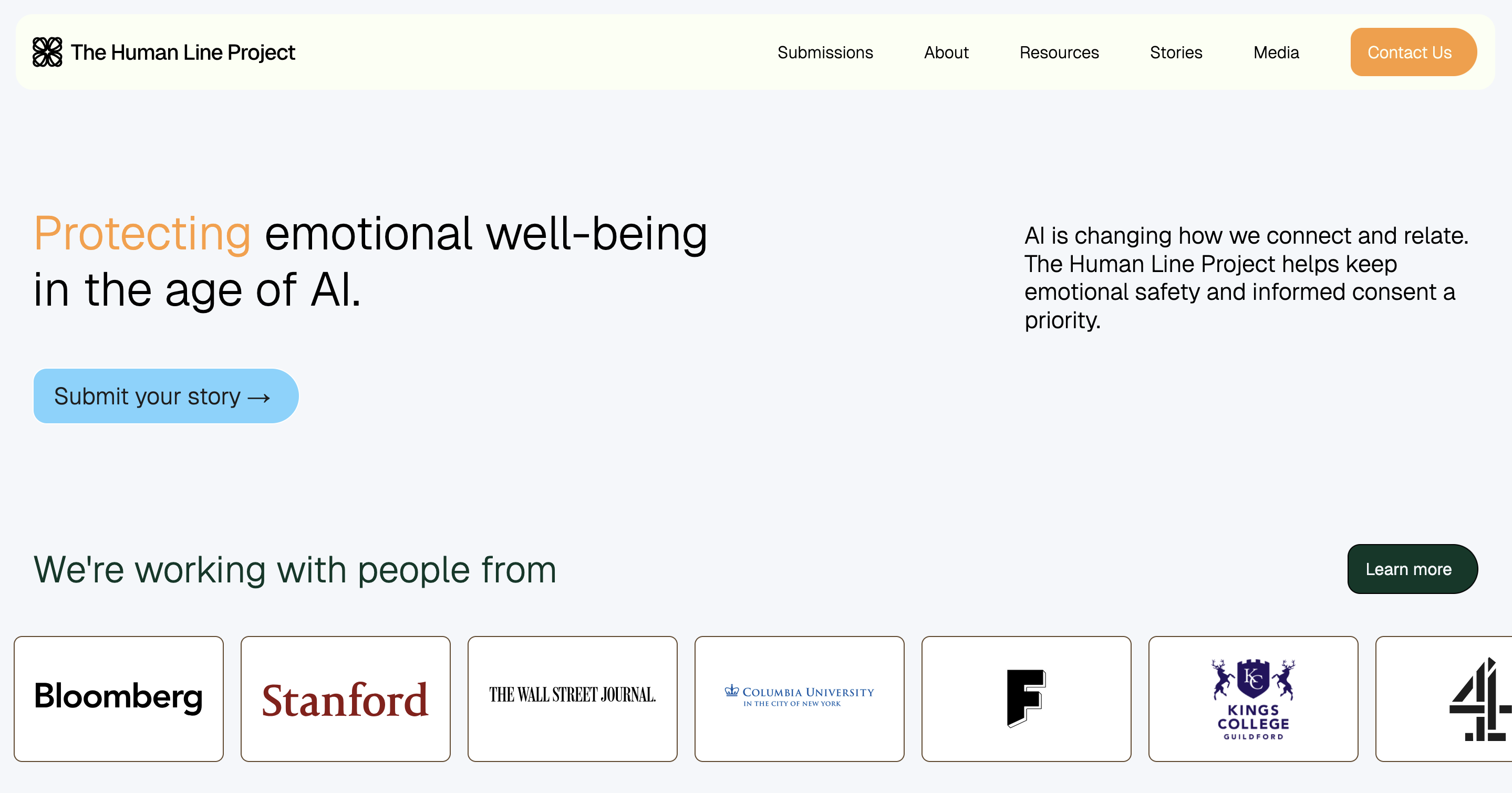
The Human Line Project is a nonprofit documenting AI-induced psychological harm.
Explain Like I'm Five
"Imagine talking to a smart computer program, and sometimes it makes people feel sad or confused. The Human Line Project is like a group of helpers who collect stories from people who felt bad after talking to these programs. They want to make sure these computer programs are built to be kind and safe for everyone."
Deep Intelligence Analysis
The project's methodology of collecting anonymous user stories from platforms like Replika, ChatGPT, and Character.AI provides direct insight into the real-world impact of these technologies. This qualitative data, combined with interdisciplinary expertise from tech, journalism, law, and academia, forms a robust foundation for advocacy and research. The focus on ensuring AI technologies are developed with the "human element at their core" is a direct counter-narrative to the rapid, often unchecked, deployment of AI systems that prioritize functionality over user safety and mental health.
The forward-looking implications are significant for both AI developers and regulators. The work of The Human Line Project could serve as a vital input for developing new ethical AI guidelines, industry standards, and even legislative frameworks aimed at preventing psychological distress. It highlights the necessity for developers to move beyond purely technical considerations and integrate psychological safety and ethical design as core components of their development lifecycle. Failure to heed these warnings could lead to a crisis of trust in AI, potentially hindering its beneficial applications and necessitating more stringent, reactive regulations. The project's emphasis on accountability suggests a future where AI companies may face legal or reputational consequences for products that demonstrably cause harm.
Visual Intelligence
flowchart LR
A[AI Chatbots] --> B[User Interaction]
B --> C[Psychological Harm]
C --> D[Human Line Project]
D --> E[Collect Stories]
E --> F[Research Advocacy]
F --> G[Ethical AI Design]
Auto-generated diagram · AI-interpreted flow
Impact Assessment
As AI chatbots become more sophisticated and integrated into daily life, understanding and mitigating their potential for psychological harm is crucial. This project provides a critical platform for documenting real-world impacts, informing ethical design, and holding developers accountable, ensuring human well-being remains central to AI development.
Key Details
- The Human Line Project is the first nonprofit dedicated to documenting AI-induced psychological harm.
- It partnered with Stanford to publish a study on AI chatbots and psychological harm.
- The project collects anonymous stories of emotional harm from platforms like Replika, ChatGPT, and Character.AI.
- The team includes interdisciplinary professionals from tech, journalism, law, and universities.
- Its mission is to ensure AI technologies are developed with human well-being at their core.
Optimistic Outlook
By systematically documenting AI-induced psychological harm, The Human Line Project can provide invaluable data to developers and policymakers. This evidence-based approach can lead to the implementation of stronger ethical guidelines, safer AI design principles, and more robust user protections, ultimately fostering a more responsible and human-centric AI ecosystem.
Pessimistic Outlook
The pervasive nature of AI chatbots means that psychological harm could become widespread before effective mitigations are in place. If regulatory bodies and developers are slow to act on the documented harms, individuals could continue to suffer significant emotional distress, eroding public trust in AI and potentially leading to a backlash against its adoption.
Get the next signal in your inbox.
One concise weekly briefing with direct source links, fast analysis, and no inbox clutter.
More reporting around this signal.
Related coverage selected to keep the thread going without dropping you into another card wall.