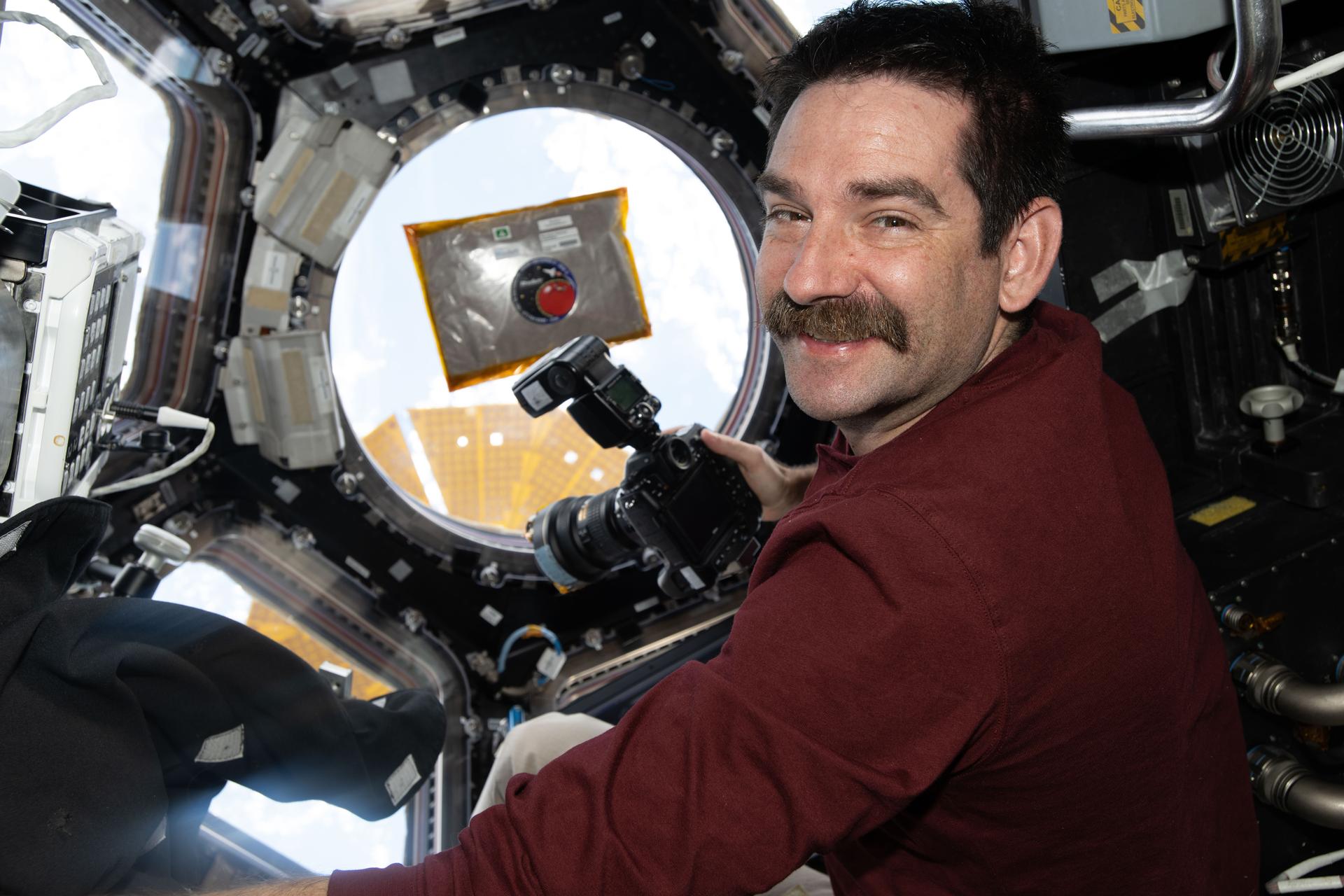
ISS Crew Uses AI and AR for Spacewalk Prep and Health Checks
Sonic Intelligence
ISS crew leverages AI and AR for medical scans and spacewalk preparations.
Explain Like I'm Five
"Imagine doctors in space using special glasses that show them how to do check-ups, and then a smart computer brain helps them understand what they see inside the body. This helps astronauts stay healthy far away from Earth, without always needing doctors on the ground to tell them what to do."
Deep Intelligence Analysis
More significantly for the advancement of in-space medical care, flight engineers Jack Hathaway (NASA) and Sophie Adenot (ESA) conducted AR-guided ultrasound scans. Utilizing the EchoFinder-2 biomedical device within the Columbus laboratory module, they performed scans of each other's abdomen and vascular systems. Crucially, an artificial intelligence system subsequently analyzed these ultrasound images to accurately confirm organ identification. The primary objective of this human research study is to substantially diminish the reliance on ground support for medical procedures. This reduction is a critical step as space crews embark on increasingly longer-duration missions further from Earth, where real-time communication delays and limited bandwidth become prohibitive for immediate expert consultation.
In parallel scientific endeavors, Roscosmos cosmonauts Sergey Kud-Sverchkov and Sergei Mikaev teamed up on a pair of biology experiments focused on observing the human circulatory system in microgravity. They employed various arm, wrist, and finger cuffs to measure blood pressure and other vital signs, alongside applying sensors to their forehead, fingers, and toes to collect blood flow data. This data was then transmitted via a Bluetooth adaptor to a laptop for detailed analysis. This biomedical data is vital for understanding the long-term physiological effects of living in space on vascular health. Additionally, flight engineer Andrey Fedyaev dedicated his time to essential life support system maintenance, servicing the Elektron oxygen generator and ensuring the station's drinking water supply chain remained clean. The article also notes the impending departure of Northrop Grumman’s Cygnus XL cargo spacecraft, concluding a nearly six-month stay. The successful integration of AI and AR into medical diagnostics represents a significant leap towards developing autonomous healthcare capabilities, which are absolutely essential for future deep-space exploration and hold promising potential for remote terrestrial medical applications.
Impact Assessment
Integrating AI and AR into space medical procedures significantly enhances astronaut autonomy and safety for long-duration missions. This reduces dependence on Earth-based support, crucial as human spaceflight ventures further from our planet.
Key Details
- Expedition 74 crew used augmented reality (AR) for ultrasound scans with EchoFinder-2.
- Artificial intelligence (AI) analyzed ultrasound images for organ identification.
- Objective: Reduce reliance on ground support for medical procedures in deep space.
- Spacewalk scheduled for March 18 by Jessica Meir and Chris Williams for solar array modification.
- Roscosmos cosmonauts conducted biology experiments on circulatory system in weightlessness.
Optimistic Outlook
The successful application of AI and AR for medical diagnostics in space paves the way for fully autonomous health systems on future deep-space missions. This technology could also find terrestrial applications, improving remote healthcare and diagnostics in underserved areas.
Pessimistic Outlook
Over-reliance on AI for critical medical diagnoses in space could introduce new risks if systems fail or provide erroneous interpretations without immediate human expert oversight. The complexity of maintaining and updating such advanced systems in remote environments poses significant logistical challenges.
Get the next signal in your inbox.
One concise weekly briefing with direct source links, fast analysis, and no inbox clutter.
More reporting around this signal.
Related coverage selected to keep the thread going without dropping you into another card wall.