MedVersa AI Unifies Medical Imaging Analysis, Matches Human Radiologists
Sonic Intelligence
MedVersa, a new generalist AI, unifies diverse medical imaging tasks and performs comparably to human radiologists.
Explain Like I'm Five
"Imagine doctors have many different special magnifying glasses, one for bones, one for blood, etc. MedVersa is like one super magnifying glass that can look at everything and even write down what it sees, helping doctors much faster."
Deep Intelligence Analysis
The model's development involved training on an extensive dataset, "MedInterp," which aggregates 91 public datasets comprising over 29 million medical instances. This massive training corpus includes images, bounding-box annotations, segmentation masks, and vision-language supervision signals, enabling MedVersa to detect pathologies and generate reports within a unified analytical framework. A key architectural innovation is the use of a trained Large Language Model (LLM) as an "orchestrator," dynamically selecting appropriate internal vision modules based on user requirements, such as identifying a tumor.
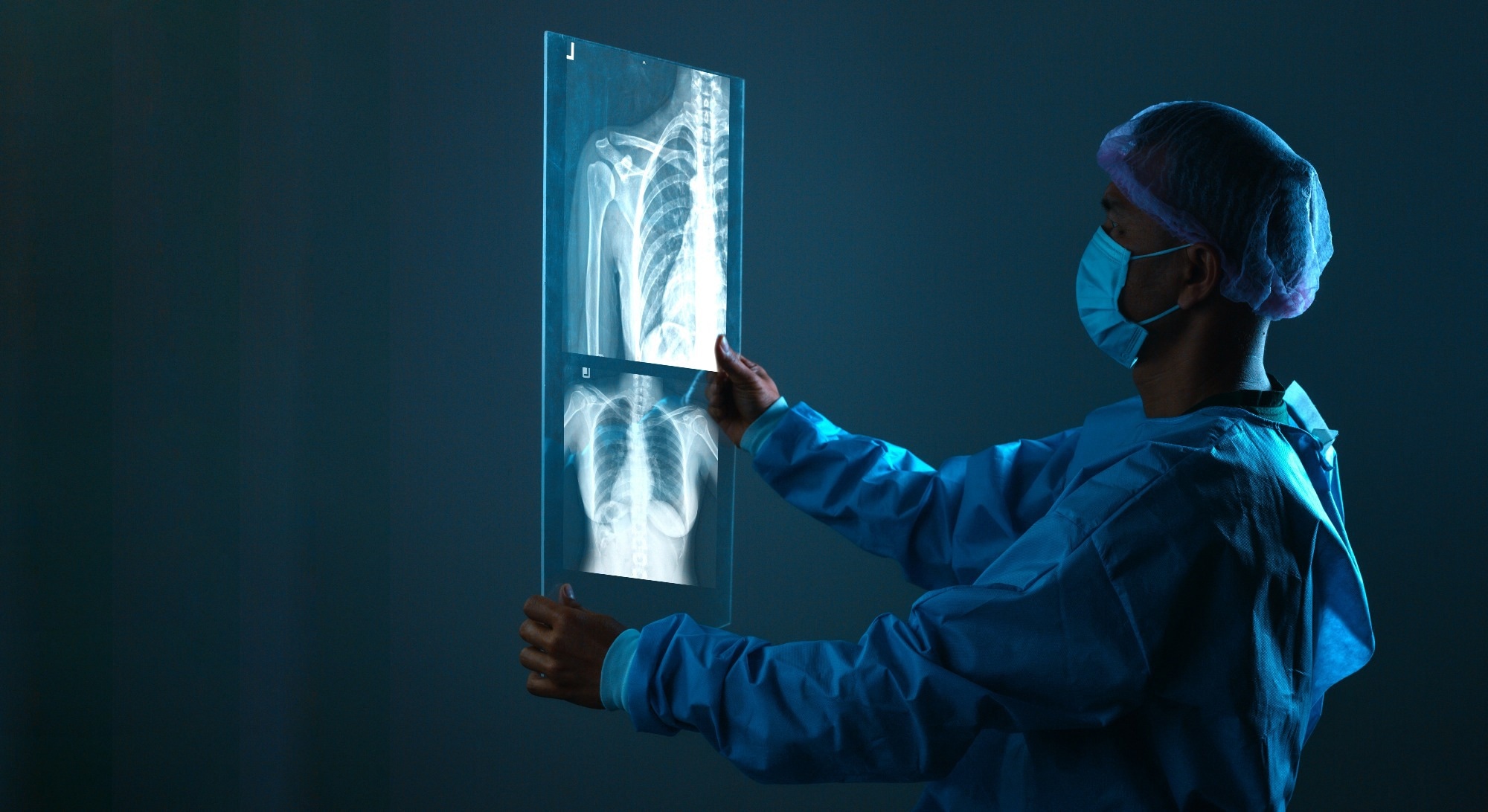
Crucially, a blinded evaluation comparing MedVersa's performance with human radiologists on chest radiograph reports demonstrated that the AI-generated reports were clinically comparable, particularly for normal findings. Furthermore, the model significantly reduced the time human radiologists spent on documentation. These findings suggest that MedVersa can not only augment diagnostic accuracy but also substantially improve workflow efficiency in clinical settings. The potential for such a unified model to consolidate the disparate AI tools currently in use could lead to a more streamlined, efficient, and potentially more equitable healthcare system, where advanced diagnostic capabilities are more broadly accessible. This represents a significant step towards the realization of Generalist Medical Artificial Intelligence (GMAI).
[Transparency Statement: This analysis was generated by an AI model based on the provided input. No external data was used.]
Visual Intelligence
graph LR
    A[Medical Image Input] --> B(MedVersa AI Model);
    B -- Orchestration LLM --> C{Select Vision Module};
    C --> D[Image Analysis & Detection];
    D --> E(Generate Report);
    E --> F[Radiologist Review];
Auto-generated diagram · AI-interpreted flow
Impact Assessment
MedVersa represents a significant leap towards consolidating the fragmented landscape of medical AI tools. By offering a unified platform for diverse imaging modalities, it promises to enhance diagnostic efficiency, reduce radiologist workload, and potentially improve patient outcomes through more consistent and comprehensive analysis.
Key Details
- MedVersa is a generalist AI model for diverse medical imaging tasks.
- It was trained on 'tens of millions' of medical imaging instances.
- In a blinded evaluation, MedVersa produced clinically comparable chest radiograph reports to human radiologists.
- The model significantly reduced the time human radiologists spend documenting findings.
- MedVersa utilizes 'MedInterp,' a dataset of 91 public datasets comprising over 29 million medical instances.
- Its architecture employs a trained LLM as an 'orchestrator' for internal vision modules.
Optimistic Outlook
This generalist AI model could streamline clinical workflows, allowing radiologists to focus on complex cases and patient interaction rather than routine documentation. Its ability to process multimodal data could lead to more holistic patient evaluations, accelerating diagnoses and treatment plans, ultimately improving healthcare accessibility and quality globally.
Pessimistic Outlook
While promising, the integration of such a powerful AI into existing clinical systems presents challenges, including validation, regulatory approval, and ensuring ethical deployment. Over-reliance on AI could potentially diminish human diagnostic skills over time, and the model's performance on rare or complex pathologies needs continuous rigorous evaluation to prevent diagnostic errors.
Get the next signal in your inbox.
One concise weekly briefing with direct source links, fast analysis, and no inbox clutter.
More reporting around this signal.
Related coverage selected to keep the thread going without dropping you into another card wall.