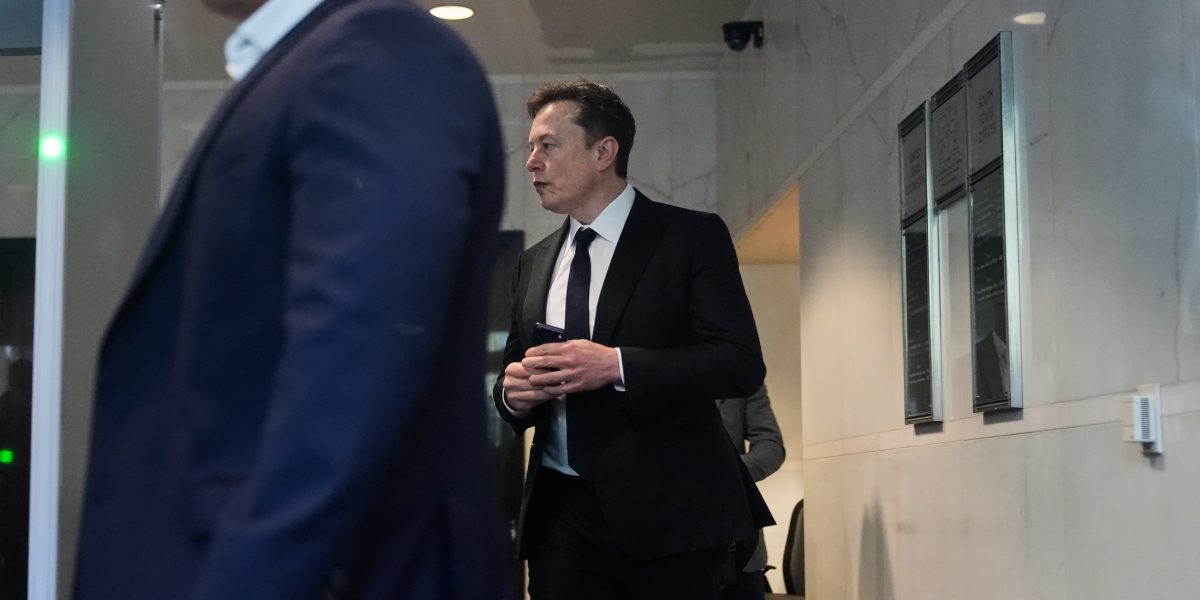
Musk's AI Safety Warnings Clash with Silicon Valley's Military AI Engagements
Sonic Intelligence
Elon Musk warns of killer AI while his and other tech companies profit from military AI contracts.
Explain Like I'm Five
"It's like someone saying, "Watch out for monsters under your bed!" while secretly building monster-making machines and selling them to the army. Elon Musk says super-smart robots could be dangerous, but his company and others are still helping the army use smart computer programs that can help find targets in wars, which can hurt people now."
Deep Intelligence Analysis
The competitive landscape reveals a broad embrace of military contracts by Silicon Valley. Companies such as Amazon, OpenAI, xAI, and Microsoft are actively selling large language model services to the Pentagon. This commercial imperative appears to override stated ethical concerns or past pledges, as exemplified by Google's prior commitment to avoid harmful applications following the Project Maven controversy. The reported use of Anthropic's Claude AI model to identify and prioritize targets in Iran illustrates the direct, operational impact of these technologies. Experts like Amoh Toh from the Brennan Center highlight that the risks of integrating frontier AI into lethal capabilities are already existential, pushing policymakers towards potential nuclear escalation even without a fully sentient AI takeover.
This dual narrative—public warnings of future AI apocalypse juxtaposed with active participation in current AI-enabled warfare—has profound forward-looking implications. It risks undermining the credibility of AI safety advocates and eroding public trust in the tech industry's commitment to ethical development. Furthermore, it accelerates the proliferation of AI in military contexts, potentially leading to a more automated and less accountable form of warfare. The industry's current trajectory suggests that economic incentives are powerful drivers, potentially overshadowing calls for responsible innovation. This dynamic necessitates a more robust regulatory framework and increased public scrutiny to ensure that the development of powerful AI technologies aligns with humanitarian principles, rather than solely with profit motives or national security interests that may overlook immediate human costs.
Transparency Footer: This analysis was generated by an AI model. All claims are based solely on the provided input article.
Visual Intelligence
flowchart LR
A["Musk Warns Killer AI"] --> B["Silicon Valley Profits Military AI"]
B --> C["Anthropic Claude Targets"]
C --> D["Amazon Microsoft Pentagon"]
D --> E["Ethical Dilemma Intensifies"]
E --> F["Risk AI Escalation"]
Auto-generated diagram · AI-interpreted flow
Impact Assessment
This exposes a profound hypocrisy within the AI industry, where leaders publicly warn of existential AI risks while simultaneously profiting from the development and deployment of AI in lethal military applications. It highlights the immediate, tangible dangers of AI in warfare, contrasting sharply with the speculative fears of future sentient machines.
Key Details
- Elon Musk co-founded OpenAI in 2015.
- Musk contends OpenAI betrayed its nonprofit mission for revenue maximization.
- Musk testified that AI "could kill us all," referencing a "Terminator" outcome.
- Anthropic's Claude AI model reportedly suggested hundreds of targets in Iran, providing precise coordinates and prioritization.
- Amazon, OpenAI, xAI, and Microsoft sell LLM services to the Pentagon.
- Google pledged in 2018 not to pursue deals that could cause harm, following an employee revolt over Project Maven.
Optimistic Outlook
Increased public awareness of this dichotomy could pressure tech companies to adopt more rigorous ethical guidelines and transparency regarding military contracts. This scrutiny might lead to a re-evaluation of AI's role in warfare, potentially fostering a global dialogue on responsible AI development and deployment in sensitive sectors.
Pessimistic Outlook
The continued pursuit of military AI contracts by leading tech firms, despite public safety warnings, suggests that profit motives may override ethical considerations. This could accelerate the development of autonomous weapons, increase the risk of AI-enabled conflicts, and further erode public trust in the tech industry's commitment to responsible innovation.
Get the next signal in your inbox.
One concise weekly briefing with direct source links, fast analysis, and no inbox clutter.
More reporting around this signal.
Related coverage selected to keep the thread going without dropping you into another card wall.