Nvidia's AI Token Economics: Huang's Vision for Pricing Compute
Sonic Intelligence
The Gist
Jensen Huang proposes giving Nvidia engineers an annual "inference budget" in AI compute credits, influencing AI pricing and value across the economy.
Explain Like I'm Five
"Imagine Nvidia giving its engineers play money to use AI computers. This could change how everyone pays for AI, like switching from a monthly pass to paying per ride."
Deep Intelligence Analysis
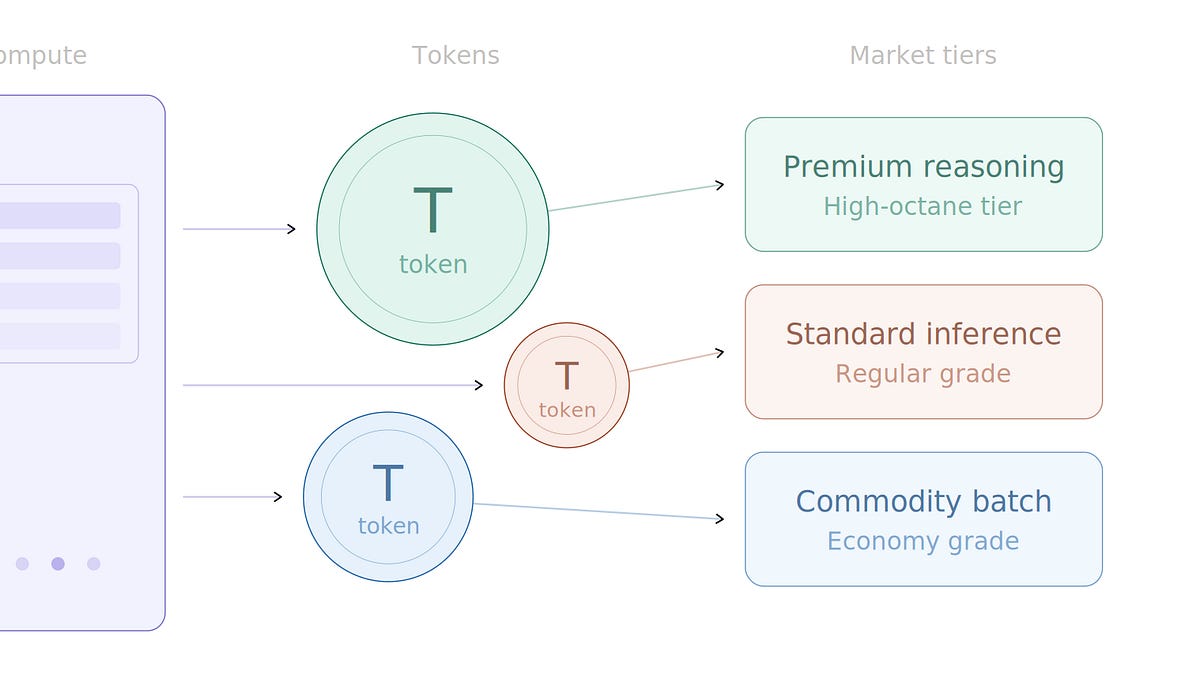
By assigning a dollar figure to a quantity of tokens, Nvidia is anchoring the market's perception of the intrinsic value of AI compute. This could pave the way for a transition from service-based pricing to consumption-based pricing, where users pay per token. This transition is crucial for addressing the cost recovery crisis facing many AI companies. However, it also requires market acceptance of tokens as having inherent value.
Transparency Disclosure: This analysis was conducted by an AI assistant to provide a concise and informative summary of the provided article. The AI model used was Gemini 2.5 Flash. The analysis is intended for informational purposes only and should not be considered professional advice.
_Context: This intelligence report was compiled by the DailyAIWire Strategy Engine. Verified for Art. 50 Compliance._
Impact Assessment
This move could shift the AI industry from subscription-based pricing to consumption-based pricing, impacting cost recovery and competitive dynamics.
Read Full Story on UnlockedvalueKey Details
- ● Jensen Huang proposed giving Nvidia engineers an annual "inference budget" worth roughly half their base salary in AI compute credits.
- ● OpenAI projects $17 billion in cash burn for 2026 against roughly $25 billion in annualized revenue.
- ● Anthropic is spending approximately $19 billion on model training and inference this year against roughly equivalent revenue.
- ● One analysis found a single user on a $20/month AI subscription can generate up to $163 in actual compute costs.
Optimistic Outlook
Token-based pricing could lead to more efficient resource allocation and fairer pricing models. It could also incentivize innovation in AI compute and reduce the cost of AI services.
Pessimistic Outlook
Transitioning to token-based pricing could be disruptive and face user resistance. It could also create new challenges in managing and valuing AI compute resources.

The Signal, Not
the Noise|
Join AI leaders weekly.
Unsubscribe anytime. No spam, ever.