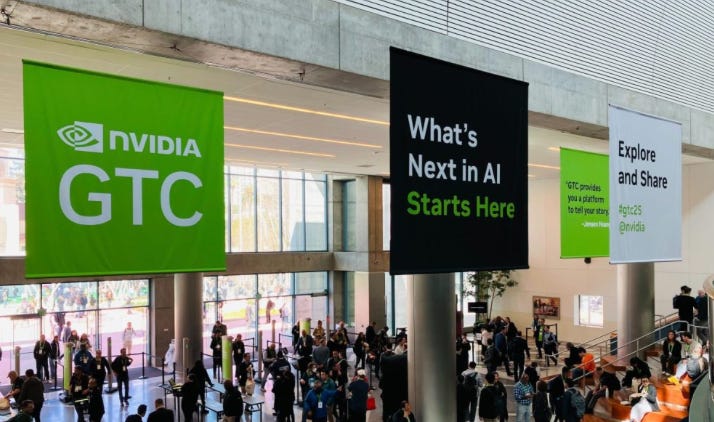
Nvidia GTC 2026: Signs of an AI Dark Compute Cycle?
Sonic Intelligence
The Gist
Nvidia's GTC 2026 highlights faster GPUs and lower compute costs, raising concerns about hyperscaler ROI and a potential 'AI Dark Compute' cycle.
Explain Like I'm Five
"Imagine building a super-fast race car, but the racetrack keeps getting shorter. You have a great car, but not enough track to use it fully, and you have to keep buying new cars."
Deep Intelligence Analysis
This phenomenon could lead to economic obsolescence for hyperscalers and AI clouds, as they face increasing depreciation and stranding risks. The need to constantly upgrade infrastructure to stay competitive could result in wasted investments and squeezed margins. The comparison to the late-1990s telecom boom, where fiber networks were built ahead of demand, highlights the potential for infrastructure to expand faster than monetization.
While faster GPUs and lower compute costs can accelerate AI adoption, the industry needs to carefully consider the balance between supply and demand. Hyperscalers and AI clouds need to develop strategies to effectively monetize their infrastructure investments and avoid the pitfalls of the 'AI Dark Compute' cycle. This includes exploring new applications, optimizing resource utilization, and developing innovative pricing models.
_Context: This intelligence report was compiled by the DailyAIWire Strategy Engine. Verified for Art. 50 Compliance._
Impact Assessment
The rapid advancements in GPU technology and decreasing compute costs could lead to economic obsolescence for hyperscalers and AI clouds. This 'AI Dark Compute' cycle suggests that compute supply may outpace monetized demand, impacting infrastructure investments.
Read Full Story on CoastaljournalKey Details
- ● Nvidia's GTC 2026 attracted over 30,000 attendees from 190+ countries.
- ● The conference is positioned as the epicenter of a new AI industrial era.
- ● AI infrastructure faces the risk of compute supply and efficiency growing faster than monetized demand.
Optimistic Outlook
Faster GPUs and lower compute costs could accelerate AI adoption across various industries, leading to new applications and business models. Increased efficiency could also drive down the environmental impact of AI.
Pessimistic Outlook
Hyperscalers face depreciation and stranding risks as they upgrade to stay competitive, potentially leading to wasted investments. The commoditization of compute could squeeze margins and make it difficult to recoup infrastructure costs.
The Signal, Not
the Noise|
Get the week's top 1% of AI intelligence synthesized into a 5-minute read. Join 25,000+ AI leaders.
Unsubscribe anytime. No spam, ever.