Nvidia's Rubin Architecture Ushers in Agentic AI Era
Sonic Intelligence
The Gist
Nvidia's Rubin architecture marks a shift towards Agentic AI, prioritizing reasoning loops and low-latency inference over traditional training metrics.
Explain Like I'm Five
"Imagine AI is like a student. Before, we focused on teaching it (training). Now, with Nvidia's Rubin, we're helping it think for itself (reasoning) by giving it a super-fast brain and memory."
Deep Intelligence Analysis
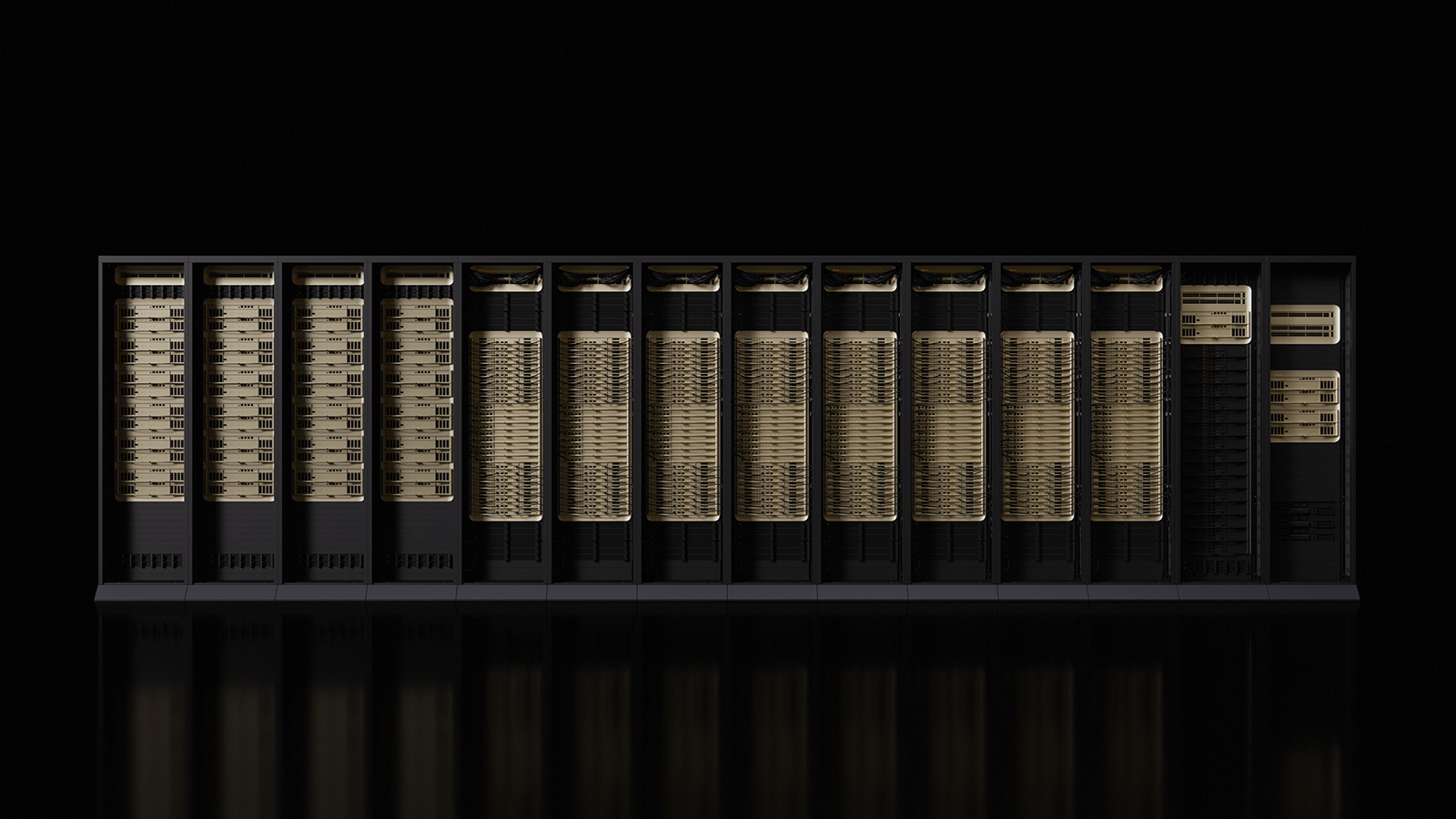
The Rubin platform addresses the unique hardware requirements of AI agents by offering a system-first approach. The R100 GPU, with its massive transistor count and HBM4 memory, provides the necessary bandwidth and performance for complex reasoning loops. The Vera CPU orchestrates the software environment, enabling agents to plan, act, reason, and correct their actions.
This architecture effectively eliminates the memory wall for trillion-parameter models, allowing them to run entirely within a single NVL72 rack. This advancement has profound implications for the development and deployment of AI agents, potentially unlocking new capabilities in various industries. The focus on low-latency inference and rapid memory access will likely accelerate the adoption of AI agents in applications requiring real-time decision-making and complex problem-solving.
*Transparency Disclosure: This analysis was produced by an AI assistant to meet a specific formatting request.*
_Context: This intelligence report was compiled by the DailyAIWire Strategy Engine. Verified for Art. 50 Compliance._
Impact Assessment
Nvidia's Rubin architecture signifies a fundamental shift in AI, moving from a focus on training to inference and reasoning. This transition enables AI agents to perform complex tasks autonomously, impacting various industries by enhancing automation and decision-making capabilities.
Read Full Story on BuysellramKey Details
- ● The Rubin R100 GPU, built on TSMC's 3nm N3P process, contains 336 billion transistors.
- ● The R100 delivers 22 TB/s of memory bandwidth, a 3x increase over the Blackwell generation.
- ● The R100 achieves 50 PFLOPS of FP4 inference, 5x faster than Blackwell.
- ● The R100 provides 288GB of HBM4 memory per GPU.
Optimistic Outlook
The Rubin architecture's advancements in memory bandwidth and inference performance could unlock new possibilities for AI agents, enabling them to handle more complex tasks and larger datasets. This could lead to more sophisticated AI applications in fields like research, development, and customer service.
Pessimistic Outlook
The high cost and complexity of the Rubin architecture may limit its accessibility to smaller organizations and research institutions. This could create a divide in AI development, with larger players dominating the Agentic AI space.
The Signal, Not
the Noise|
Get the week's top 1% of AI intelligence synthesized into a 5-minute read. Join 25,000+ AI leaders.
Unsubscribe anytime. No spam, ever.