The Paradox of Medical AI: Advanced Capabilities vs. Slow Clinical Adoption
Sonic Intelligence
Advanced medical AI tools face slow clinical adoption.
Explain Like I'm Five
"Even though super-smart computer programs are really good at finding problems in medical pictures, like X-rays or eye scans, doctors aren't using them as much as they could. It's like having a super-fast car but still choosing to walk, even when you need to get somewhere quickly to help someone."
Deep Intelligence Analysis
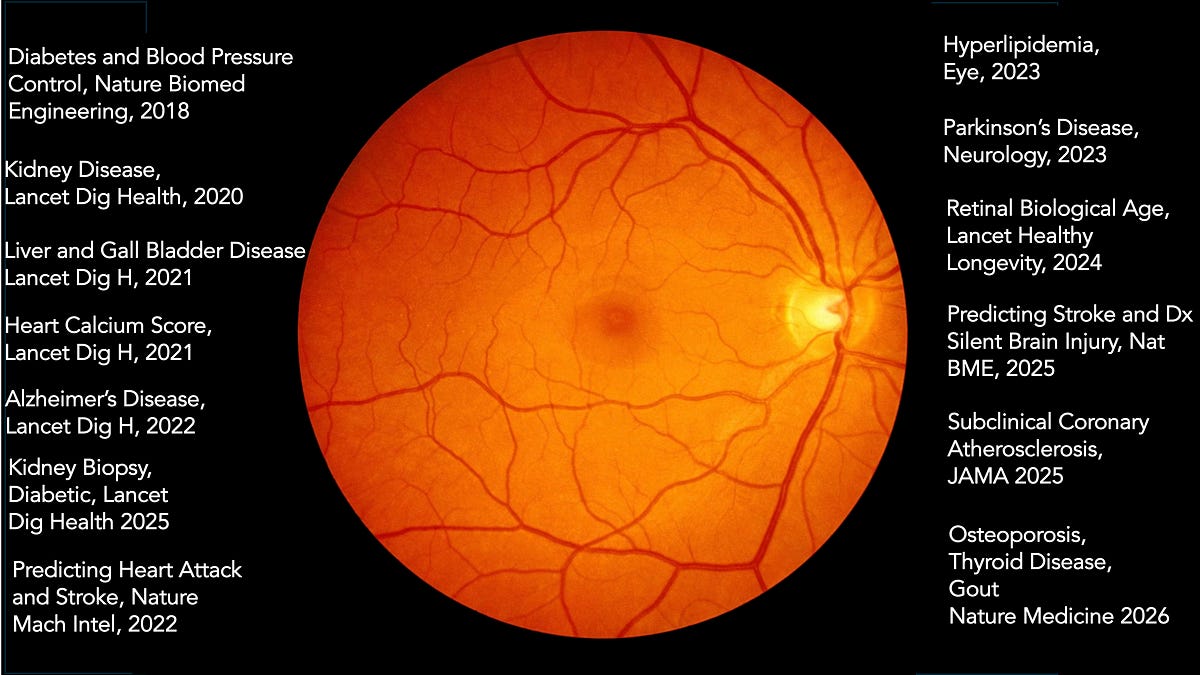
Concrete evidence underscores this paradox. For instance, 44 randomized trials consistently show AI-assisted colonoscopy significantly outperforms human gastroenterologists in detecting adenomatous polyps, yet this has not become standard practice. Similarly, AI's ability to extract a wealth of information from retinal images, predicting risks for conditions like Parkinson's, Alzheimer's, heart disease, and now even thyroid disease and osteoporosis, remains largely untapped in routine eye exams, despite over 100 million Americans receiving such exams annually. The existence of foundation models like RETFound and Reti-Pioneer, trained on millions of images, further highlights the technical readiness that contrasts sharply with clinical inertia.
The forward-looking implications are substantial. The delay in adopting these validated AI tools means patients are not benefiting from earlier disease detection and more precise risk stratification, potentially leading to worse outcomes and higher healthcare costs in the long run. Overcoming this implementation gap requires addressing a complex interplay of factors including regulatory approval processes, physician training and trust, integration challenges with existing electronic health records, and clear demonstration of economic value. Without a concerted effort to bridge this chasm, the promise of AI to revolutionize healthcare will remain largely confined to research papers and limited pilot programs, rather than transforming global patient care.
Visual Intelligence
flowchart LR
A[AI Diagnostic Tools Ready] --> B[Clinical Trials Confirm Efficacy]
B --> C{Slow Adoption in Practice?}
C -- Yes --> D[Missed Patient Outcomes]
C -- No --> E[Improved Patient Care]
D --> F[Regulatory Hurdles]
D --> G[Clinician Skepticism]
D --> H[Integration Challenges]
Auto-generated diagram · AI-interpreted flow
Impact Assessment
Despite overwhelming evidence of AI's superior diagnostic capabilities in medical imaging, its integration into routine clinical practice remains paradoxically slow. This gap represents missed opportunities for improved patient outcomes and highlights significant barriers to adoption, from regulatory hurdles to clinician skepticism.
Key Details
- AlexNet's 2012 ImageNet win marked the deep learning era's start.
- Over 7 years ago, a Nature Medicine review summarized AI progress in medical imaging.
- 44 randomized trials for colonoscopy show AI-assist significantly improves polyp detection.
- A new retinal image foundation model (Reti-Pioneer) from 100,000+ photos identifies risks for thyroid disease, gout, and osteoporosis.
- More than half of Americans had an eye exam last year (over 100 million people).
Optimistic Outlook
Overcoming the implementation paradox will unlock AI's full potential to revolutionize diagnostics, leading to earlier disease detection, more accurate prognoses, and personalized treatment plans. This could significantly reduce healthcare costs, improve patient quality of life, and free up clinician time for more complex patient interactions.
Pessimistic Outlook
Continued slow adoption of proven AI tools means patients are missing out on potentially life-saving early diagnoses and more effective treatments. This delay perpetuates inefficiencies in healthcare, increases the burden on human clinicians, and risks widening the gap between cutting-edge research and practical patient care.
Get the next signal in your inbox.
One concise weekly briefing with direct source links, fast analysis, and no inbox clutter.
More reporting around this signal.
Related coverage selected to keep the thread going without dropping you into another card wall.