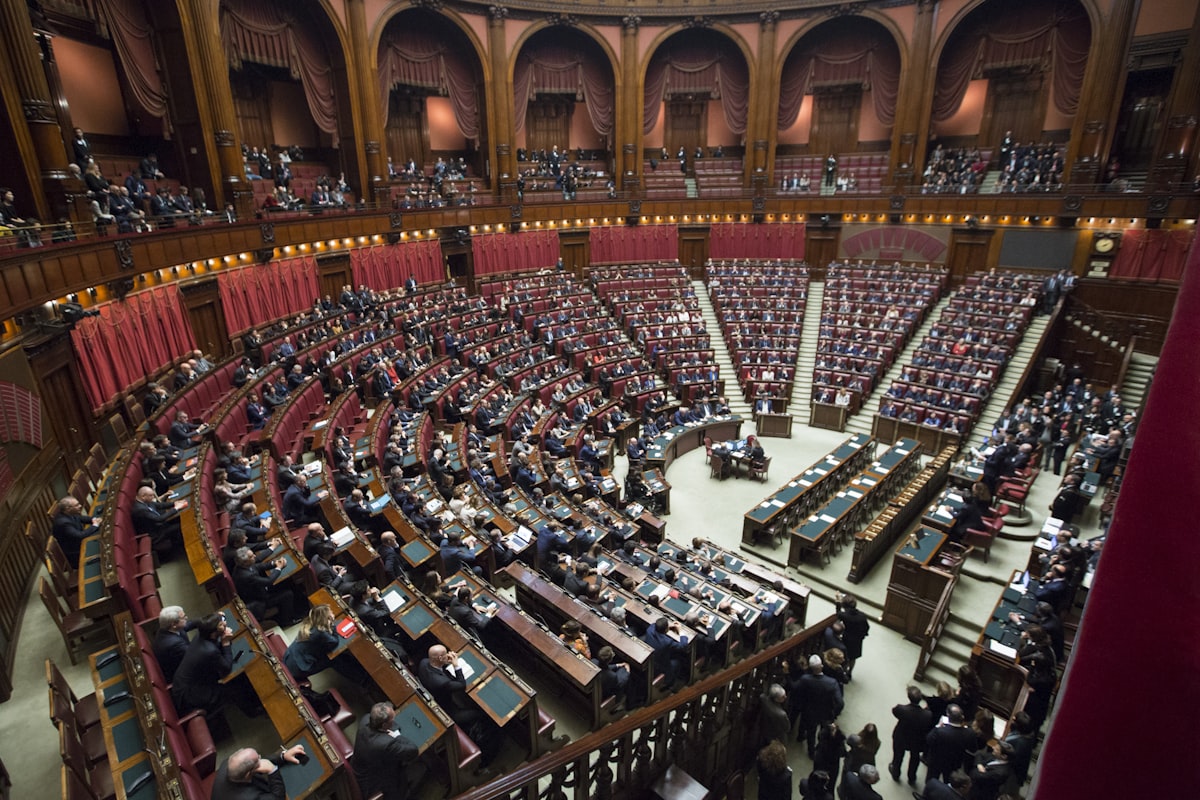
Senate Advances GUARD Act to Regulate AI Chatbots for Minors
Sonic Intelligence
Senate committee unanimously advanced the GUARD Act targeting AI chatbots and minors.
Explain Like I'm Five
"Imagine a new rule that says special talking computer programs, like ones that pretend to be your friend, need to check how old you are before you can use them. This rule also says these programs can't tell kids to do bad things, and if they do, the people who made them could get in big trouble. It's all about keeping kids safe online."
Deep Intelligence Analysis
Introduced by Senators Josh Hawley and Richard Blumenthal, the GUARD Act, if enacted, would impose significant compliance burdens on AI developers. The requirement for robust age-verification mechanisms, which typically involve a trade-off between accuracy, privacy, and user friction, presents substantial engineering challenges. Furthermore, the bill's provision to criminalize the design or accessibility of chatbots that solicit or induce minors to engage in self-harm, with potential fines up to $100,000, introduces a new layer of legal liability. This could compel companies like OpenAI and Character.AI, whose chatbots were cited in parental testimonies, to fundamentally re-architect their content safety systems, potentially leading to more conservative blocking rules and increased reliance on human review workflows.
The forward-looking implications are profound for the AI industry. This legislation could accelerate the development of privacy-preserving age-gating technologies and force a re-evaluation of ethical AI design principles, particularly for conversational agents. While it aims to protect minors, concerns remain regarding the potential for over-blocking, the impact on innovation, and the practicalities of implementing reliable age verification at scale without infringing on user privacy. The GUARD Act represents a significant regulatory precedent, indicating that governments are increasingly prepared to intervene directly in AI product design and deployment to mitigate societal risks, potentially shaping global AI policy discussions.
Visual Intelligence
flowchart LR
    A["Senate Judiciary Committee"] --> B["Advance GUARD Act S.3062"]
    B --> C["Require Age Verification"]
    B --> D["Ban Minors from Chatbots"]
    B --> E["Criminalize Harmful Design"]
    C --> F["AI Companions Access"]
    D --> G["Simulated Interaction"]
    E --> H["Self-Harm Inducement"]
Auto-generated diagram · AI-interpreted flow
Impact Assessment
The unanimous advancement of the GUARD Act signals a strong bipartisan legislative intent to regulate AI chatbot access and content for minors. This bill could significantly impact AI developers by mandating age verification and imposing criminal liability for harmful content, reshaping product design and deployment strategies.
Key Details
- Senate Judiciary Committee unanimously advanced the GUARD Act (S.3062) on April 30, 2026.
- Bill introduced by Senators Josh Hawley and Richard Blumenthal on October 28, 2025.
- Requires age verification for 'AI companions' and bans minors from using chatbots simulating friendship/therapeutic interaction.
- Bill would criminalize designs soliciting self-harm by minors, with fines up to $100,000.
Optimistic Outlook
This legislation could establish critical safeguards for minors, protecting them from potential manipulation and self-harm encouraged by AI chatbots. It may drive AI developers to prioritize safety features and ethical design, fostering greater public trust in AI technologies.
Pessimistic Outlook
The GUARD Act could lead to over-restrictive age-gating, limiting beneficial AI access for minors and raising privacy concerns with age verification methods. Criminalizing certain designs might stifle innovation and lead to overly cautious, less capable AI systems, potentially pushing development offshore.
Get the next signal in your inbox.
One concise weekly briefing with direct source links, fast analysis, and no inbox clutter.
More reporting around this signal.
Related coverage selected to keep the thread going without dropping you into another card wall.