Teaching Programming in the AI Era: Balancing Assistance and Fundamental Skills
Sonic Intelligence
Educators are grappling with integrating AI tools into programming curricula while preserving fundamental learning.
Explain Like I'm Five
"Imagine you're learning to build with LEGOs. Now, there's a super smart robot that can tell you exactly how to build something or even build it for you. Teachers are trying to figure out how to let you use the robot to help you learn, but also make sure you still learn how to think and build things yourself, so you don't just become a button-pusher!"
Deep Intelligence Analysis
The rapid adoption of AI in classrooms is undeniable; from a few students experimenting in 2022, almost every student now utilizes AI in programming courses. This widespread use, however, is not solely for cheating; many students are genuinely exploring AI as a learning aid but are uncertain about ethical boundaries. This uncertainty is particularly pronounced among vulnerable student groups and women, who are less likely to use AI due to fears of academic integrity violations, potentially exacerbating existing educational inequities. A class activity exploring seven levels of AI use revealed a general consensus among students and instructors on appropriate boundaries, such as refraining from using AI to write weekly coding assignments, indicating a desire for guidance rather than outright prohibition.
Looking forward, the educational landscape must adapt by designing curricula that explicitly teach students how to effectively and ethically collaborate with AI. This involves developing "prompt engineering" skills, understanding AI's limitations, and emphasizing the human role in design, validation, and critical assessment of AI-generated code. The goal is not to eliminate struggle, which is often crucial for deep learning, but to redefine it within an AI-augmented environment. Institutions must address the growing divides in AI literacy and access to ensure that AI tools genuinely enhance learning for all students, preparing them for a future where human-AI collaboration is a core competency.
_Context: This intelligence report was compiled by the DailyAIWire Strategy Engine. Verified for Art. 50 Compliance._
Impact Assessment
The widespread availability of AI coding assistants is fundamentally altering how programming is learned and taught. This necessitates a re-evaluation of pedagogical approaches to ensure students develop core comprehension and problem-solving skills, rather than merely relying on AI for shortcuts.
Key Details
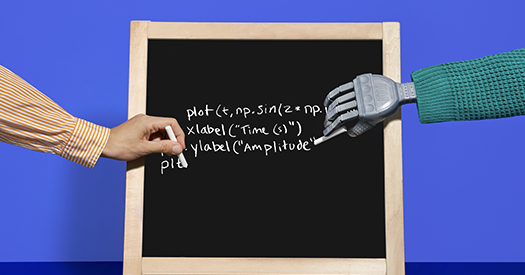
- Many neuroscience students learned coding by adapting existing scripts.
- AI agents can debug code and assist in teaching programming.
- Almost every student now uses AI in programming classes, up from a few in 2022.
- Students use AI for various purposes, not just cheating, but some fear academic integrity violations.
- Vulnerable students and women are less likely to use AI for fear of cheating.
- A class activity identified 7 levels of AI use, with students generally agreeing on boundaries (e.g., no AI for weekly assignments).
Optimistic Outlook
AI tools can personalize education, provide instant debugging, and act as tutors, potentially making programming more accessible and efficient for diverse learners. Integrating AI thoughtfully could foster a new generation of programmers adept at leveraging advanced tools while understanding underlying principles.
Pessimistic Outlook
Over-reliance on AI could hinder the development of critical thinking, debugging skills, and deep code comprehension. It risks exacerbating educational inequities if access or understanding of prompt engineering varies, potentially creating a divide between those who master AI-assisted coding and those who become dependent.
Get the next signal in your inbox.
One concise weekly briefing with direct source links, fast analysis, and no inbox clutter.
More reporting around this signal.
Related coverage selected to keep the thread going without dropping you into another card wall.