Ultralearning in the AI Era: What Changes and What Endures
Sonic Intelligence
AI reshapes 'Ultralearning' principles, emphasizing deeper human skills.
Explain Like I'm Five
"A book called 'Ultralearning' teaches you how to learn really fast. Now, with smart computers (AI), some parts of learning are easier, but you still have to work hard, and you need to learn even better skills to keep up."
Deep Intelligence Analysis
Scott Young's 2019 bestseller, 'Ultralearning,' posited that intensive self-education is crucial for navigating a rapidly changing world. AI has only accelerated the trends identified in the book, particularly widening the 'gulf between the haves and have-nots of human capital.' Crucially, AI has dramatically reduced the cost and effort associated with 'meta-learning'—the process of researching how to learn a skill. AI tools can now rapidly break down complex subjects into discrete components, suggest practice activities, and map out learning paths, a task that previously required significant human effort and expertise. However, the author correctly notes that AI has not diminished the intrinsic effort required for deep learning, reinforcing that sustained dedication remains irreplaceable.
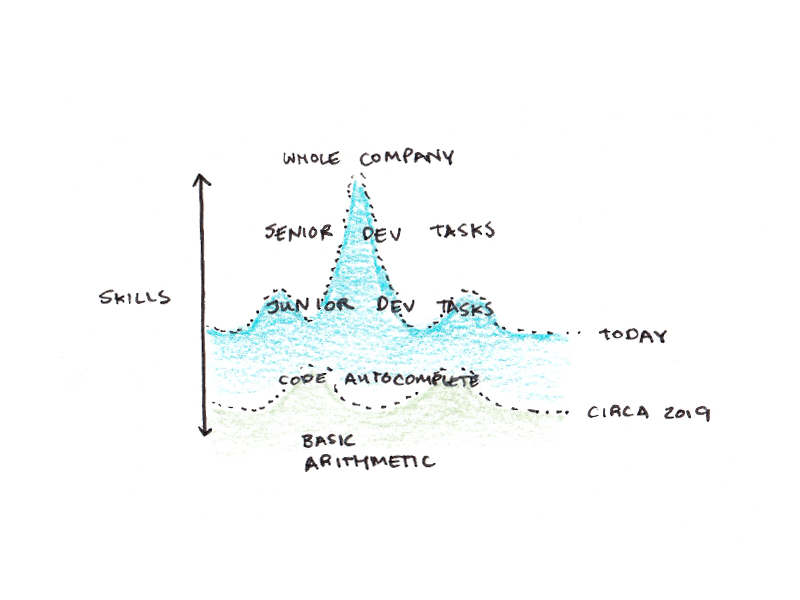
Looking forward, the integration of AI into learning processes will likely raise the bar for human expertise rather than devalue it. Tasks once performed by junior professionals are increasingly within the grasp of automated agents, compelling humans to pursue deeper, more robust skills. This necessitates a strategic focus on uniquely human capabilities—critical thinking, creativity, complex problem-solving, and emotional intelligence—that AI cannot yet replicate. The challenge for educators and individuals will be to leverage AI as a powerful learning accelerator while simultaneously cultivating these higher-order human skills, ensuring that learning remains a truly transformative and competitive advantage.
Visual Intelligence
flowchart LR
A["Ultralearning Principles"] --> B["AI Impact on Meta-learning"]
B --> C["Reduced Research Cost"]
C --> D["Accelerated Skill Mapping"]
D --> E["Increased Demand for Deep Skills"]
E --> F["Human Effort Remains Key"]
Auto-generated diagram · AI-interpreted flow
Impact Assessment
The advent of advanced AI fundamentally alters the landscape of self-education, challenging established methodologies like 'Ultralearning.' Understanding how AI impacts learning principles is crucial for individuals and educational institutions to adapt and remain competitive in an increasingly automated world.
Key Details
- Scott Young's book 'Ultralearning' was published in 2019, selling over 200,000 copies.
- The book's core message about continuous skill acquisition remains relevant, accelerated by AI.
- AI has made 'Meta-learning' (researching how to learn) significantly easier and faster.
- AI has not changed the intrinsic effort required for learning.
- The author believes AI has raised the bar for professional skills, not devalued them.
Optimistic Outlook
AI can act as a powerful accelerant for self-directed learning, particularly in meta-learning, by democratizing access to structured knowledge and learning paths. This could empower more individuals to acquire complex skills efficiently, fostering a highly adaptable and skilled workforce capable of navigating future technological shifts.
Pessimistic Outlook
While AI simplifies some aspects of learning, it also raises the bar for human expertise, potentially widening the skill gap between those who can leverage AI effectively and those who cannot. The ease of access to information via AI might also reduce the perceived value of deep, effortful learning, leading to superficial understanding.
Get the next signal in your inbox.
One concise weekly briefing with direct source links, fast analysis, and no inbox clutter.
More reporting around this signal.
Related coverage selected to keep the thread going without dropping you into another card wall.