US Officials Explore Government Stakes in AI Firms
Sonic Intelligence
US officials are discussing potential government share acquisition in major AI companies.
Explain Like I'm Five
"Government leaders are talking to big AI companies about the possibility of the government owning a piece of them, to share the money AI makes with everyone."
Deep Intelligence Analysis
The context for these deliberations is multifaceted. Firstly, there is a palpable societal concern about AI's potential to exacerbate economic inequality. By proposing a means to distribute AI-generated wealth more broadly, the government seeks to preemptively address these anxieties and foster greater public acceptance of advanced AI technologies. Secondly, the discussions occur against a backdrop of intense global competition in AI development, where national economic interests are intrinsically linked to technological leadership. Establishing a framework for public benefit from AI could be viewed as a strategy to bolster domestic AI industries while simultaneously addressing social equity. Furthermore, the voluntary nature of the proposed share transfer indicates an attempt to navigate potential legal and regulatory hurdles, seeking a cooperative rather than a coercive path to achieving these objectives. The exclusion of Anthropic from these specific conversations suggests that the approach may be company-specific or still in very early, divergent stages of exploration.
Looking forward, the success of such a government equity initiative could fundamentally alter the relationship between the state, private enterprise, and the distribution of wealth generated by transformative technologies. If implemented, it could set a precedent for how future foundational technologies are leveraged for public good, potentially influencing regulatory frameworks and corporate governance models globally. The optimistic scenario sees a more equitable distribution of AI's economic dividends, fostering social cohesion and sustained public investment in AI research and development. Conversely, a pessimistic outlook anticipates significant challenges, including corporate resistance, complex valuation and distribution mechanisms, and potential political interference, which could render the initiative ineffective or create unintended market distortions. The ultimate impact will hinge on the details of implementation and the willingness of both government and industry to forge a novel partnership.
Visual Intelligence
flowchart LR
    A[Gov Officials Discuss AI Equity] --> B{Voluntary Share Ceding?}
    B -- Yes --> C[AI Firms Consider Shares]
    C --> D[Returns Fund Public Benefits]
    D --> E[e.g., Household Dividends]
    B -- No --> F[Further Policy Development]
    E --> G[Address Economic Anxiety]
    F --> G
Auto-generated diagram · AI-interpreted flow
Impact Assessment
This initiative signals a potential shift in how the economic benefits of AI are distributed, aiming to broaden public access to gains from a foundational technology.
Key Details
- ● Preliminary discussions held between senior US officials and major AI companies.
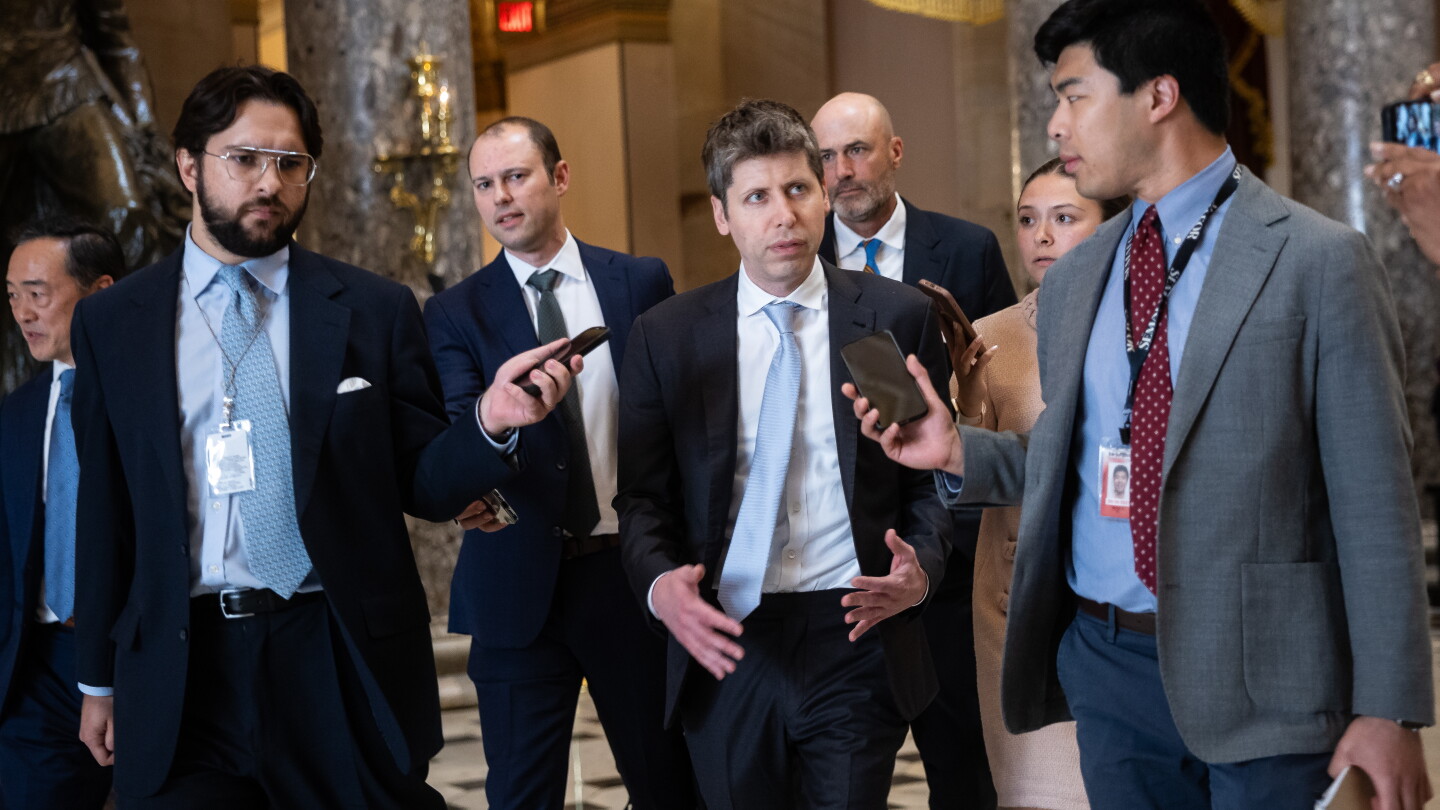
- ● OpenAI CEO Sam Altman has discussed the concept with Trump administration officials since early 2025.
- ● The proposal involves firms voluntarily ceding shares to the government.
- ● Potential returns could fund public purposes like household dividends.
- ● Anthropic is reportedly not involved in similar discussions.
Optimistic Outlook
Such a move could democratize AI's economic benefits, fostering broader public support and mitigating concerns about wealth concentration.
Pessimistic Outlook
Voluntary share ceding may face corporate resistance, and the complex mechanics of public benefit distribution could prove challenging to implement effectively.
Get the next signal in your inbox.
One concise weekly briefing with direct source links, fast analysis, and no inbox clutter.
More reporting around this signal.
Related coverage selected to keep the thread going without dropping you into another card wall.