Survey Reveals Widespread Concern Among Writers Regarding AI's Impact on Creativity and Trust
Sonic Intelligence
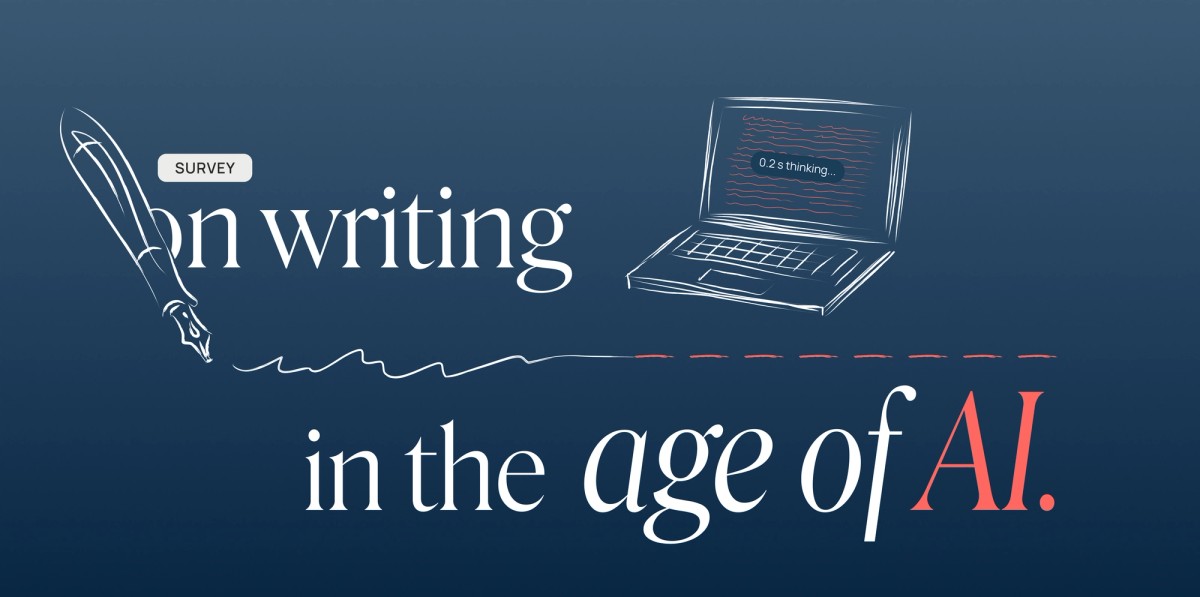
A survey of over 5,000 writers reveals deep concern about AI's impact on creativity.
Explain Like I'm Five
"Imagine you love drawing, but suddenly smart robots can draw super fast, and sometimes it's hard to tell if a drawing was made by a person or a robot. A big group of people who write stories were asked how they feel about these smart robots, and many of them are worried. They feel confused about how their writing will be special if robots can write too, and they don't trust things as much anymore."
Deep Intelligence Analysis
The survey's findings highlight several key areas of concern, including AI's effect on creative motivation, the perceived differences between human and AI-generated writing, the need for protections for human work, and the future viability of creative communities. The demographic skew towards fiction writers and online communities, while reflecting the survey's distribution, also points to the segments most immediately and directly impacted by generative AI's capabilities. The sheer volume of responses indicates a deep-seated anxiety that extends beyond anecdotal evidence, signaling a systemic challenge to the established norms of creative production and consumption.
The implications are far-reaching. The erosion of creative trust could lead to a bifurcated content landscape, where discerning between human and AI-generated work becomes increasingly difficult, potentially devaluing human artistry. For institutions, the imperative is clear: develop proactive strategies that address creator concerns, establish transparent guidelines for AI use, and explore models that genuinely empower human creativity rather than marginalizing it. Failure to bridge this gap risks fostering an adversarial relationship between technology and creators, ultimately diminishing the richness and authenticity of the creative ecosystem. This survey is a stark warning that the human element in AI's creative revolution cannot be an afterthought.
Impact Assessment
This extensive survey provides crucial quantitative and qualitative data on the human experience of AI's integration into creative fields, highlighting a significant disconnect between rapid technological deployment and institutional response, leading to widespread disorientation among creators.
Key Details
- Ellipsus conducted a survey on April 10, 2026, about AI's impact on creatives.
- The survey received 5,202 respondents.
- It generated 10,600 text responses, totaling over 527,000 words.
- The sample skewed towards fiction writers and online writing communities.
- A major finding indicates a "new baseline of suspicion" regarding AI's impact on creative trust.
Optimistic Outlook
The survey's findings can serve as a critical catalyst for developing ethical AI tools and policies that genuinely support human creativity rather than displacing it. By understanding creators' concerns, platforms and institutions can collaborate to build a more harmonious human-AI creative ecosystem.
Pessimistic Outlook
The "new baseline of suspicion" could lead to a significant erosion of trust in digital platforms and AI-generated content, potentially stifling innovation and creating a fragmented creative landscape. A lack of institutional response risks alienating a vast community of creators, impacting the quality and authenticity of future creative works.
Get the next signal in your inbox.
One concise weekly briefing with direct source links, fast analysis, and no inbox clutter.
More reporting around this signal.
Related coverage selected to keep the thread going without dropping you into another card wall.