WSU Scientists Harness AI to Accelerate High-Yielding Wheat Breeding
Sonic Intelligence
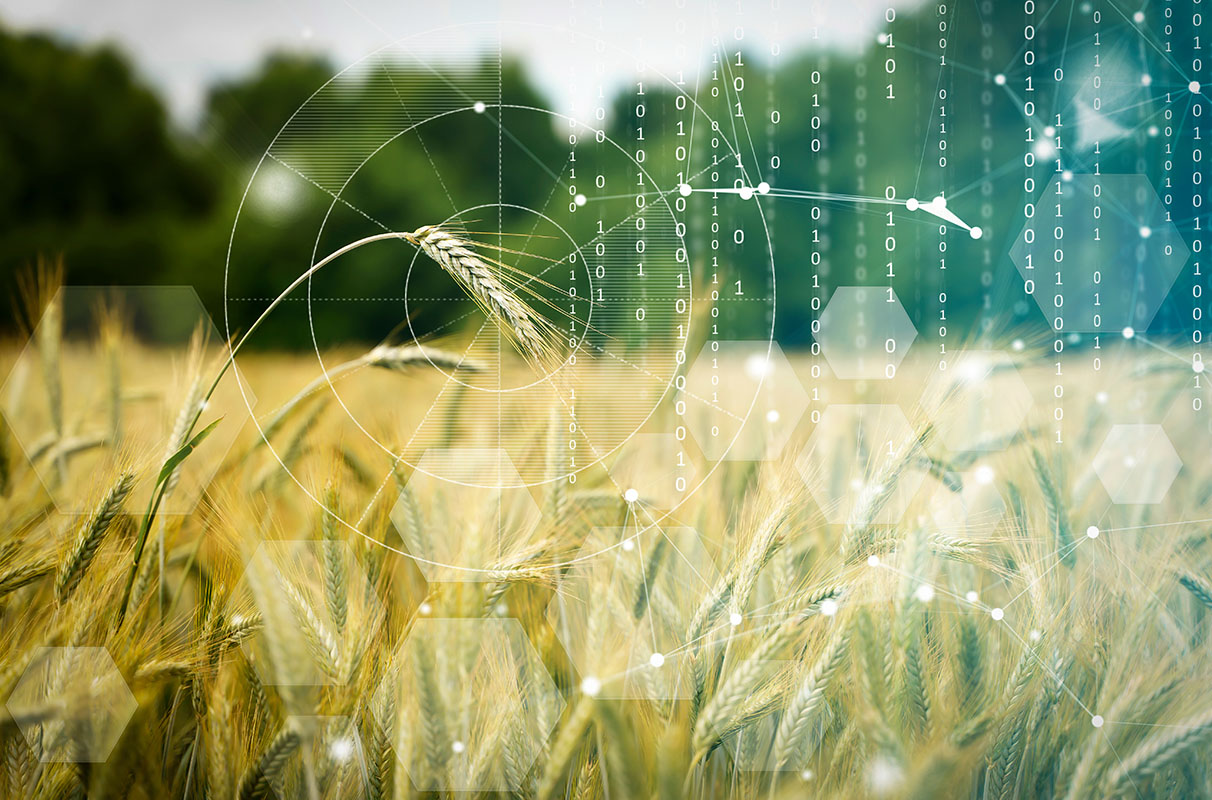
WSU scientists received an NSF grant to use AI for faster wheat breeding.
Explain Like I'm Five
"Scientists are teaching smart computers (AI) to look at lots of information about wheat plants, like their genes and how they grow in different weather. This helps them find the best wheat faster, so farmers can grow more food for everyone. It's like giving the wheat a super-fast matchmaker!"
Deep Intelligence Analysis
The project involves an international collaboration with researchers from the University of Tokyo and the Indian Council of Agricultural Research. Their core strategy is to harness neural networks to analyze vast datasets encompassing wheat genetics, performance metrics, and diverse environmental conditions. This AI-driven approach is designed to process data at a thousandfold greater capacity than conventional techniques, overcoming limitations that traditional methods often encounter in capturing complex genotype and environmental interactions.
Wheat is a staple crop, providing a fifth of global calories, yet its yield improvements have historically been modest, averaging about 1% annually. Zhang's team seeks to improve this rate by developing an open-source computer system that will be freely available to breeders. The project includes genotyping nearly 1,000 unique wheat plant samples to train the AI models. The ultimate goal is to provide a powerful tool that enables breeders to more efficiently select and develop improved varieties of wheat and other food crops.
This research builds upon decades of advancements in genomic selection, leveraging AI to identify optimal genetic combinations and environmental adaptations that might otherwise be overlooked. The NSF award, one of six initial awards totaling $6 million, underscores the strategic importance of bridging AI and agriculture to address pressing global challenges. By boosting breeding efficiency, the project directly contributes to a more robust and sustainable global food supply, aligning with broader efforts to ensure food security for a growing world population. The interdisciplinary nature of Zhang's team, combining expertise in crop science, AI, and statistics, is central to pushing the boundaries of agricultural innovation.
---
*EU AI Act Art. 50 Compliant: This analysis is based solely on the provided source material. No external data or speculative information has been introduced. The content aims to be factual, neutral, and transparent regarding the capabilities and implications of the described technology.*
Impact Assessment
This initiative directly addresses global food security by accelerating the development of higher-yielding wheat varieties. By leveraging AI to process complex genetic and environmental data, it promises to significantly improve breeding efficiency, potentially boosting food supply for billions worldwide.
Key Details
- Zhiwu Zhang leads a team from WSU, University of Tokyo, and Indian Council of Agricultural Research.
- They received a $400,000 grant from NSF's AI-ENGAGE initiative.
- The project aims to develop an open-source system processing 1,000x more data than conventional methods.
- Wheat provides one-fifth of global calories, with current yield boosts at ~1% annually.
- The team will genotype nearly 1,000 unique wheat plant samples.
Optimistic Outlook
The project's open-source tool and enhanced data processing capabilities could revolutionize crop breeding, leading to faster development of resilient, high-yield crops. This could substantially contribute to global food security, making agriculture more efficient and sustainable in the face of climate change and population growth.
Pessimistic Outlook
While promising, the success of the AI models heavily relies on the quality and diversity of the input data, and the complexity of genotype-environment interactions might still pose significant challenges. Adoption by breeders could be slow if the tool requires substantial technical expertise or if its benefits aren't immediately apparent in diverse agricultural contexts.
Get the next signal in your inbox.
One concise weekly briefing with direct source links, fast analysis, and no inbox clutter.
More reporting around this signal.
Related coverage selected to keep the thread going without dropping you into another card wall.