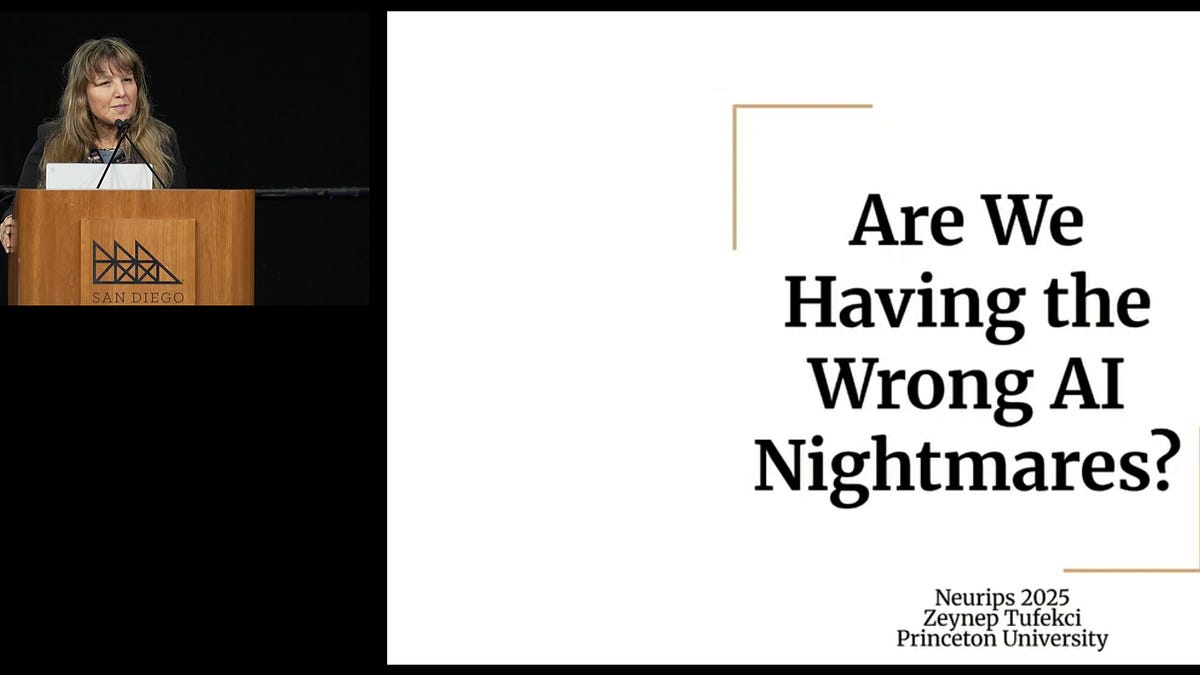
Zeynep Tufekci Warns Against Focusing on the Wrong AI Nightmares
Sonic Intelligence
Zeynep Tufekci argues that society is focusing on the wrong AI risks, primarily AGI, instead of the more immediate threat of 'Artificial Good-Enough Intelligence'.
Explain Like I'm Five
"Imagine grown-ups are worried about robots becoming super smart and taking over the world. But this smart lady, Zeynep, says we should be more worried about robots becoming 'good enough' to trick us, like making fake videos that look real. We need to learn how to tell what's real and what's not!"
Deep Intelligence Analysis
Tufekci draws parallels to historical technological shifts, such as the printing press and the automobile, to illustrate how early conversations often fixate on incremental substitutions rather than systemic second-order effects. She argues that the focus on whether AI can beat humans at specific tasks distracts from the broader institutional and societal implications of its widespread deployment.
The core concern is that generative AI can undermine the correlations that society relies on to infer trustworthiness and legitimacy. As these signals become unreliable, the transition to new filters and mechanisms for establishing trust can be costly and disruptive. Tufekci's analysis underscores the need for a more nuanced and comprehensive understanding of AI's potential impacts, urging a shift in focus from futuristic scenarios to the immediate challenges posed by readily deployable AI technologies. This includes addressing the ethical and societal implications of AI-generated content and developing strategies to mitigate the erosion of trust in information and institutions. Transparency in AI development and deployment is crucial to ensure accountability and prevent misuse.
Impact Assessment
Tufekci's analysis highlights the importance of considering the societal and institutional impacts of AI beyond its technical capabilities. Focusing on the erosion of trust and credibility is crucial for navigating the challenges posed by rapidly advancing AI technologies.
Key Details
- Tufekci argues that 'Artificial Good-Enough Intelligence' poses a more immediate risk than AGI.
- She believes generative AI breaks correlations used to infer effort, sincerity, authenticity, and credibility.
- Early technology impact conversations often focus on familiar benchmarks rather than systemic second-order effects.
Optimistic Outlook
By recognizing the potential pitfalls of 'Artificial Good-Enough Intelligence', society can proactively develop new filters and mechanisms to maintain trust and credibility. This could lead to a more resilient and adaptable social fabric in the face of technological change.
Pessimistic Outlook
The erosion of established signals like effort and authenticity could lead to widespread distrust and social instability. The transition to new filters may be costly and disruptive, potentially exacerbating existing inequalities.
Get the next signal in your inbox.
One concise weekly briefing with direct source links, fast analysis, and no inbox clutter.
More reporting around this signal.
Related coverage selected to keep the thread going without dropping you into another card wall.