The AI Capability-Reliability Gap: Adoption Struggles Despite High Usage
Sonic Intelligence
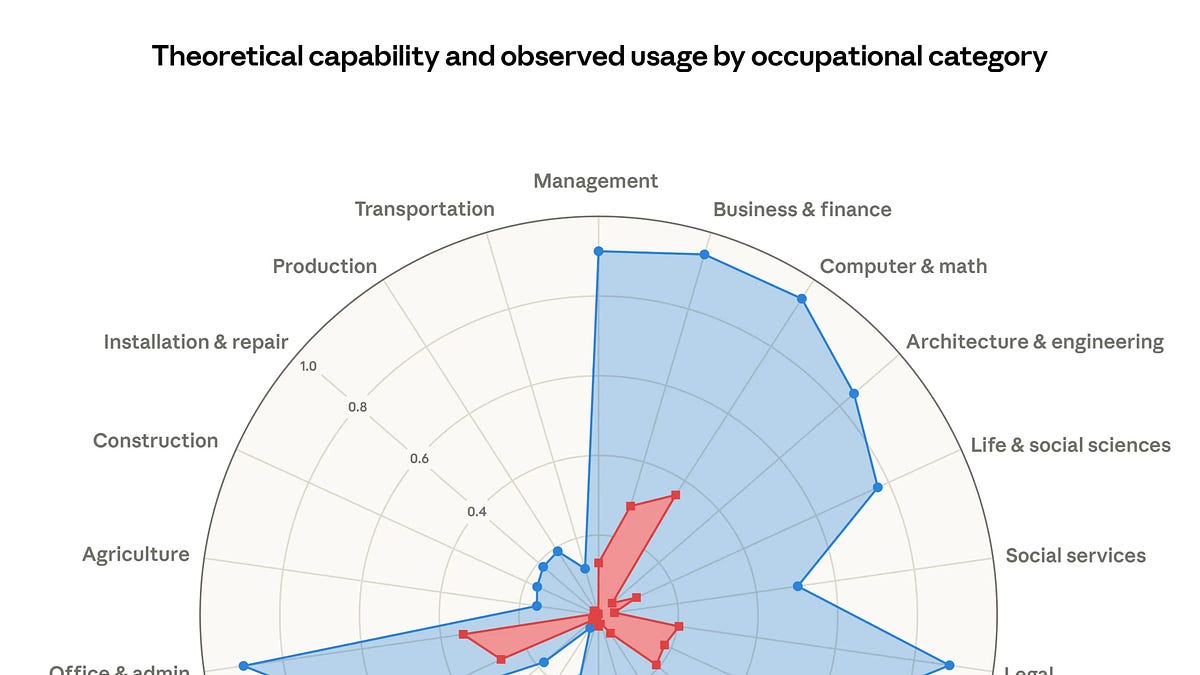
Despite high usage of generative AI, many companies are abandoning AI initiatives due to a gap between theoretical capabilities and real-world reliability.
Explain Like I'm Five
"Imagine everyone is excited about a new robot that can do amazing things, but it keeps breaking down or doing things wrong. This article talks about how many companies are finding that AI is like that robot – it has a lot of potential, but it's not always reliable in the real world."
Deep Intelligence Analysis
S&P Global found that 42% of companies abandoned most of their AI initiatives, a sharp increase from 17% the previous year. The average organization scrapped 46% of proof-of-concept projects before reaching production. PwC's Global CEO Survey revealed that 56% of CEOs reported neither revenue increase nor cost decrease from AI over the prior 12 months. BCG's AI Radar reported that 60% of CEOs have intentionally slowed AI implementation due to concerns over errors and malfunctions.
The U.S. Census Bureau data shows that AI use in actual production rose from 3.7% in September 2023 to roughly 10% by September 2025. Even when broadening the criteria to include any business function, the number only jumped to 17.6%. This highlights the gap between the hype surrounding AI and its actual implementation in businesses.
The article suggests that the problem is not the lack of AI capabilities, but rather the difficulty in translating those capabilities into reliable and valuable solutions. This "capability-reliability gap" needs to be addressed for AI to reach its full potential and deliver tangible benefits to businesses.
Visual Intelligence
null
Auto-generated diagram · AI-interpreted flow
Impact Assessment
This article highlights a critical disconnect between the hype surrounding AI and its actual implementation in businesses. The high abandonment rates and lack of tangible benefits suggest that many companies are struggling to translate AI capabilities into reliable and valuable solutions. This could lead to disillusionment and slower adoption of AI in the long run.
Key Details
- 42% of companies abandoned most of their AI initiatives, up from 17% the prior year (S&P Global).
- The average organization scrapped 46% of proof-of-concept projects before reaching production (S&P Global).
- 56% of CEOs report neither revenue increase nor cost decrease from AI over the prior 12 months (PwC).
- 60% of CEOs have intentionally slowed AI implementation due to concerns over errors and malfunctions (BCG).
- AI use in actual production rose from 3.7% in September 2023 to roughly 10% by September 2025 (U.S. Census Bureau).
Optimistic Outlook
The recognition of the capability-reliability gap can drive more realistic expectations and focused efforts on addressing the challenges of AI implementation. As companies learn from their failures and develop better strategies, the gap can be narrowed, leading to more successful AI deployments and tangible benefits. The increasing adoption of AI coding assistants suggests that targeted applications can deliver value.
Pessimistic Outlook
The high failure rates and lack of ROI may discourage companies from investing further in AI. Concerns over errors, malfunctions, and security issues could further slow down adoption. If the capability-reliability gap is not addressed effectively, AI may fail to live up to its potential and become another overhyped technology.
Get the next signal in your inbox.
One concise weekly briefing with direct source links, fast analysis, and no inbox clutter.
More reporting around this signal.
Related coverage selected to keep the thread going without dropping you into another card wall.