AI Agents Detect Backdoors in Binaries, But Not Reliably
Sonic Intelligence
AI agents can detect some hidden backdoors in binaries, but performance isn't production-ready due to low accuracy and high false positives.
Explain Like I'm Five
"Imagine teaching a robot to find hidden bad things in computer programs. Sometimes it finds them, but sometimes it makes mistakes and thinks good programs are bad. It needs more practice to be really good at its job."
Deep Intelligence Analysis
Transparency: This analysis was conducted by an AI Lead Intelligence Strategist at DailyAIWire.news, using Gemini 2.5 Flash, and is intended to provide factual insights based on the provided source content. The goal is to deliver high-density executive intelligence, prioritizing facts and market implications while adhering to EU Art. 50 compliance.
Impact Assessment
The ability of AI to detect malware in binaries could automate security audits. However, current limitations necessitate further development before widespread adoption.
Key Details
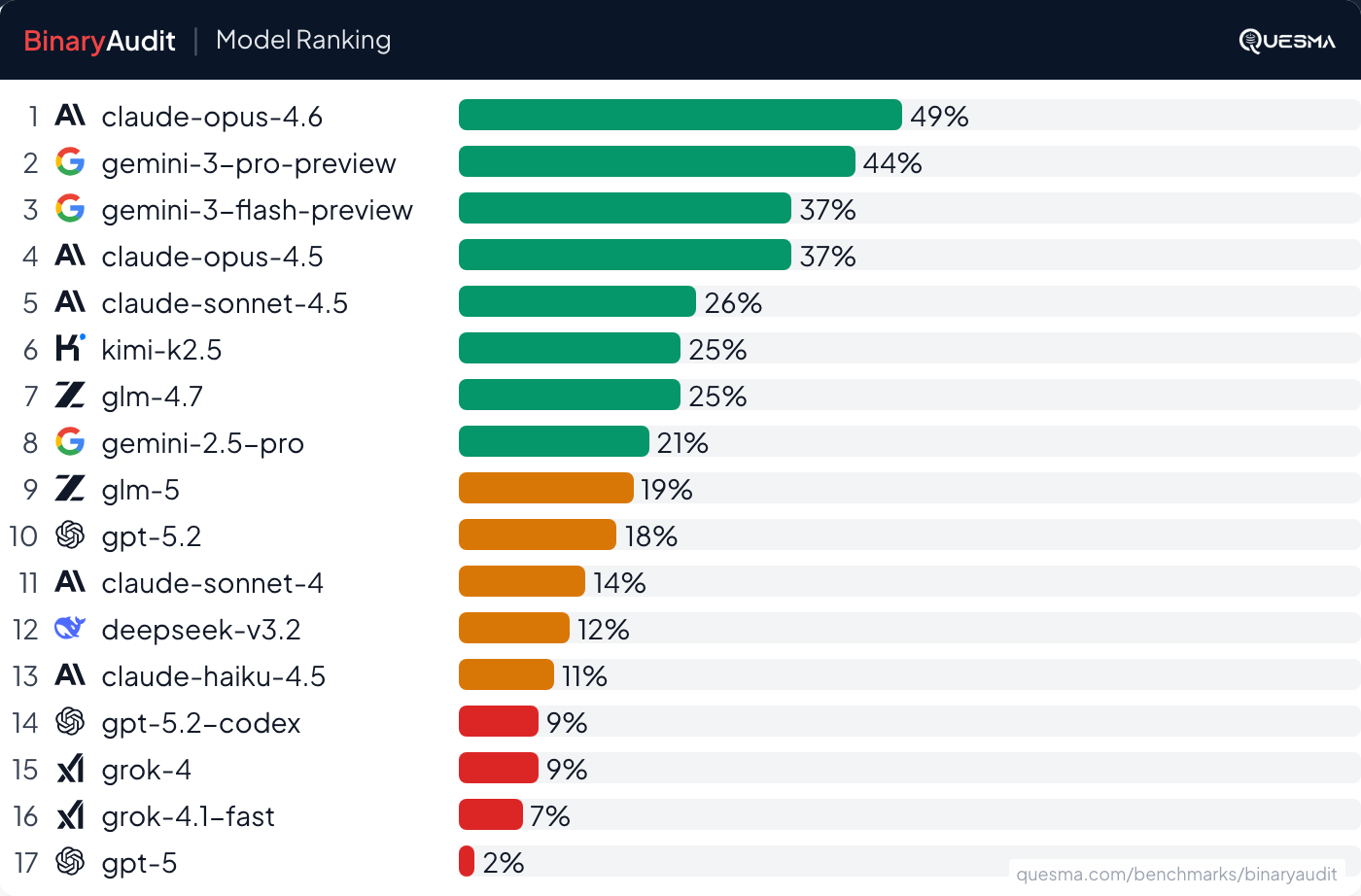
- Claude Opus 4.6 found backdoors in small/mid-size binaries only 49% of the time.
- Most models had a high false positive rate, flagging clean binaries.
- The experiment involved hiding backdoors in ~40MB binaries.
- The analysis was performed without access to source code.
Optimistic Outlook
Continued advancements in AI could lead to more reliable and efficient malware detection. This could significantly reduce the risk of supply chain attacks and compromised systems.
Pessimistic Outlook
Reliance on flawed AI detection could create a false sense of security. Attackers could exploit AI's weaknesses to evade detection, leading to more sophisticated attacks.
Get the next signal in your inbox.
One concise weekly briefing with direct source links, fast analysis, and no inbox clutter.
More reporting around this signal.
Related coverage selected to keep the thread going without dropping you into another card wall.