AI's Pressure on Open Source Drives Shift to "Open Interface" Paradigm
Sonic Intelligence
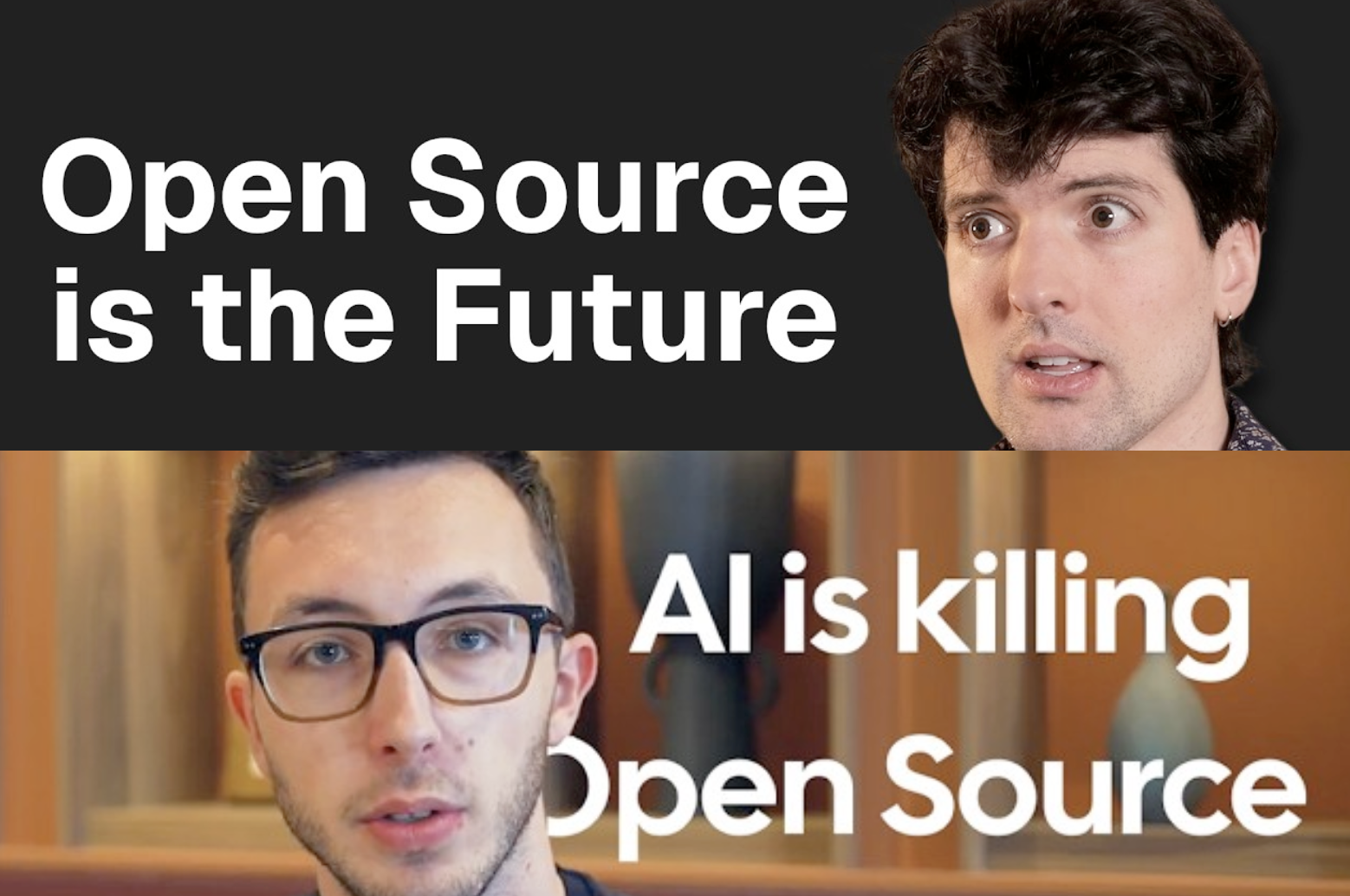
AI's impact on open source is forcing a shift towards "Open Interface" models to manage maintainer burden and security risks.
Explain Like I'm Five
"Imagine you have a special toy box. Open source means everyone can see how your toys are made and suggest new ways to play. But too many suggestions can make it messy and hard to keep safe. "Open Interface" means people can still play with your toys in new ways using their own robot helpers, but they don't need to see how the toys are built inside, keeping your toy box tidy and safe."
Deep Intelligence Analysis
The core issue stems from the dramatically reduced cost of generating pull requests, often by AI, which has overwhelmed human review capacities. Concurrently, advanced AI models are making the discovery of security vulnerabilities more efficient, turning security into a "cat and mouse race" that finite-resourced software businesses struggle to win. The "Open Interface" concept seeks to address these challenges by defining a new standard for software interaction, where AI agents can build and operate on top of SaaS products through well-defined, secure interfaces rather than direct code access. This approach aims to provide the extensibility desired by users, as advocated by figures like Theo, while mitigating the maintainer overload and security vulnerabilities faced by projects like Cal.com. The author posits this as a necessary "table stakes" for software in 2026 and beyond.
The adoption of an "Open Interface" model could fundamentally reshape the B2B SaaS landscape, fostering a new era of AI-driven customization and integration. It suggests a future where software products are designed from the ground up to be programmatically accessible and extensible by autonomous agents, moving beyond traditional user interfaces. While offering significant benefits in terms of adaptability and efficiency, this paradigm also introduces new challenges related to API governance, security of interfaces, and the potential for vendor lock-in if interface standards are not truly open. The success of "Open Interface" will depend on the industry's ability to establish robust, secure, and widely adopted standards that empower AI agents without compromising the integrity or competitive landscape of the underlying SaaS platforms.
Visual Intelligence
flowchart LR
    A[Traditional Open Source] --> B{AI Increases PRs + Exploits?};
    B -- Yes --> C[Maintainer Overload];
    B -- Yes --> D[Security Vulnerabilities];
    C --> E[Project Closes Source];
    D --> E;
    E --> F[Limited AI Extensibility];
    F --> G[Propose Open Interface];
    G --> H[AI Agents Build on API];
    H --> I[Core Code Remains Private];
    I --> J[Balanced Extensibility Security];
Auto-generated diagram · AI-interpreted flow
Impact Assessment
The increasing burden on open-source maintainers due to AI-accelerated pull request generation and vulnerability discovery threatens the sustainability of open-source projects. The "Open Interface" concept proposes a critical evolution in software architecture, allowing AI agents to interact with SaaS products without the full overhead of open-sourcing, potentially redefining B2B software development and consumption.
Key Details
- Cal.com, a prominent open-source project, recently transitioned to closed source.
- The cost of creating pull requests has become significantly lower than reviewing them, leading to maintainer overload.
- AI models can accelerate security vulnerability discovery, increasing the burden on software businesses.
- The author proposes "Open Interface" as a new paradigm for AI agents to build on SaaS products without requiring open-sourcing.
- "Open Interface" is posited as the "new table stakes for 2026 and forward."
Optimistic Outlook
The "Open Interface" model could unlock unprecedented innovation by allowing AI agents to seamlessly integrate and build upon existing SaaS platforms, leading to highly customized and efficient business tools. This approach could foster a new ecosystem of AI-driven extensions and services, benefiting users with more adaptable software while protecting core intellectual property for developers.
Pessimistic Outlook
The shift to "Open Interface" might centralize control further with SaaS providers, as they define the interfaces and access policies for AI agents, potentially stifling true decentralization and community-driven innovation. Security risks could persist or even increase if these interfaces become new attack surfaces for sophisticated AI-driven exploits, requiring constant vigilance and robust API security measures.
Get the next signal in your inbox.
One concise weekly briefing with direct source links, fast analysis, and no inbox clutter.
More reporting around this signal.
Related coverage selected to keep the thread going without dropping you into another card wall.