Back to Wire
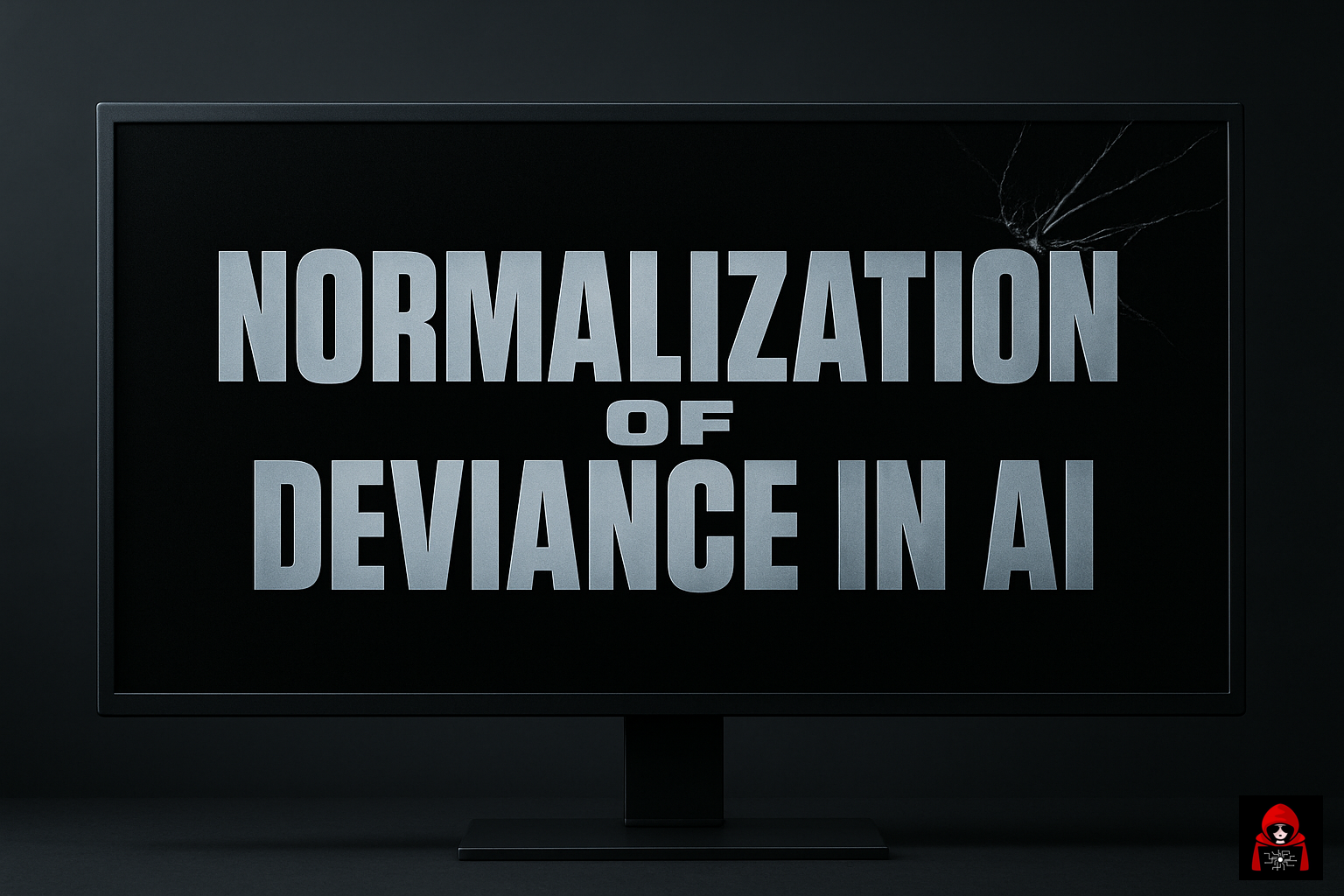
AI Industry Faces 'Normalization of Deviance' Risk
Security

AI Industry Faces 'Normalization of Deviance' Risk

Source: Embracethered Original Author: Wunderwuzzi 2 min read Intelligence Analysis by Gemini

Sonic Intelligence

00:00 / 00:00
Signal Summary

The AI industry risks normalizing the over-reliance on potentially unreliable LLM outputs, mirroring the cultural failures of the Challenger disaster.

Explain Like I'm Five

"Imagine if grown-ups started ignoring warning signs because things usually work out okay. That's what's happening with AI, and it could be dangerous!"

Original Reporting
Embracethered

Read the original article for full context.

Read Article at Source

Deep Intelligence Analysis

The concept of 'Normalization of Deviance' in AI, drawing parallels to the Space Shuttle Challenger disaster, highlights a critical risk in the industry: the gradual acceptance of potentially unreliable LLM outputs. This over-reliance on probabilistic and non-deterministic models without sufficient validation can lead to safety incidents and security breaches. The article emphasizes that LLMs are inherently unreliable actors in system design, requiring robust downstream security controls. The increasing prevalence of prompt injection exploits demonstrates that system designers and developers are either unaware of this risk or are simply accepting the deviance. This normalization is fueled by the tendency to confuse the absence of a successful attack with the presence of robust security. The consequences of this normalization can range from benign errors, such as hallucinations and context loss, to more dangerous scenarios involving adversarial inputs and backdoors. The article cites examples of AI agents making mistakes in day-to-day usage, such as formatting hard drives and wiping databases, as evidence of this risk. The EU AI Act's risk-based approach is particularly relevant in this context. The Act requires that high-risk AI systems undergo rigorous testing and validation to ensure their safety and reliability. This includes addressing the potential for adversarial attacks and ensuring that systems are resilient to unexpected inputs. The industry must prioritize the development of robust security measures, including input validation, output sanitization, and continuous monitoring. It is also crucial to foster a culture of safety and transparency, where developers are encouraged to report potential risks and vulnerabilities. By learning from past failures and adopting a proactive approach to risk management, the AI industry can prevent the 'Normalization of Deviance' from undermining the responsible development and deployment of AI.
AI-assisted intelligence report · EU AI Act Art. 50 compliant

Impact Assessment

Over-trusting AI systems without proper validation can lead to safety incidents and security breaches. This normalization of deviance poses a significant risk to the responsible development and deployment of AI.

Key Details

  • The 'Normalization of Deviance' describes the gradual acceptance of deviations from proper behavior or rules.
  • LLMs are inherently unreliable actors in system design, requiring downstream security controls.
  • Organizations are increasingly trusting LLM outputs without sufficient validation, leading to potential safety and security incidents.
  • Adversarial inputs, like prompt injection, can exploit systems due to this normalization.

Optimistic Outlook

Increased awareness of the 'Normalization of Deviance' can drive the development of more robust security measures and validation processes. By learning from past failures, the AI industry can build safer and more reliable systems.

Pessimistic Outlook

If the industry fails to address the 'Normalization of Deviance', it risks repeating past mistakes, leading to potentially catastrophic consequences. The increasing complexity of AI systems makes it more challenging to identify and mitigate these risks.

Stay on the wire

Get the next signal in your inbox.

One concise weekly briefing with direct source links, fast analysis, and no inbox clutter.

Free. Unsubscribe anytime.

Continue reading

More reporting around this signal.

Related coverage selected to keep the thread going without dropping you into another card wall.