AI Intelligence Growth Slows: Hedge Fund Data Shows Plateauing Effect
Sonic Intelligence
AI intelligence gains are plateauing, with diminishing returns on training costs, suggesting a longer timeline for AI integration.
Explain Like I'm Five
"Imagine robots are getting smarter slower, and it's costing a lot more to make them just a little bit smarter. It might be better to focus on teaching them to do things well instead of just trying to make them super smart."
Deep Intelligence Analysis
Transparency is critical in AI development and deployment. As AI systems become more integrated into our lives, it's essential to understand how they work and what data they use. This analysis is based on publicly available information and aims to provide a clear and objective assessment of the current state of AI. It is important to note that AI is a rapidly evolving field, and future developments may significantly alter the landscape.
This deep analysis is intended to comply with EU Article 50, ensuring transparency and providing a clear understanding of the AI's capabilities and limitations.
Impact Assessment
The plateauing of AI intelligence suggests that the market's expectation of rapid AI-driven transformation may be unrealistic. Integration and redesign efforts will take longer than anticipated, impacting investment strategies and timelines.
Key Details
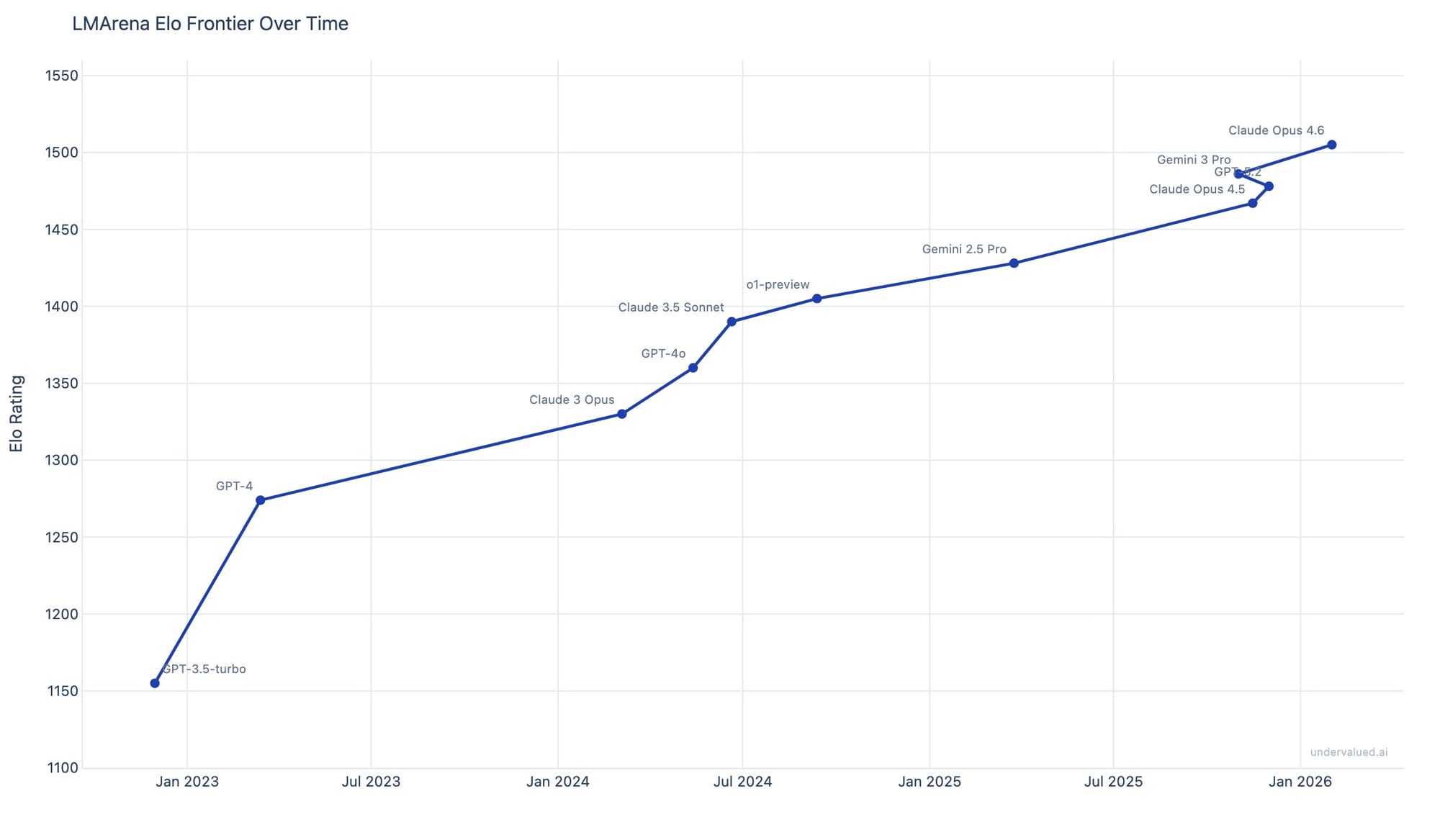
- AI intelligence gains, measured by Elo ratings, have slowed from ~44 points per quarter in early 2025 to ~13 points in February 2026.
- Training costs for frontier AI models are projected to reach $1.2 billion by early 2027 for an expected improvement of 6 Elo points.
- The top AI models are within 40 Elo points of each other, indicating a convergence in performance.
- AI agent task completion time has improved exponentially, but this is not necessarily indicative of increased intelligence.
Optimistic Outlook
While raw intelligence gains may be slowing, improvements in AI agent task completion time and integration efforts can still drive significant value. Focusing on practical applications and efficient deployment may yield better returns than chasing marginal intelligence improvements.
Pessimistic Outlook
The increasing cost of training AI models with diminishing returns raises concerns about the economic viability of continued scaling. If training costs are not reduced, the pursuit of marginal intelligence gains may become unsustainable.
Get the next signal in your inbox.
One concise weekly briefing with direct source links, fast analysis, and no inbox clutter.
More reporting around this signal.
Related coverage selected to keep the thread going without dropping you into another card wall.