AI Power Surge: Labs Bypass Grid with Onsite Gas Plants as Demand Explodes to 28GW by 2026
Sonic Intelligence
AI labs and hyperscalers are rapidly adopting onsite power generation, primarily with gas turbines, to circumvent an overloaded grid and meet explosive AI datacenter energy demand, projected to hit 28GW in the US by 2026.
Explain Like I'm Five
"AI computers need a LOT of electricity, like a whole city's worth. But the old power lines can't send enough. So, big AI companies are building their own small power stations right next to their computers, using gas engines, so they can get power super fast and keep making AI smarter."
Deep Intelligence Analysis
The economic imperative for AI labs to bypass this grid bottleneck is immense. An AI cloud can generate an astonishing $10-12 billion dollars per gigawatt annually, meaning even a six-month delay for a 400 MW datacenter could cost billions. In response, AI infrastructure developers are pivoting towards onsite power generation, a strategic shift driven by both necessity and the enormous revenue potential.
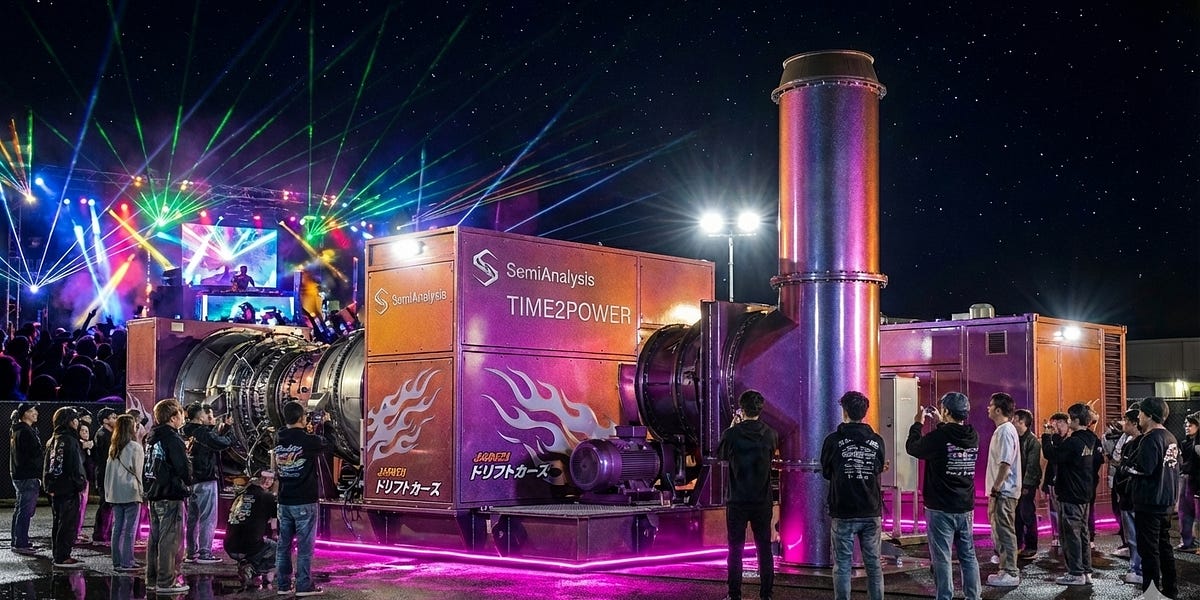
Elon Musk's xAI demonstrated this paradigm shift by building a 100,000-GPU cluster in just four months, entirely bypassing the grid with truck-mounted gas turbines and engines. xAI has already deployed over 500 MW of turbines, highlighting speed as a critical competitive advantage in the race for gigawatt-scale datacenters. Following suit, hyperscalers and major AI labs are increasingly adopting this model. OpenAI and Oracle, for instance, placed the largest order ever for onsite gas generation with a 2.3 GW plant in Texas, slated for October 2025.
This trend is fueling a triple-digit annual growth in the onsite gas generation market, attracting a diverse range of suppliers. Beyond established players like GE Vernova and Siemens Energy, new entrants are making significant strides. Doosan Enerbility secured a 1.9 GW order for xAI, while Wärtsilä, traditionally a ship engine manufacturer, has signed 800 MW of US datacenter contracts by adapting its engines. Even Boom Supersonic has entered the fray, leveraging a 1.2 GW turbine contract with Crusoe to fund its jet development.
However, this decentralized power strategy is not without its challenges. Onsite power is often more expensive than grid power, and navigating complex permitting processes can lead to delays, as observed with some Oracle/Stargate facilities. Nevertheless, the urgent demand for AI compute capacity is driving unprecedented innovation and investment in energy infrastructure, reshaping the power landscape for the digital future.
Impact Assessment
The energy crisis is a critical bottleneck for AI's explosive growth, with grid infrastructure unable to keep pace. Onsite generation solutions are not just a temporary fix but a strategic shift enabling AI giants to scale rapidly, unlocking billions in revenue and reshaping energy infrastructure markets.
Key Details
- ● US AI Power Demand forecasted to grow from ~3GW in 2023 to over 28GW by 2026.
- ● xAI deployed over 500MW of turbines near its datacenters in four months.
- ● OpenAI and Oracle placed a 2.3GW onsite gas generation order in Texas for October 2025.
- ● Wärtsilä signed 800MW of US datacenter contracts.
- ● Doosan Enerbility booked a 1.9GW order for xAI.
Optimistic Outlook
This innovative shift to onsite power generation provides a fast track for AI development, ensuring that compute capacity can meet demand without being constrained by an aging grid. It fosters new markets for power generation technologies and drives significant economic activity, ultimately accelerating AI advancements and their broad benefits.
Pessimistic Outlook
Relying heavily on onsite gas generation raises environmental concerns regarding increased carbon emissions, even as global efforts push for decarbonization. Additionally, higher power costs and complex permitting processes associated with these private plants could introduce new challenges, potentially leading to project delays and increased operational expenses for AI labs.
Get the next signal in your inbox.
One concise weekly briefing with direct source links, fast analysis, and no inbox clutter.
More reporting around this signal.
Related coverage selected to keep the thread going without dropping you into another card wall.