AI Removes Constraints, Redefines Knowledge Work Economics
Sonic Intelligence
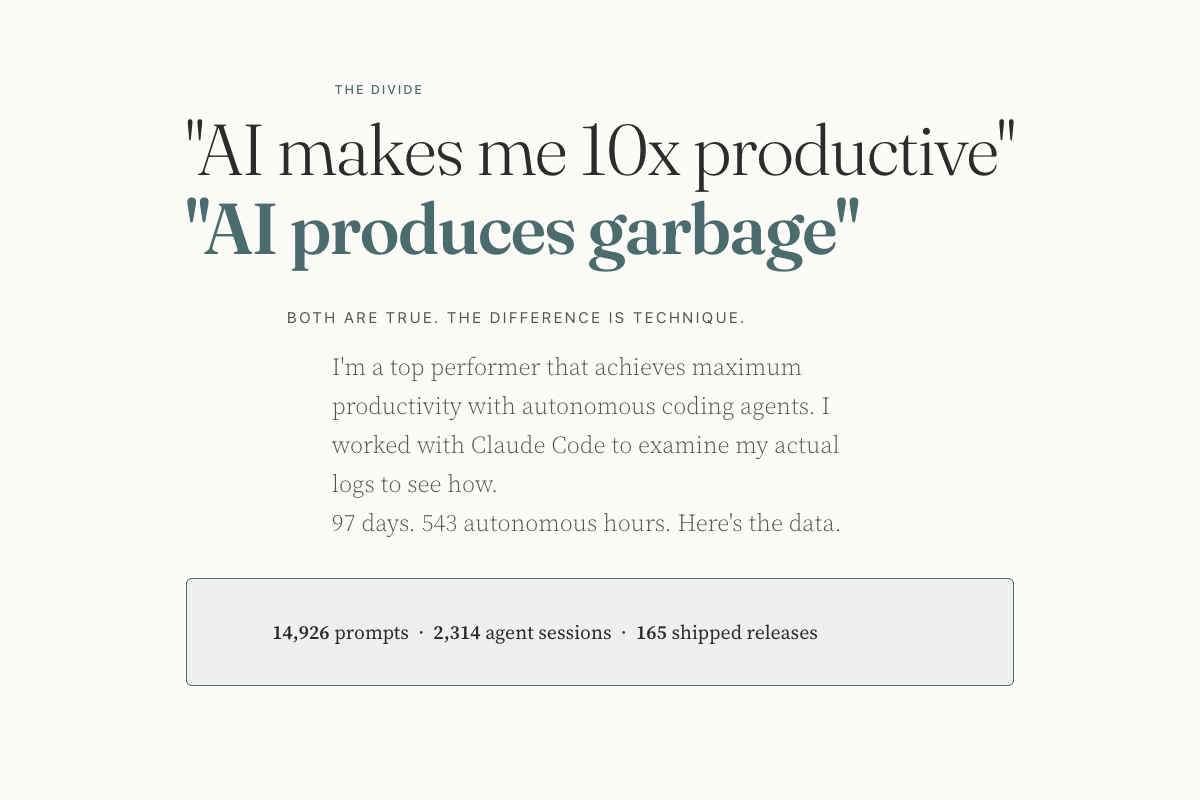
Autonomous AI agents are collapsing the effort constraint in knowledge work, fundamentally altering how organizations prioritize and build.
Explain Like I'm Five
"Imagine having a super-fast helper that can do all your homework. This article talks about how that helper changes what you can learn and build."
Deep Intelligence Analysis
The numbers presented, such as Claude Code's billion-dollar revenue and its ability to reproduce a year of architectural work in a single hour, support the claim that these AI agents are significantly increasing productivity. The author's personal experience of completing a year's worth of professional development work in a matter of weeks further illustrates the transformative potential of this technology.
However, the briefing also acknowledges the potential challenges associated with this shift. The rapid displacement of human workers and the need for workforce retraining are significant concerns. Organizations must adapt their planning and prioritization processes to account for the changing economics of knowledge work. The long-term implications of this shift are still uncertain, but the briefing argues that decision-makers in both the private and public sectors need to understand these changes now to prepare for the future.
Impact Assessment
This shift impacts how organizations prioritize projects, test ideas, and manage backlogs. The collapse of the effort constraint allows for faster innovation and development cycles.
Key Details
- Autonomous AI agents can deliver high-quality work continuously with minimal human intervention.
- Claude Code generated over $1 billion in revenue by November 2025.
- Claude Code reportedly reproduced a year of architectural work in a single hour.
- The author built six internal tools in weeks that previously would have taken a year.
Optimistic Outlook
Organizations can now pursue previously infeasible projects and rapidly test new ideas. This could lead to a surge in innovation and the development of new products and services.
Pessimistic Outlook
The rapid shift could lead to job displacement and require significant workforce retraining. Organizations must adapt their planning and prioritization processes to account for the changing economics of knowledge work.
Get the next signal in your inbox.
One concise weekly briefing with direct source links, fast analysis, and no inbox clutter.
More reporting around this signal.
Related coverage selected to keep the thread going without dropping you into another card wall.