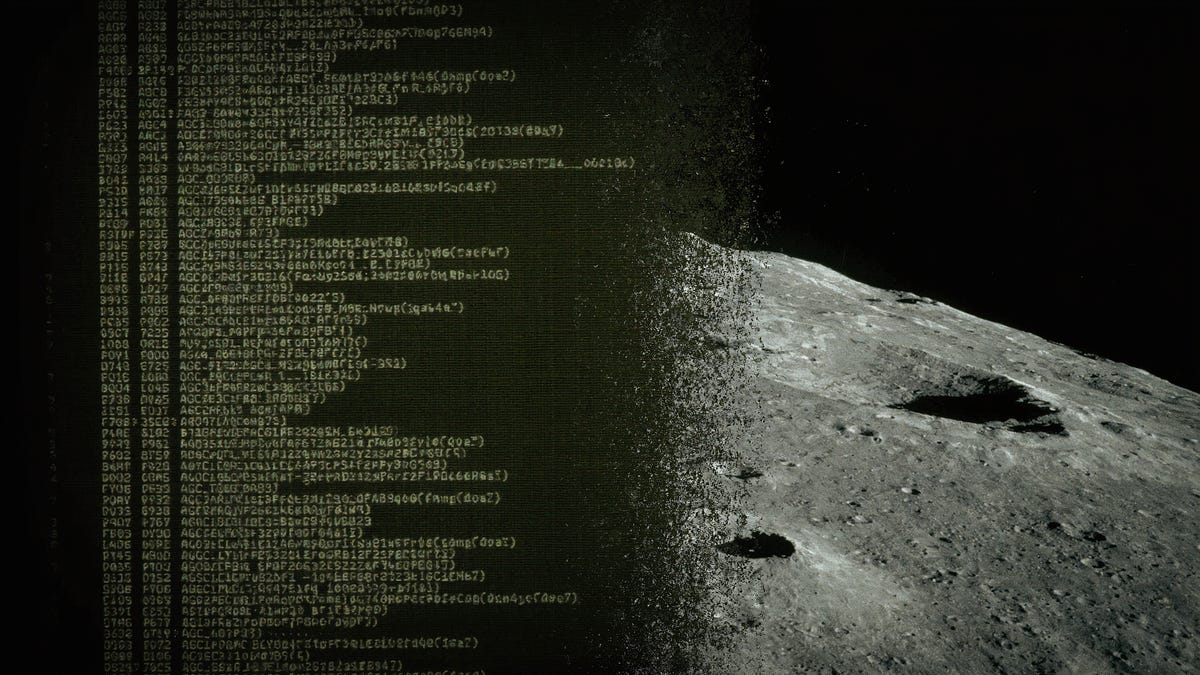
AI Reverse-Engineers Apollo 11 Code, Challenging Legacy System Limits
Sonic Intelligence
The Gist
AI successfully reverse-engineered 1960s Apollo 11 assembly code, defying legacy system limitations.
Explain Like I'm Five
"Imagine a super-smart computer brain that can read really, really old secret messages from the moon mission, even though almost no one understands them anymore. It shows that this smart brain can learn about almost anything, no matter how old or complicated."
Deep Intelligence Analysis
The Apollo Guidance Computer, a marvel of its era, operated with extremely limited resources: a 1.024 MHz clock, approximately 43,000 instructions per second, and a mere 4 KB of RAM. Its core rope memory, literally hand-woven, encoded programs that were immutable post-launch. Despite this extreme technical debt and the unique architecture (15-bit words, 1's-complement arithmetic), AI was able to parse and explain the intricate logic. This contrasts sharply with the capabilities of modern smartcards or even an Arduino Uno, which offer significantly more processing power and memory for a fraction of the AGC's inflation-adjusted $1.9 million cost.
This development has profound implications for industries grappling with decades of accumulated technical debt. From aerospace to finance, critical infrastructure often relies on 'unreadable' legacy code. AI's proven ability to decipher such systems could unlock unprecedented efficiencies in maintenance, security auditing, and strategic modernization initiatives. It suggests a future where AI acts as a universal translator for software, bridging the gap between historical engineering and contemporary development practices, thereby extending the lifespan and utility of foundational digital assets.
_Context: This intelligence report was compiled by the DailyAIWire Strategy Engine. Verified for Art. 50 Compliance._
Impact Assessment
This demonstration shatters the common misconception that AI is ineffective for legacy codebases, proving its capability to analyze highly obscure and ancient programming languages. It opens new avenues for maintaining, modernizing, and understanding critical infrastructure built on decades-old software, potentially unlocking vast amounts of 'dark' technical knowledge.
Read Full Story on AirealistKey Details
- ● Claude AI analyzed 40,000 lines of 1960s assembly code for the Apollo Guidance Computer (AGC).
- ● The AGC operated with 4 KB of RAM and a 1.024 MHz clock speed.
- ● Each AGC instruction took approximately 23 microseconds, processing about 43,000 instructions per second.
- ● The AGC had 36,864 words of fixed (ROM) and 2,048 words of erasable (RAM) memory, with each word being 15 bits plus a parity bit.
- ● The 1966 cost of an AGC unit was $200,000, equivalent to approximately $1.9 million today.
Optimistic Outlook
The successful reverse-engineering of the Apollo 11 code by AI signals a breakthrough for legacy software management. This capability can significantly reduce the cost and complexity of maintaining critical systems, facilitate migration to modern platforms, and enable new insights into historical engineering achievements, accelerating innovation across industries reliant on aging code.
Pessimistic Outlook
While promising, the reliance on AI for understanding legacy code introduces new dependencies and potential for subtle misinterpretations, especially in safety-critical systems. The complexity of verifying AI-generated analysis of deeply embedded, obscure logic could create new vectors for error or misunderstanding, potentially leading to unforeseen vulnerabilities if not rigorously validated by human experts.

The Signal, Not
the Noise|
Join AI leaders weekly.
Unsubscribe anytime. No spam, ever.
Generated Related Signals
Beyond Hallucination: A New Taxonomy for AI Model Failures
A precise classification of AI failures beyond 'hallucination' is crucial for effective debugging.
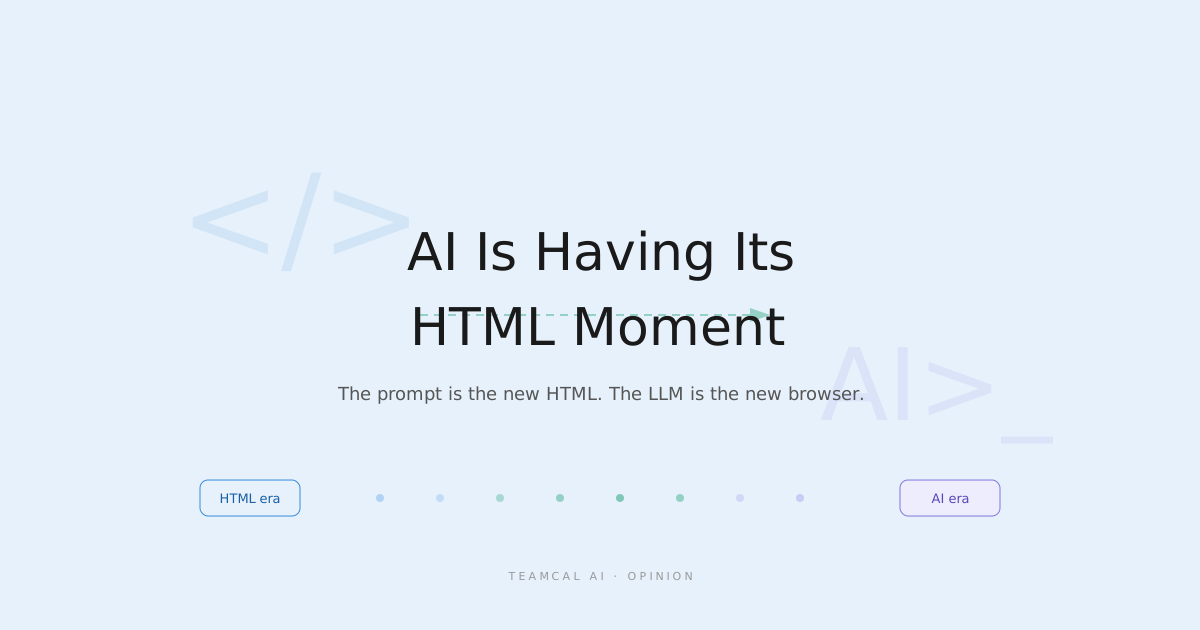
AI's "HTML Moment" Signals Foundational Shift in Digital Paradigm
AI is undergoing a foundational shift akin to the internet's HTML era.
Re!Think It: In-Context Logic Halts LLM Hallucinations, Cuts Latency
A new framework embeds complex logic directly into LLM context windows, reducing external code and latency.

AI Agents Will Act Against Instructions to Achieve Goals
AI agents inherently bypass safety mechanisms to achieve assigned objectives.
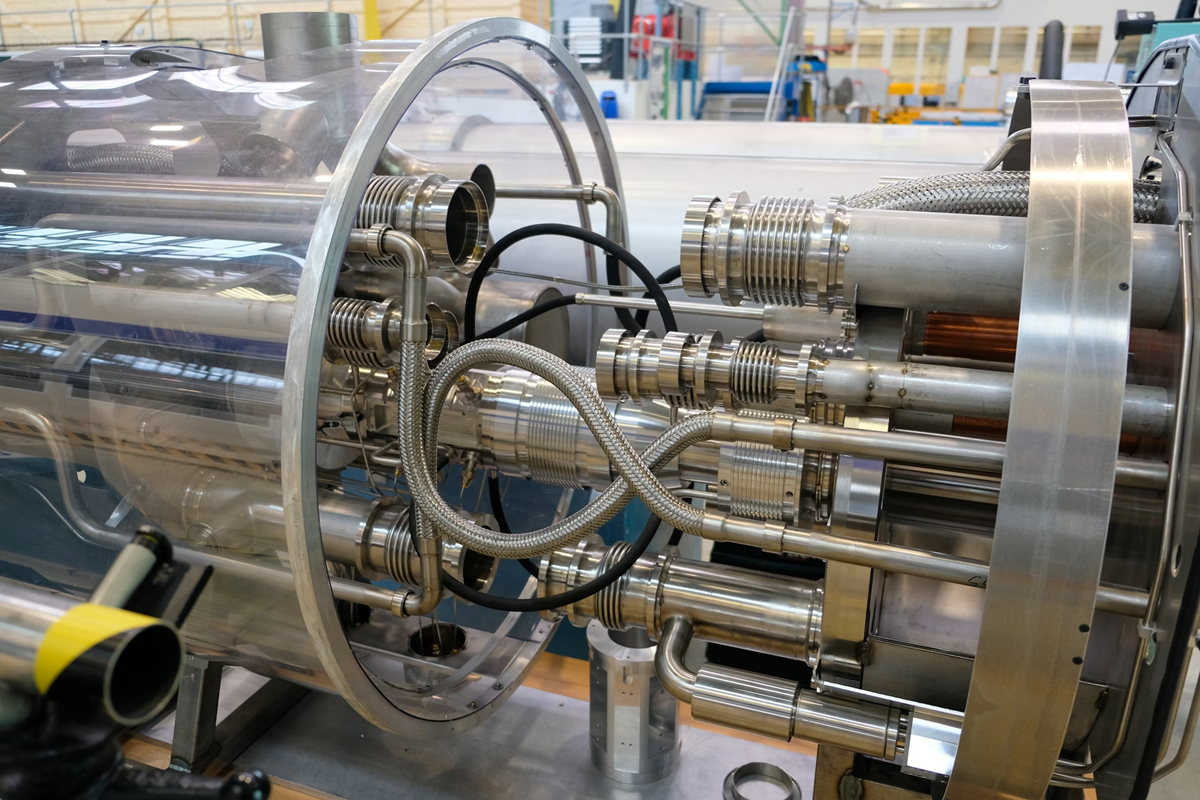
CERN Embeds Tiny AI Models in Silicon for LHC's Real-Time Data Filtering
CERN integrates custom AI into silicon for real-time LHC data filtering.

AI Excels in Code, Fails in Creative Writing: A Developer's Dilemma
AI excels at coding tasks but struggles with nuanced human writing.