
AI Synthesizes Custom Database Engines, Achieving 11x Speedup
Sonic Intelligence
The Gist
AI autonomously generates bespoke database engines for massive speedups.
Explain Like I'm Five
"Imagine you have a special box that sorts information super fast, but it's built to sort *any* kind of information. This new AI can build a *brand new* sorting box just for *your specific* information, making it sort things incredibly faster – like 10 times faster! It's like having a custom-made tool for every job, but the AI builds the tool itself."
Deep Intelligence Analysis
The technical ingenuity of Bespoke OLAP lies in its LLM-guided code generation, which allows for the dynamic tailoring of every database component to a precisely defined workload. Unlike general-purpose engines that interpret schemas at runtime and use generic data structures, Bespoke OLAP optimizes storage layouts, encoding decisions, and query compilation based on observed access patterns and value distributions. This bespoke approach eliminates the overhead associated with flexibility, compiling queries directly into code that interacts with workload-specific data structures. Remarkably, this entire synthesis process costs approximately $120 and takes 6-12 hours, requiring no manual intervention, making it economically viable for a wide array of enterprise scenarios where stable query templates dominate.
The implications for enterprise data warehousing and cloud analytics are profound. By enabling the creation of hyper-optimized database engines on demand, Bespoke OLAP could dramatically reduce infrastructure costs and accelerate data processing for critical business intelligence and machine learning pipelines. This shifts the focus from optimizing general-purpose engines to defining workloads precisely, allowing AI to generate the optimal underlying infrastructure. While initial adoption may focus on environments with well-understood, stable query patterns, the long-term vision suggests a future where database systems are not merely configured but autonomously engineered for peak performance, potentially redefining the roles of database administrators and systems architects towards workload definition and validation rather than manual optimization.
Impact Assessment
This research represents a paradigm shift in database design, moving from general-purpose engines to highly optimized, workload-specific systems generated autonomously by AI. It promises massive performance gains for stable analytical workloads, potentially redefining efficiency standards in enterprise data warehousing and cloud analytics.
Read Full Story on UcbskyadrsKey Details
- ● Bespoke OLAP uses LLM-guided code generation to synthesize workload-specific C++ database engines.
- ● Achieved an 11.78x total speedup over DuckDB on TPC-H (SF 20) and 9.76x on CEB (SF 2).
- ● Per-query speedups ranged from 5.7x to an astonishing 1466x.
- ● Synthesis costs approximately $120 and 6-12 hours, requiring no manual intervention.
- ● The system eliminates the "performance tax of generality" by tailoring engine components to specific query patterns.
Optimistic Outlook
The ability to automatically synthesize highly optimized database engines could unlock unprecedented performance for critical analytical workloads, drastically reducing operational costs and enabling faster, more complex data insights. This could democratize access to high-performance data infrastructure, allowing even smaller organizations to leverage bespoke database solutions previously only feasible for tech giants.
Pessimistic Outlook
The initial synthesis cost and time, while impressive for a custom engine, might still be a barrier for rapidly evolving or highly ad-hoc workloads. Furthermore, the complexity of debugging and maintaining AI-generated C++ code for critical infrastructure could introduce new challenges, requiring specialized expertise or robust validation frameworks.
The Signal, Not
the Noise|
Join AI leaders weekly.
Unsubscribe anytime. No spam, ever.
Generated Related Signals
Researchers Reverse-Engineer Google's SynthID Watermark, Achieve 91% Removal
Researchers reverse-engineered Google's SynthID watermark, achieving 91% phase coherence drop.
Riemann-Bench Exposes AI's Research Math Gap
A new benchmark reveals AI's significant gap in advanced research-level mathematics.

"Frankenstein" Tutorial Demystifies LLM Construction on Kaggle
A tutorial demonstrates building a basic 3.2M parameter LLM from "Frankenstein" on Kaggle.
Twitch-like Terminal Streaming Tool Enables Real-time AI Agent Monitoring and Collaborative Debugging
A new tool enables real-time, read-only streaming of terminal sessions, ideal for monitoring AI agents and collaborative...
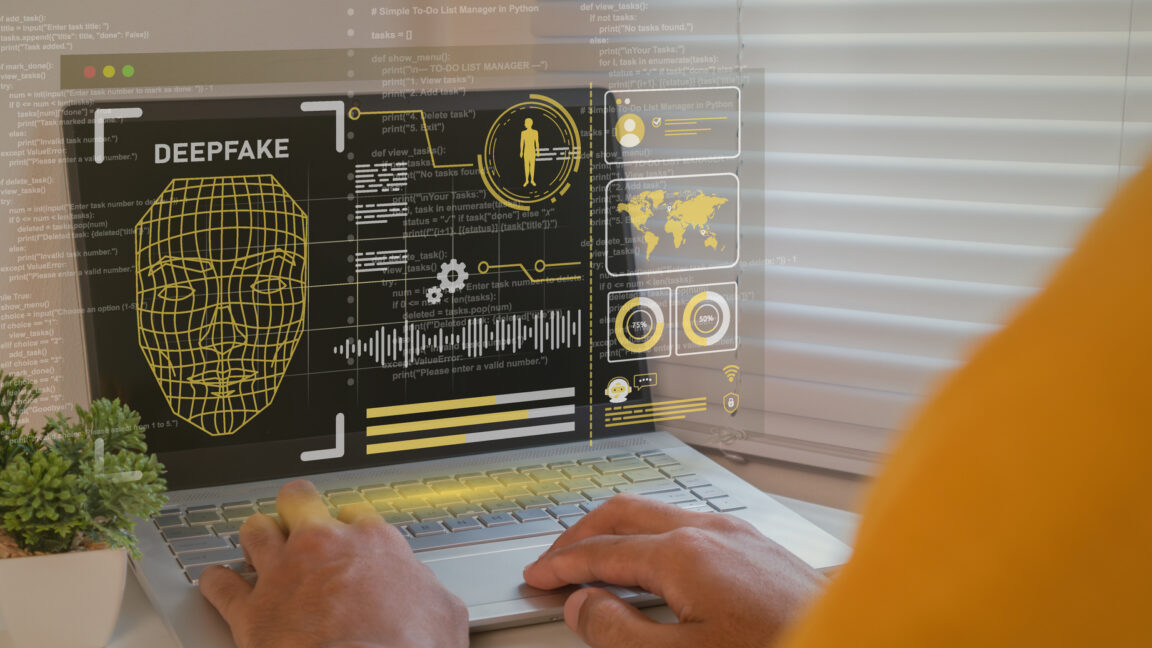
Police Corporal Pleads Guilty to Creating AI Deepfake Pornography from State Databases
A Pennsylvania police corporal pleaded guilty to creating over 3,000 AI-generated deepfake pornographic images, many fro...
LLMs Compete in Texas Hold'em Simulation, Revealing Distinct Strategic Personalities
Five distinct LLMs demonstrated unique poker strategies in a simulated Texas Hold'em game.