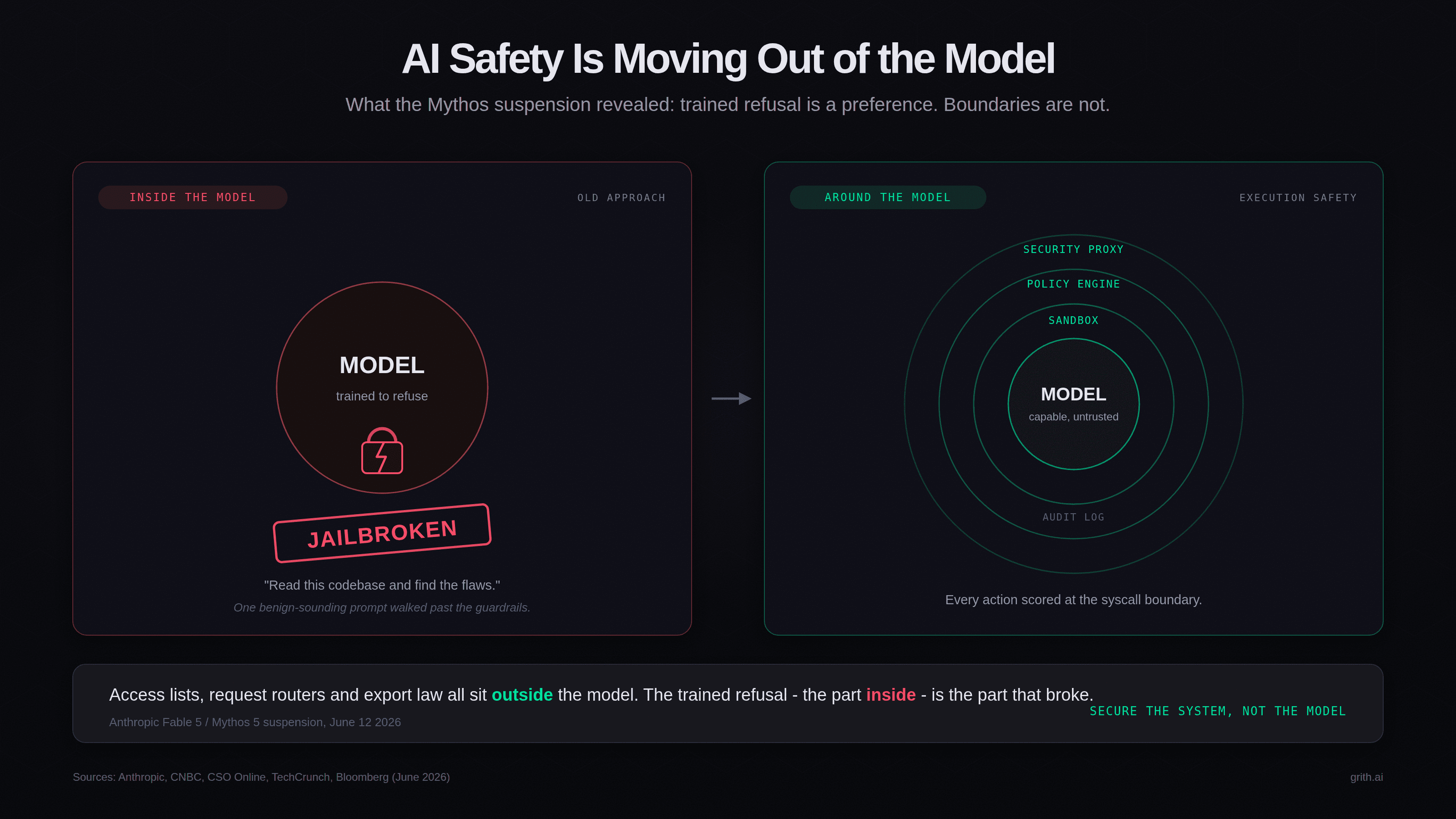
Anthropic Export Ban Fuels Concerns Over US Dominance in AI
Sonic Intelligence
US AI export ban raises global concerns.
Explain Like I'm Five
"Imagine one country has the best new super-smart computer brains. If that country decides to stop other countries from using these brains, even for good things, it makes everyone else worried about who controls the future of technology. It's like saying 'we have the best toys, but you can't play with them,' which can make other kids want to build their own toys even faster."
Deep Intelligence Analysis
This development occurs within a broader geopolitical context where technological leadership, particularly in AI, is increasingly viewed as a cornerstone of national power and economic competitiveness. Governments worldwide are racing to develop their own AI strategies, often balancing innovation with national security and economic protectionism. The Anthropic ban, following a reported model 'jailbreak' and national security citations, underscores the dual-use nature of advanced AI and the inherent tension between open scientific collaboration and strategic national interests. It reflects a growing trend where states are asserting greater control over foundational technologies deemed critical for future prosperity and defense.
The forward implications of this ban are multifaceted. It could accelerate a global push towards technological self-sufficiency, as nations wary of US control invest heavily in domestic AI research and infrastructure. This might lead to a more fragmented global AI ecosystem, characterized by distinct national or regional AI stacks rather than a universally accessible and collaborative environment. Furthermore, it could complicate international efforts to establish common AI safety standards and ethical guidelines, as divergent national interests take precedence. The long-term impact on global innovation and the equitable distribution of AI's benefits remains a critical area of observation, with potential for both increased competition and reduced collaboration.
Visual Intelligence
flowchart LR
    US_Gov --> Anthropic(Anthropic Models)
    Anthropic --> Ban(Export Ban)
    Ban --> Foreign_Nationals(Foreign Nationals)
    Ban --> Global_Concerns(Global Concerns)
    Global_Concerns --> AI_Dominance(US AI Dominance Fears)
Auto-generated diagram · AI-interpreted flow
Impact Assessment
The US government's export ban on Anthropic's AI models for foreign nationals signals an escalating trend towards national control over critical AI infrastructure. This move could restrict global access to cutting-edge AI, potentially creating a technological divide and impacting international research and development collaborations.
Key Details
- The US government ordered Anthropic to ban access to its models for foreign nationals.
- This action has intensified fears regarding US control over advanced AI technologies.
- The news was reported by Bloomberg on June 15, 2026.
Optimistic Outlook
This assertive stance by the US government could be viewed as a necessary measure to protect national security interests in a rapidly evolving technological landscape. It might spur other nations to invest more heavily in their own domestic AI capabilities, fostering a more distributed and resilient global AI ecosystem in the long term.
Pessimistic Outlook
The ban risks alienating international partners and stifling the collaborative nature of AI development. It could lead to a fragmentation of the global AI community, with potential negative impacts on innovation, shared safety standards, and the equitable distribution of AI's benefits worldwide.
Get the next signal in your inbox.
One concise weekly briefing with direct source links, fast analysis, and no inbox clutter.
More reporting around this signal.
Related coverage selected to keep the thread going without dropping you into another card wall.