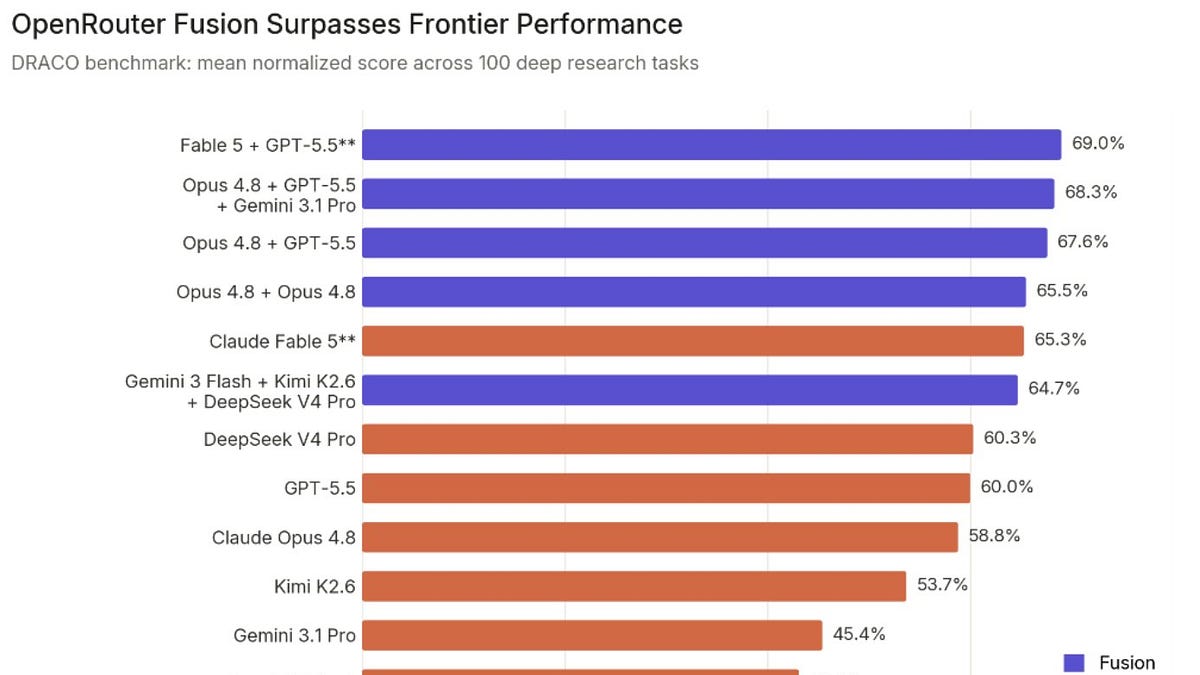
Decentralized AI Networks Outperform Centralized Frontier Models
Sonic Intelligence
Decentralized AI networks now lead in capability, speed, and cost.
Explain Like I'm Five
"Imagine instead of one giant, super-smart computer, we have many smaller, smart computers working together like a team. This team is now proving to be faster, cheaper, and better than the single giant computer, changing how we think about building and using AI."
Deep Intelligence Analysis
For the past decade, the AI industry has been characterized by a strong trend towards ever-larger models, influencing everything from venture capital pitches to regulatory discussions. This trajectory was largely predicated on the belief that scale directly correlated with capability. However, the current data indicates a pivotal shift, drawing parallels to historical technological transitions like the mainframe era versus the rise of personal computing and the internet. The analogy suggests that just as centralized computing gave way to distributed systems, so too will centralized AI yield to 'network-source AI,' fundamentally altering market dynamics.
This shift carries profound implications for the competitive landscape and strategic direction of the AI industry. Companies that have heavily invested in developing and deploying monolithic frontier models may find their competitive edge eroding as more agile, cost-effective decentralized alternatives gain traction. The transition could democratize access to advanced AI capabilities, fostering a more diverse ecosystem of developers and applications. Furthermore, it necessitates a re-thinking of AI regulation, investment strategies, and long-term technological roadmaps, moving towards an era where networked intelligence, rather than singular, massive models, defines the cutting edge.
Visual Intelligence
flowchart LR
    A[Centralized AI] --> B{Outperformed By}
    B --> C[Decentralized AI Networks]
    C --> D[Higher Speed]
    C --> E[Better Accuracy]
    C --> F[Lower Cost]
    G[Old Assumption] --> H{Challenged By}
    H --> C
Auto-generated diagram · AI-interpreted flow
Impact Assessment
This paradigm shift suggests a fundamental reorientation of AI development and deployment, moving away from monolithic models towards distributed architectures. It impacts investment strategies, regulatory approaches, and the competitive landscape, potentially democratizing advanced AI capabilities.
Key Details
- Networks of smaller AI models are outperforming frontier AI systems.
- Performance advantages include speed, accuracy, and cost efficiency.
- The shift challenges the long-held assumption of AI's future being larger models held by fewer players.
- Centralized AI is compared to the mainframe era, suggesting a similar market shift.
Optimistic Outlook
The rise of decentralized AI could foster greater innovation, reduce barriers to entry, and lead to more resilient and specialized AI applications. Increased competition and accessibility might accelerate AI's integration into diverse sectors, driving down costs and improving performance across the board.
Pessimistic Outlook
A fragmented AI landscape could introduce new complexities in governance, interoperability, and security. The proliferation of smaller, networked models might make it harder to ensure ethical alignment or prevent misuse, potentially leading to a less controlled and more chaotic AI ecosystem.
Get the next signal in your inbox.
One concise weekly briefing with direct source links, fast analysis, and no inbox clutter.
More reporting around this signal.
Related coverage selected to keep the thread going without dropping you into another card wall.