
The Quest for Universal 'Human-Made' Content Labels Amid AI Proliferation
Sonic Intelligence
The Gist
Creators seek universal 'AI-free' labels, but standardization and verification remain elusive.
Explain Like I'm Five
"Imagine you draw a picture, and a robot can draw one that looks exactly the same. Now, everyone wonders if your picture was made by you or the robot. People want a special sticker to prove it was made by a person, but everyone has different ideas for the sticker, and it's hard to check if the sticker is real. So, it's tricky to show what's truly "human-made.""
Deep Intelligence Analysis
Despite broad industry recognition of the problem, including calls from figures like Instagram head Adam Mosseri to "fingerprint real media," a unified solution remains elusive. The C2PA content credentials standard, adopted by major platforms like Meta, has proven largely ineffectual in practice, often circumvented by those motivated to obscure AI origins for clicks and revenue. Currently, at least twelve distinct "AI-free" labeling alternatives exist, each with varying eligibility criteria and verification methods. Some, like "Made by Human," rely solely on trust, while others attempt visual inspection or AI detection services, which are notoriously unreliable. The most dependable method identified involves labor-intensive manual auditing of creative processes, such as reviewing sketches or drafts, highlighting the significant technical and logistical hurdles to scalable authentication.
The absence of a widely adopted, verifiable "human-made" content standard carries profound implications for the future of digital media and creative industries. Without clear provenance, the value of human artistry risks being diluted, potentially leading to economic displacement for creators and a general decline in content quality. Furthermore, the inability to reliably distinguish AI from human output exacerbates issues of misinformation and deepfakes, undermining public trust in news and social platforms. The path forward requires significant cross-industry collaboration, potentially involving regulatory frameworks, to establish a universally recognized and technically robust authentication system that can keep pace with advancing AI capabilities, ensuring the continued recognition and protection of human creativity.
[EU AI Act Art. 50 Compliant: This analysis was generated by an AI model. Transparency and traceability are maintained.]
_Context: This intelligence report was compiled by the DailyAIWire Strategy Engine. Verified for Art. 50 Compliance._
Visual Intelligence
flowchart LR
A["AI Content Proliferation"] --> B["Trust Erosion"]
B --> C["Creator Demand Labels"]
C --> D["Multiple Label Solutions"]
D --> E["Verification Challenges"]
E --> F["C2PA Ineffectual"]
F --> G["Manual Audit Best"]
G --> H["No Universal Standard"]
Auto-generated diagram · AI-interpreted flow
Impact Assessment
The proliferation of generative AI is eroding trust in digital content, creating an urgent need for provenance verification. The lack of a unified, effective "human-made" labeling standard hinders creators, confuses consumers, and complicates platform moderation, impacting the digital economy and information integrity.
Read Full Story on The VergeKey Details
- ● Instagram head Adam Mosseri suggested fingerprinting real media over fake media.
- ● C2PA content credentials standard is used by Meta platforms but is "ineffectual."
- ● At least 12 different "AI-free" labeling alternatives exist.
- ● Some solutions, like Made by Human, rely purely on trust.
- ● Manual verification (showing working processes) is currently the most reliable method.
Optimistic Outlook
A universally adopted, robust "human-made" labeling standard could restore trust in authentic content, empower human creators, and foster a clearer digital ecosystem. This could lead to new business models for verified content and stronger protections for intellectual property, ensuring human creativity remains valued.
Pessimistic Outlook
The current fragmentation and ineffectiveness of "AI-free" labeling efforts suggest a difficult path to widespread adoption. Without a unified, verifiable standard, the digital landscape risks becoming increasingly saturated with unidentifiable AI-generated content, further devaluing human creative work and making content authentication nearly impossible.
The Signal, Not
the Noise|
Join AI leaders weekly.
Unsubscribe anytime. No spam, ever.
Generated Related Signals

AI's Homogenizing Effect: Eroding Original Thought in Higher Education
AI chatbots are homogenizing student expression and critical thinking in university settings.
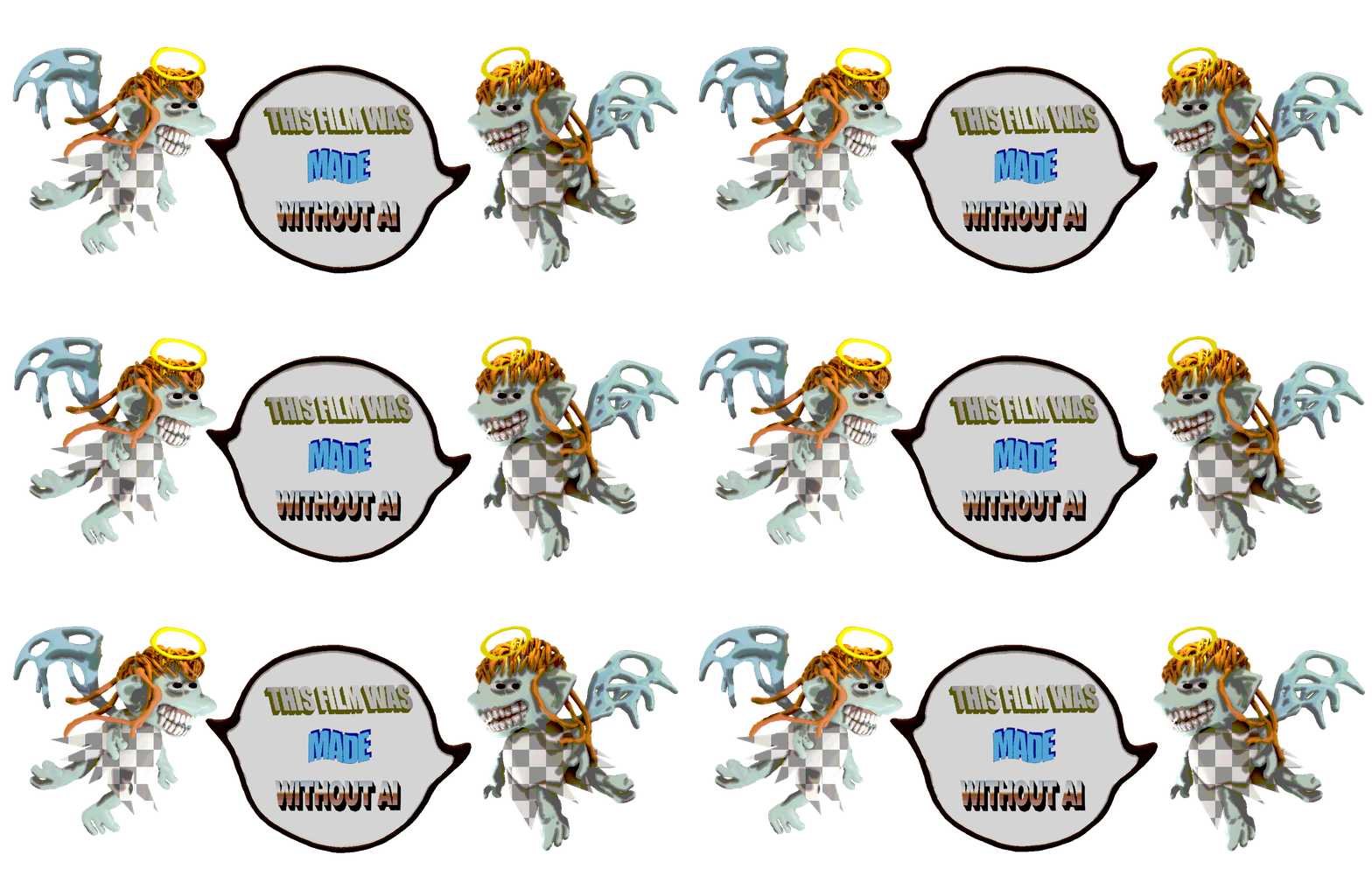
Artists Launch Collective to Authenticate Human Creativity Against AI Generation
Artists are collaborating to create anti-AI disclaimers, asserting human creativity.

Research Reveals 'Cognitive Surrender' as AI Users Abandon Critical Thinking
New research identifies 'cognitive surrender,' where AI users uncritically accept AI outputs.

Suno AI Music Copyright Filters Easily Bypassed, Raising Infringement Concerns
Suno's AI music platform copyright filters are easily circumvented, enabling creation of close imitations.

SpaceX Explores Orbital Data Centers Amidst $1.75 Trillion Valuation IPO Buzz
SpaceX explores orbital data centers to justify a massive $1.75 trillion valuation.

Japan Pivots to Physical AI for Industrial Survival Amidst Demographic Crisis
Japan deploys physical AI to counter severe labor shortages.