
SpaceX Explores Orbital Data Centers Amidst $1.75 Trillion Valuation IPO Buzz
Sonic Intelligence
The Gist
SpaceX explores orbital data centers to justify a massive $1.75 trillion valuation.
Explain Like I'm Five
"Imagine putting giant computers in space! SpaceX wants to do this because building them on Earth is getting tricky with lots of rules and people not wanting them. If they can do it, it could make their company super valuable, like a trillion dollars!"
Deep Intelligence Analysis
The competitive landscape for orbital data solutions is rapidly intensifying. Beyond SpaceX, Jeff Bezos's Blue Origin and Amazon are actively developing their own satellite networks, signaling a direct continuation of their terrestrial rivalry into the orbital domain. Furthermore, startups like Starcloud, a Y Combinator alumnus, have already achieved unicorn status with a $170 million funding round, demonstrating significant investor confidence in this emerging sector. The core challenge remains the immense engineering, physics, and orbital mechanics hurdles, which demand substantial capital investment and technological breakthroughs to achieve viability and scale.
The long-term implications of successful orbital data centers are profound, potentially reshaping global data infrastructure, security paradigms, and the economics of space commerce. However, the absence of established international regulatory frameworks for data sovereignty and environmental impact in orbit introduces considerable legal and ethical complexities. While the promise of reduced latency for specific applications and enhanced security is compelling, the high development costs and inherent risks of space operations could lead to project delays or outright failures, impacting investor sentiment and the broader space industry's trajectory. The success of these ventures will hinge on overcoming not only technical barriers but also navigating a complex, evolving geopolitical and regulatory environment.
Impact Assessment
The pursuit of orbital data centers by SpaceX and competitors signals a strategic pivot to overcome terrestrial infrastructure challenges and regulatory hurdles. This could unlock new revenue streams for space companies, fundamentally altering the economics of space exploration and data management, and potentially justifying unprecedented valuations.
Read Full Story on TechCrunchKey Details
- ● SpaceX reportedly filed confidential IPO paperwork.
- ● The IPO aims to raise $75 billion at a $1.75 trillion valuation.
- ● CEO Elon Musk states orbital data centers will be a significant part of SpaceX's future.
- ● Other companies, including a Y Combinator startup (Starcloud, now unicorn status after $170M raise) and Jeff Bezos's Blue Origin/Amazon, are pursuing similar space-based data solutions.
- ● Opposition to terrestrial data centers is a factor driving interest in orbital solutions.
Optimistic Outlook
Orbital data centers could offer unparalleled security, reduced latency for specific applications, and a solution to the growing energy and land demands of terrestrial data infrastructure. This innovation could drive a new era of space-based commerce and scientific research, creating entirely new markets and technological capabilities.
Pessimistic Outlook
The engineering, physics, and orbital mechanics challenges for space data centers are immense, requiring massive capital expenditure with uncertain returns. Regulatory frameworks for data sovereignty and environmental impact in orbit are nascent, posing significant future risks. High costs and technical hurdles could lead to project delays or failures, impacting investor confidence.

The Signal, Not
the Noise|
Join AI leaders weekly.
Unsubscribe anytime. No spam, ever.
Generated Related Signals

AI Investment Justification Hinges on Software Cost Reduction
AI's massive investment requires significant software cost cuts to justify.
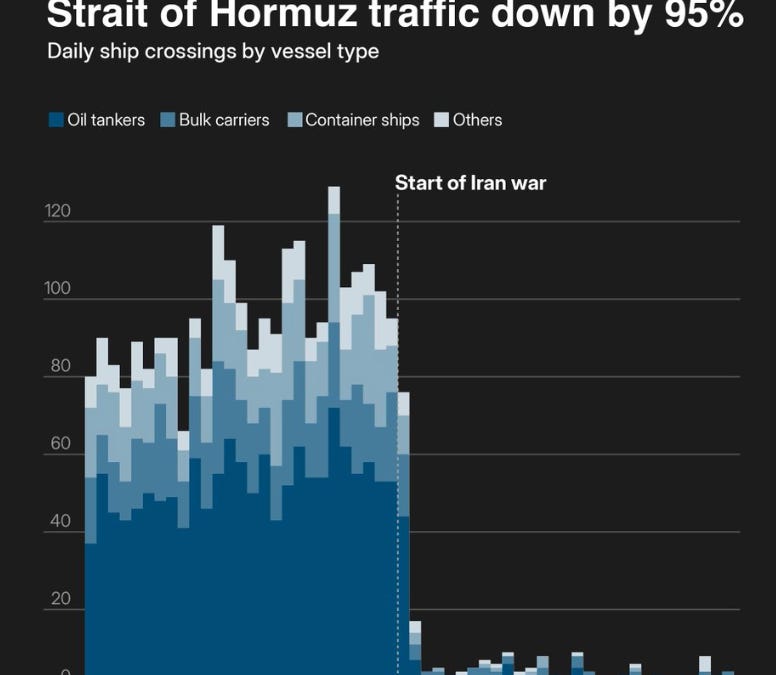
Geopolitical Chokehold: Hormuz Blockage Threatens Billions in AI Funding
Hormuz Strait blockage jeopardizes billions in Gulf sovereign wealth fund AI investments.

AWS Defends Dual AI Investments in OpenAI and Anthropic
Amazon's AWS navigates AI model provider conflicts through a long-standing partner-competition strategy.
Deconstructing LLM Agent Competence: Explicit Structure vs. LLM Revision
Research reveals explicit world models and symbolic reflection contribute more to agent competence than LLM revision.
Qualixar OS: The Universal Operating System for AI Agent Orchestration
Qualixar OS is a universal application-layer operating system designed for orchestrating diverse AI agent systems.

UK Legislation Quietly Shaped by AI, Raising Sovereignty Concerns
AI-generated text has quietly entered British legislation, sparking concerns over national sovereignty and control.