LatamGPT Unveiled: Latin America's Bid for AI Sovereignty with 70B Parameter Model
Sonic Intelligence
LatamGPT, a 70-billion-parameter LLM, aims for Latin American AI sovereignty.
Explain Like I'm Five
"Imagine most of the smart computer brains (AI) only know about things from far-away countries. LatamGPT is like a new smart brain made by many countries in Latin America, specifically taught with their own stories, languages, and culture. It's like making a special book for them, so the smart brain can help with their schools and hospitals in a way that makes sense for them, instead of always talking about things from other places."
Deep Intelligence Analysis
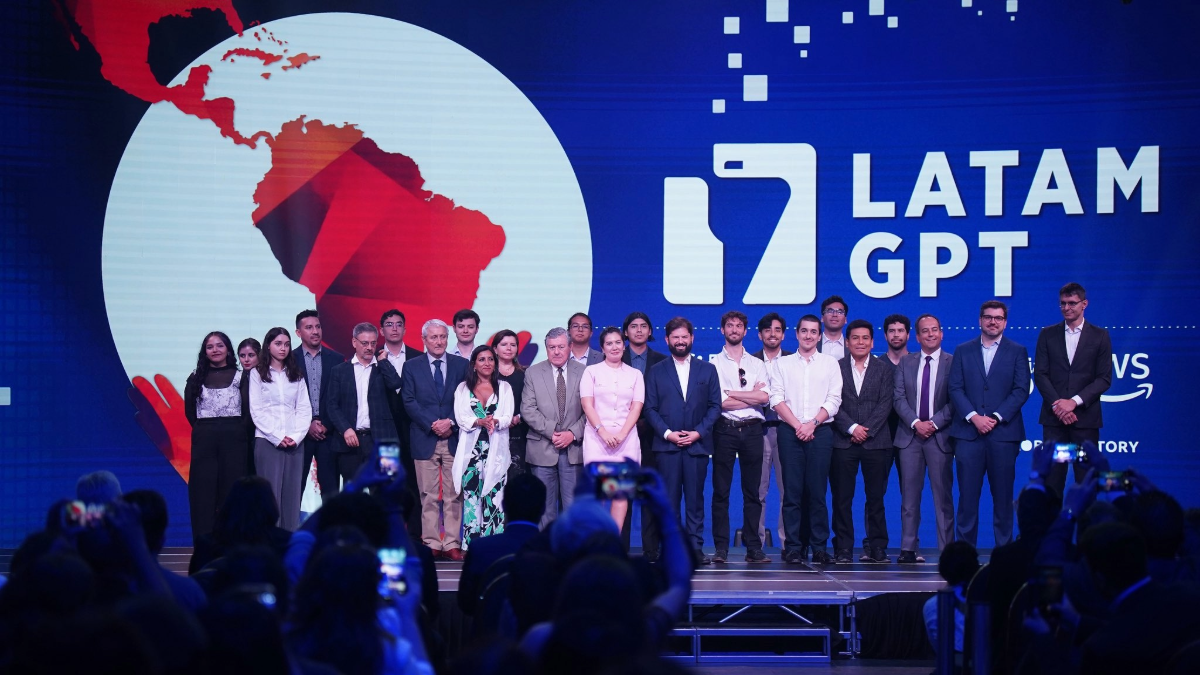
The technical foundation of LatamGPT is robust, featuring a 70-billion-parameter model built upon Meta's Llama 3.1 architecture. This model was trained on an extensive dataset exceeding eight terabytes, comprising 2.6 million documents sourced from 20 Latin American countries and Spain. The project is a testament to regional cooperation, involving 15 countries, over 200 collaborators, and 33 institutional alliances, spearheaded by Chile's National Center for Artificial Intelligence (CENIA). A critical infrastructure investment includes a $10 million supercomputing center at the University of Tarapacá in Arica, Chile, marking the region's first facility capable of domestic large-scale model training.
Crucially, LatamGPT is designed as an open-source infrastructure rather than a direct-to-consumer chatbot. This strategic choice aims to empower developers, companies, and governments across the region to adapt the model for diverse applications in sectors such as education, healthcare, public services, and cultural preservation. Álvaro Soto, director of CENIA, emphasizes the project's rationale around autonomy and relevance, highlighting that global models, despite their power, often lack the specific contextual understanding necessary for Latin American realities. He argues that the region must proactively address its own needs and foster local scientific engagement with advanced AI tools.
However, the pursuit of "technological sovereignty" faces considerable challenges within the global AI landscape. The market is dominated by incumbents like OpenAI and Google, which benefit from extreme economies of scale, network effects, and substantial first-mover advantages. These global players command resources orders of magnitude larger than what Latin American countries can collectively mobilize, creating a "sovereignty paradox." While LatamGPT is a monumental step for regional self-determination in AI, its long-term sustainability and competitive standing against well-resourced global entities remain a key concern. The project's success will depend on continued regional investment, sustained collaboration, and its ability to carve out indispensable niche applications where its cultural and linguistic specificity provides a decisive advantage.
Impact Assessment
LatamGPT addresses a critical gap in AI models by focusing on Latin American data and cultural nuances. This initiative seeks to establish regional technological autonomy, fostering local research and development while ensuring AI applications are relevant to the specific needs of the region.
Key Details
- LatamGPT is a 70-billion-parameter LLM based on Meta's Llama 3.1.
- Trained on over 8 terabytes of data from 2.6 million documents across 20 Latin American countries and Spain.
- Involves 15 countries, over 200 collaborators, and 33 institutional alliances, led by Chile's CENIA.
- Chile's University of Tarapacá invested $10 million in a supercomputing center for training.
- Spanish and Portuguese data represent only 2-3% of existing AI model training material.
Optimistic Outlook
LatamGPT could significantly boost Latin America's AI research capacity and provide culturally relevant AI solutions for education, healthcare, and public services. Its open-source nature fosters collaboration and innovation, potentially reducing reliance on foreign models and promoting digital sovereignty. This could lead to tailored AI applications that better serve regional populations.
Pessimistic Outlook
The project faces substantial market headwinds due to the extreme economies of scale and first-mover advantages of global AI incumbents like OpenAI and Google. Sustaining and evolving a 70-billion-parameter model against such competition, with potentially limited resources compared to global players, presents a significant challenge to achieving true technological sovereignty.
Get the next signal in your inbox.
One concise weekly briefing with direct source links, fast analysis, and no inbox clutter.
More reporting around this signal.
Related coverage selected to keep the thread going without dropping you into another card wall.