
LLMs Enable Autonomous Lab Control, Democratizing Scientific Automation
Sonic Intelligence
The Gist
LLMs and AI agents are automating complex lab instrumentation.
Explain Like I'm Five
"Imagine a super-smart robot brain (an LLM) that can understand what you want to do in a science lab and then write the instructions for the machines to do it all by themselves, like building with LEGOs. This means scientists don't need to be computer wizards to do cool experiments, making science faster and easier for everyone."
Deep Intelligence Analysis
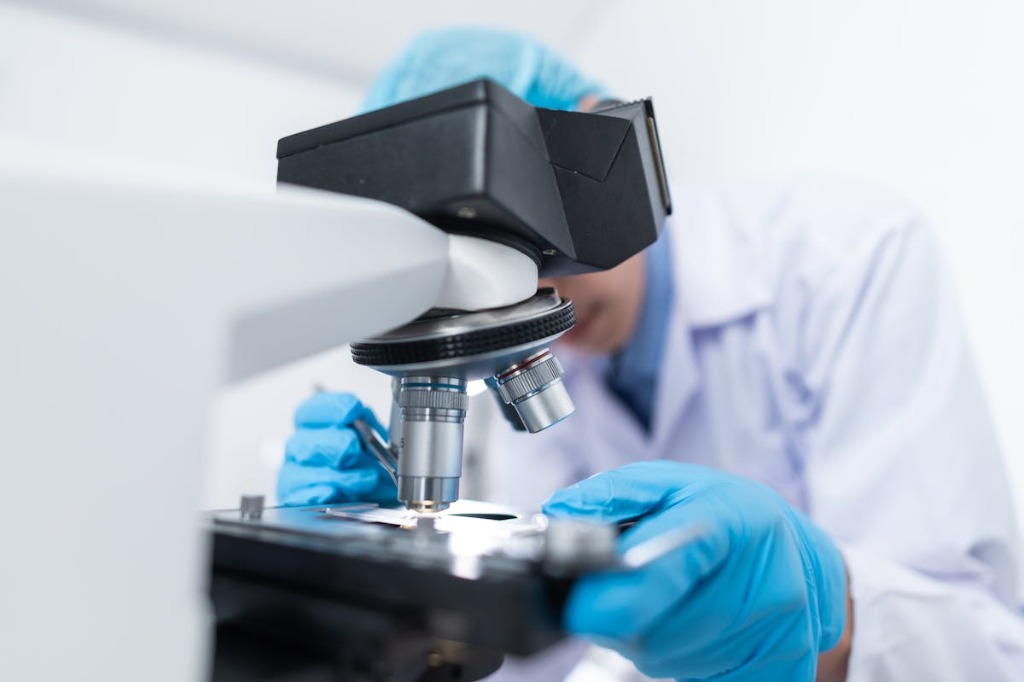
A key demonstration involved a single-pixel camera/scanning photocurrent microscope, where LLMs facilitated script creation and evolved into autonomous agents capable of independent operation and iterative refinement of control strategies. This capability extends beyond mere scripting, enabling agents to dynamically adapt and optimize experimental parameters. The current reliance on specialized programming skills for instrumentation has historically created a bottleneck in many research environments, limiting the scope and speed of experimental iteration. This new approach directly addresses that limitation by abstracting away the programming complexity.
Looking forward, this advancement signals a decisive move towards fully autonomous scientific laboratories, where AI agents manage entire experimental workflows from design to data acquisition and preliminary analysis. The implications for fields requiring high-throughput experimentation, such as drug discovery or materials science, are profound, promising exponential increases in research efficiency. However, the deployment of such systems will necessitate robust validation protocols and ethical guidelines to ensure reproducibility, prevent AI-induced biases, and maintain human oversight in critical decision-making processes, balancing automation's benefits with responsible innovation.
Visual Intelligence
flowchart LR
A["Researcher Input"] --> B["LLM Script Generation"]
B --> C["Instrument Control"]
C --> D["Experiment Execution"]
D --> E["Data Output"]
E --> F["LLM Strategy Refinement"]
F --> C
Auto-generated diagram · AI-interpreted flow
Impact Assessment
This development significantly lowers the entry barrier for scientific experimentation, allowing researchers without extensive programming skills to automate complex lab tasks. It promises to accelerate discovery by enabling faster iteration and customization of experimental setups, potentially democratizing access to advanced scientific tools.
Read Full Story on ArXiv cs.AIKey Details
- ● LLMs facilitate custom script creation for scientific equipment control.
- ● LLM-assisted tools can evolve into autonomous AI agents.
- ● A case study involved a single-pixel camera/scanning photocurrent microscope setup.
- ● The approach aims to reduce technical barriers for experimental customization.
Optimistic Outlook
The integration of LLMs into laboratory automation could dramatically speed up research cycles, leading to breakthroughs in various scientific fields. By making complex instrumentation accessible to a broader range of scientists, it fosters innovation and reduces the time from hypothesis to experimental validation.
Pessimistic Outlook
Over-reliance on LLMs for critical experimental control could introduce new failure modes or subtle biases if not rigorously validated. The potential for errors in autonomously generated scripts or control strategies might lead to irreproducible results or wasted resources, requiring robust human oversight.

The Signal, Not
the Noise|
Join AI leaders weekly.
Unsubscribe anytime. No spam, ever.
Generated Related Signals

Procurement.txt: An Open Standard for AI Agent Business Transactions
A new open standard simplifies AI agent transactions, boosting efficiency and reducing costs.
Prismer: AI Agents Learn from Shared Errors
Prismer enables AI agents to learn from shared errors.
WorldSim: LLM Agents Simulate Societies in TypeScript
WorldSim enables LLM agents to simulate societal dynamics.
STORM Foundation Model Integrates Spatial Omics and Histology for Precision Medicine
STORM model integrates spatial transcriptomics and histology for advanced biomedical insights.

AI Voice Cloning Leads to Copyright Fraud, Stripping Musician of Own Earnings
An AI company cloned a musician's voice, then used the imitation to copyright-strike her original songs on YouTube.
AI Telehealth Startup Medvi Faces Scrutiny Over Fake Doctors, Affiliate Ad Practices
AI-powered telehealth firm Medvi faces lawsuits and regulatory scrutiny for using fake doctors in affiliate ads.