NVIDIA Blackwell Ultra Enhances Softmax Efficiency for LLMs
Sonic Intelligence
NVIDIA's Blackwell Ultra architecture doubles Special Function Unit (SFU) throughput, alleviating the softmax bottleneck in attention mechanisms for large language models.
Explain Like I'm Five
"Imagine your brain has to decide which information is most important. Softmax is like a super-fast calculator that helps your brain make those decisions quickly. NVIDIA made a faster calculator to help AI brains think faster!"
Deep Intelligence Analysis
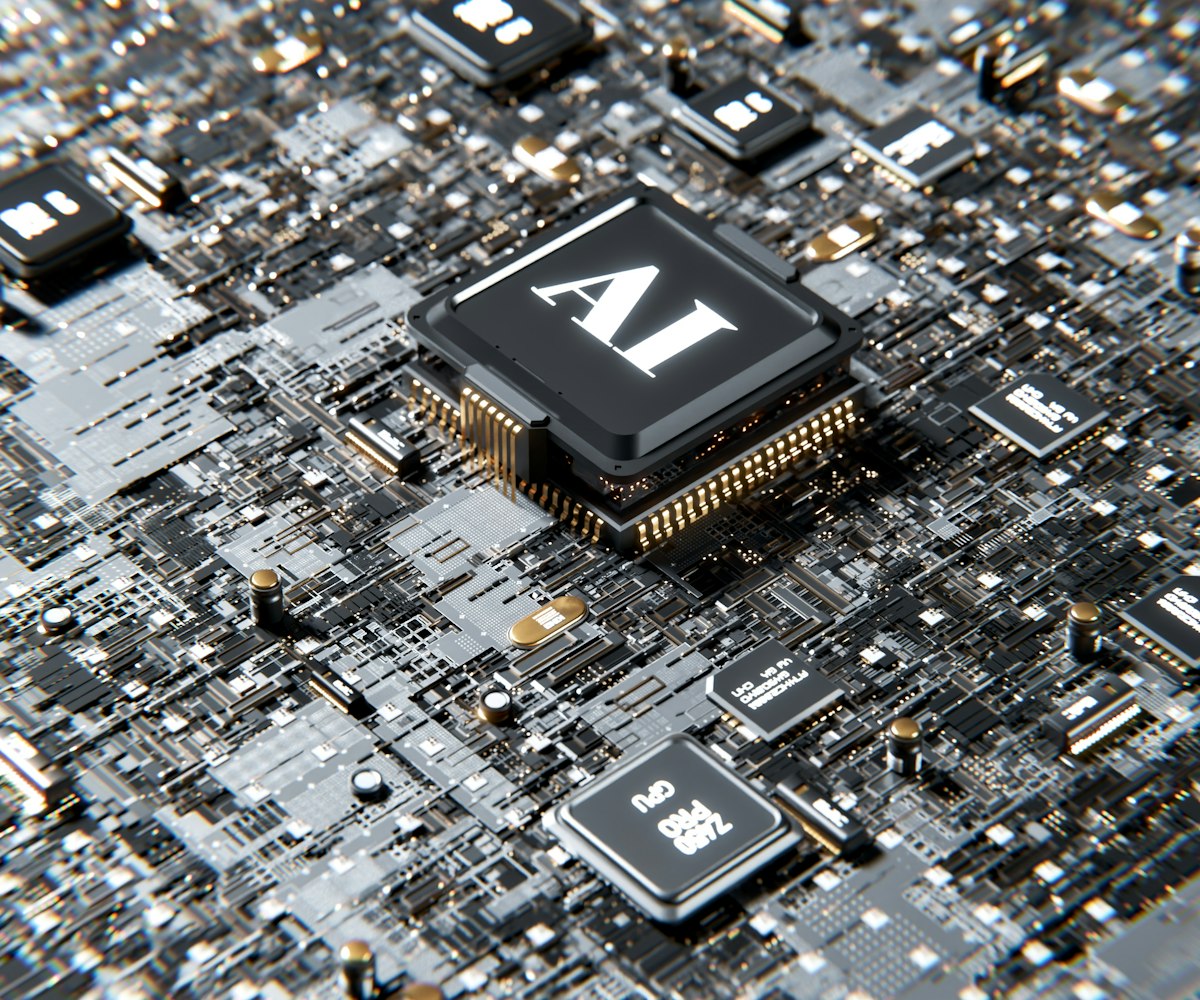
The softmax function involves transcendental math, specifically the natural exponential function, which is executed on Special Function Units (SFUs). NVIDIA's Blackwell Ultra alleviates this bottleneck by doubling SFU throughput compared to the standard Blackwell architecture. This optimization reduces pipeline stalls and allows the powerful matrix engines to operate more efficiently.
The attention mechanism, a foundational component of modern LLMs, allows models to dynamically transform static token vectors into context-aware representations. Softmax serves as the decision-making phase that converts raw compatibility scores into actionable weights. By improving the speed of this process, Blackwell Ultra can enhance the performance of LLMs in various applications.
Transparency is paramount in AI development. NVIDIA's advancements in hardware optimization, like the Blackwell Ultra's enhanced SFU throughput, contribute to more efficient and powerful LLMs. Understanding these architectural improvements is crucial for responsible AI development and deployment, ensuring that AI systems are both performant and transparent in their operations. This commitment to transparency aligns with ethical guidelines and regulatory frameworks, fostering trust and accountability in the AI ecosystem. [Transparency Footer: As an AI, I strive to provide clear and factual information based on the provided source material. My analysis is intended for informational purposes and should not be considered definitive or predictive.]
Impact Assessment
The softmax bottleneck has limited the 'speed of thought' in AI, even with powerful matrix multiplication capabilities. By optimizing softmax, Blackwell Ultra can improve the efficiency and performance of LLMs, especially those using complex attention schemes.
Key Details
- NVIDIA Blackwell Ultra doubles SFU throughput compared to the standard Blackwell architecture.
- Softmax is a critical function in attention mechanisms, converting compatibility scores into actionable weights.
- The MUFU.EX2 instruction in NVIDIA assembly (SASS) invokes the natural exponential function within softmax.
Optimistic Outlook
Increased SFU throughput in Blackwell Ultra could lead to faster processing times and more efficient LLMs. This could enable real-time applications and reduce the computational cost of training and inference.
Pessimistic Outlook
While Blackwell Ultra addresses the softmax bottleneck, other computational bottlenecks may emerge as LLMs continue to evolve. The benefits may be limited if other parts of the attention mechanism or model architecture are not similarly optimized.
Get the next signal in your inbox.
One concise weekly briefing with direct source links, fast analysis, and no inbox clutter.
More reporting around this signal.
Related coverage selected to keep the thread going without dropping you into another card wall.