OpenAI, Oracle, SoftBank Launch $500B Stargate Project, Microsoft Excluded
Sonic Intelligence
OpenAI, Oracle, and SoftBank launch a $500 billion AI infrastructure project, excluding Microsoft.
Explain Like I'm Five
"Imagine building the biggest, most powerful AI brain ever. OpenAI, Oracle, and some other big companies are teaming up to spend a huge amount of money to build it, but Microsoft, who usually works with OpenAI, isn't part of the team this time. It's like a new super-team forming in the world of AI."
Deep Intelligence Analysis
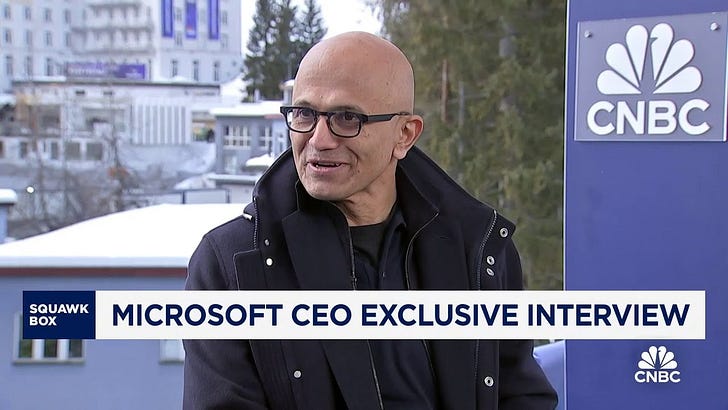
Microsoft CEO Satya Nadella's prior assertion of a 'Right Of First Refusal' for OpenAI's compute needs on Azure now appears to have been insufficient to secure this monumental project. This suggests that either Microsoft could not meet the scale or specific requirements of Stargate, or that OpenAI is strategically diversifying its compute dependencies to mitigate vendor lock-in and ensure access to the most optimal infrastructure. The project's commitment to creating 100,000 U.S. jobs and its multi-national funding structure, including a significant UAE investor, also introduce geopolitical and economic dimensions, highlighting the strategic national importance now attached to AI compute capacity.
Forward-looking implications are profound. The Stargate Project could accelerate the development of next-generation AI models by providing unprecedented compute power, potentially leading to breakthroughs that would otherwise be resource-constrained. For Oracle, this is a transformative opportunity to solidify its position as a major AI infrastructure provider, directly competing with hyperscalers. For Microsoft, it necessitates a re-evaluation of its AI strategy and its relationship with key partners. This development underscores that control over compute resources is rapidly becoming the ultimate leverage in the AI era, driving new alliances and intensifying competition at the highest levels of the tech industry.
_Context: This intelligence report was compiled by the DailyAIWire Strategy Engine. Verified for Art. 50 Compliance._
Impact Assessment
This massive $500 billion investment in AI infrastructure, spearheaded by OpenAI and Oracle, signals a significant shift in the AI compute landscape. Microsoft's exclusion challenges its perceived exclusive partnership with OpenAI and positions Oracle as a formidable new player in the high-stakes race for AI compute dominance.
Key Details
- ● The Stargate Project is a new private venture investing $500 billion over four years in AI infrastructure.
- ● The project aims to create 100,000 new jobs in the United States.
- ● Key funders include OpenAI, Oracle, SoftBank, and UAE investor MGX.
- ● Microsoft was notably absent from the Stargate Project discussions and funding.
- ● Microsoft CEO Satya Nadella previously stated OpenAI had a 'Right Of First Refusal' for Azure compute, implying Microsoft did not meet OpenAI's needs for this venture.
Optimistic Outlook
The Stargate Project could dramatically accelerate the development of next-generation AI models and applications by providing unparalleled compute resources. This diversification of AI infrastructure providers might foster greater competition, reduce reliance on a single vendor, and drive down costs, ultimately benefiting the entire AI ecosystem and potentially creating substantial economic growth and job opportunities.
Pessimistic Outlook
The concentration of such immense compute power within a new consortium raises concerns about potential market consolidation and the creation of new bottlenecks for smaller AI innovators. Furthermore, the geopolitical implications of a UAE investor's involvement in a critical U.S. AI infrastructure project warrant careful consideration regarding data sovereignty and strategic control over foundational AI capabilities.
Get the next signal in your inbox.
One concise weekly briefing with direct source links, fast analysis, and no inbox clutter.
More reporting around this signal.
Related coverage selected to keep the thread going without dropping you into another card wall.