Organizational Culture: The Real AI Bottleneck in 2026
Sonic Intelligence
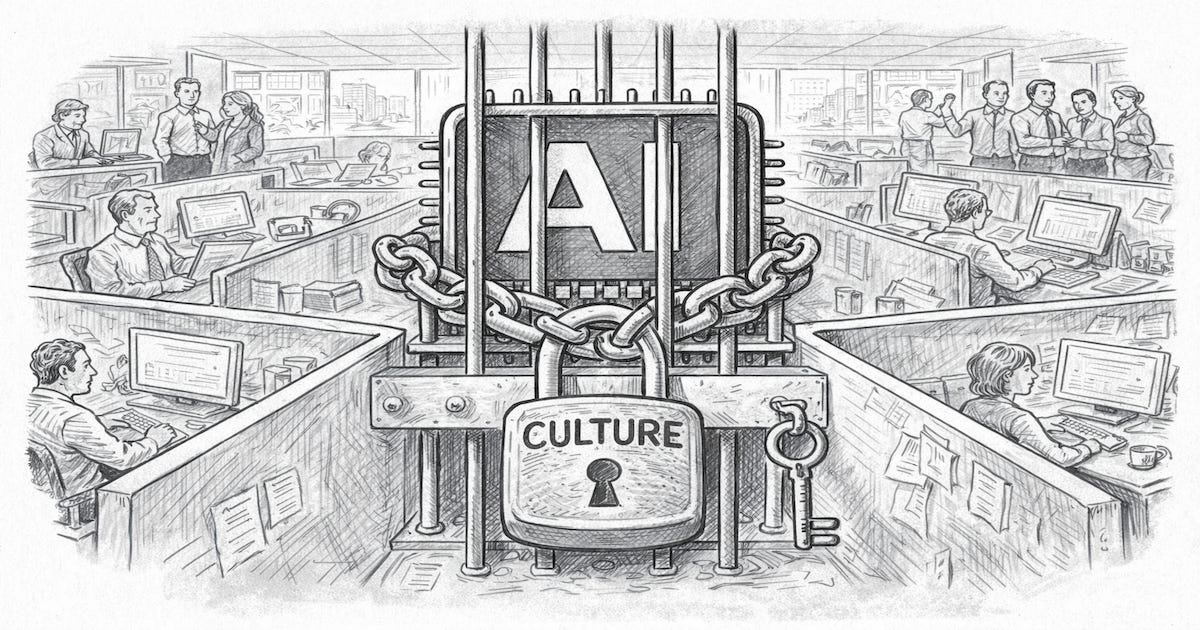
AI adoption is now bottlenecked by organizational culture, not technology.
Explain Like I'm Five
"Imagine AI is a super-fast car, but your company's rules are like a really slow road. To win the race, you need to change the rules to let the car go fast!"
Deep Intelligence Analysis
Transparency is paramount in the deployment and use of AI systems. As AI becomes more integrated into organizational processes, it is crucial to ensure that these systems are developed and used in a responsible and ethical manner. This includes providing clear and accessible information about the AI's capabilities and limitations, as well as the potential risks and benefits associated with its use. Furthermore, organizations must establish robust mechanisms for monitoring and evaluating the performance of AI systems, and for addressing any unintended consequences or biases that may arise. By prioritizing transparency, organizations can build trust and confidence in AI, and ensure that it is used in a way that aligns with their values and goals.
*Disclaimer: This analysis was conducted by an AI and reviewed by human intelligence. The AI has been trained on a vast dataset of information, but its analysis should not be considered a substitute for professional advice. The user is responsible for verifying the accuracy and completeness of the information provided.*
Impact Assessment
Organizations must prioritize speed and learning to avoid 'Safe Stagnation'. Delaying AI adoption leads to lost opportunities and increased data debt, allowing competitors to gain a cognitive advantage.
Key Details
- 85% of executives are concerned their technology can't support AI.
- The shift to Agentic AI has outpaced traditional strategic cycles.
- The 'pilot, perfect, approve, scale' cadence is obsolete.
Optimistic Outlook
By embracing modular architectures and empowering teams, organizations can unlock the full potential of AI. This shift enables faster learning, improved adaptability, and ultimately, a stronger competitive position.
Pessimistic Outlook
Risk-averse cultures and slow governance will lead to 'Safe Stagnation,' causing organizations to fall behind. Legacy platforms and architectures will further hinder AI adoption, exacerbating the cost of inaction.
Get the next signal in your inbox.
One concise weekly briefing with direct source links, fast analysis, and no inbox clutter.
More reporting around this signal.
Related coverage selected to keep the thread going without dropping you into another card wall.