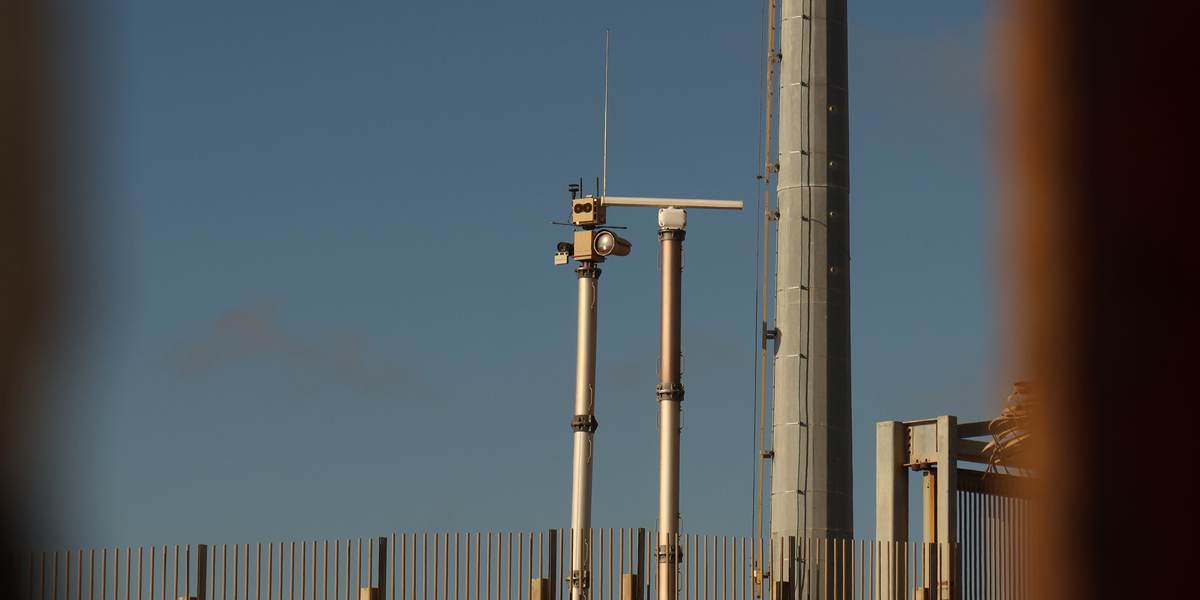
San Clemente Residents Protest CBP's AI Surveillance Tower Over Privacy Concerns
Sonic Intelligence
California residents oppose a CBP AI surveillance tower, citing pervasive privacy risks.
Explain Like I'm Five
"The government wants to put a big smart camera on a hill to watch for bad guys, but people in the town are worried it will watch everyone all the time, even when they're just at home, and they don't want that."
Deep Intelligence Analysis
The technical capabilities of the AST system, which autonomously detects, identifies, and tracks 'items of interest' (humans, animals, vehicles), are significant. While CBP asserts a primary focus on maritime surveillance, the tower's inland placement, 1.5 miles from the coast, grants it a nine-mile visual range capable of overseeing the entire 62,000-resident city and potentially neighboring communities. Crucially, CBP has rejected local proposals for a contractual prohibition on residential surveillance, instead offering only to 'avoid' scanning neighborhoods while maintaining the system's capability to track individuals in residential areas during perceived 'smuggling events.' This stance, coupled with the retention of imagery data for up to 30 days, highlights a fundamental disagreement over privacy boundaries.
This incident carries profound implications for the future of AI surveillance in the United States. It underscores the potential for mission creep, where technology deployed for border security can easily extend its reach into civilian life without adequate oversight or legal safeguards. The community's organized resistance, including a town hall meeting, reflects a growing public awareness and concern regarding the normalization of pervasive AI monitoring. The outcome of this local dispute could establish a significant precedent for how advanced surveillance technologies are governed and integrated into society, shaping the balance between national security imperatives and fundamental privacy rights.
Impact Assessment
This case highlights the escalating tension between national security objectives and individual privacy rights, particularly with the deployment of advanced AI-powered surveillance in civilian areas, setting a precedent for future domestic technology use and public oversight.
Key Details
- Customs and Border Protection (CBP) seeks to install an Anduril Industries Sentry surveillance tower in San Clemente, California.
- The tower is part of the Autonomous Surveillance Tower (AST) program, combining video, radar, and computer vision with AI algorithms.
- Despite CBP's claim of maritime focus, the tower is located 1.5 miles inland, overlooking the 62,000-resident city.
- The system can autonomously detect, identify, and track humans, animals, or vehicles.
- CBP rejected a city proposal to prohibit neighborhood surveillance, stating it would 'avoid' scanning residential areas but retain tracking capability.
- Imagery data captured by the AST system is retained, potentially for up to 30 days.
Optimistic Outlook
If community engagement and legal challenges lead to robust oversight and clear, enforceable restrictions on data usage and surveillance scope, this situation could establish a model for responsible AI deployment in public spaces, balancing security needs with civil liberties.
Pessimistic Outlook
The deployment of such pervasive AI surveillance, especially with CBP's refusal to legally restrict residential monitoring, risks normalizing constant tracking of citizens, eroding fundamental privacy rights, and potentially leading to mission creep beyond stated objectives, setting a dangerous precedent.
Get the next signal in your inbox.
One concise weekly briefing with direct source links, fast analysis, and no inbox clutter.
More reporting around this signal.
Related coverage selected to keep the thread going without dropping you into another card wall.