Tech Leaders Attribute Job Cuts to AI-Driven Productivity Shifts
Sonic Intelligence
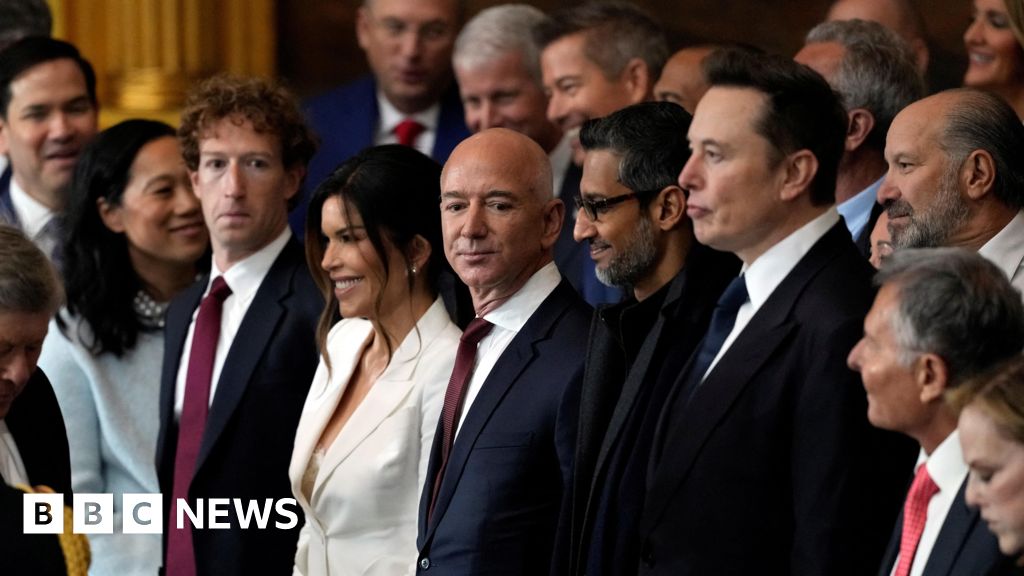
Tech CEOs increasingly cite AI as the rationale for significant workforce reductions.
Explain Like I'm Five
"Big bosses at tech companies are saying they're letting people go because smart computer programs (AI) can do a lot of the work now. It's like saying a super-smart robot can help build things faster, so you don't need as many people. They're also spending a lot of money on these smart programs."
Deep Intelligence Analysis
This re-contextualization of layoffs is underpinned by substantial investment and perceived productivity gains. Firms like Meta are reportedly planning to nearly double their AI spending, while a collective $650 billion is earmarked by Amazon, Meta, Google, and Microsoft for AI initiatives in the coming year. This financial commitment suggests a genuine belief in AI's capacity to deliver step-change productivity improvements, exemplified by reports of 25% to 75% AI-generated code in some companies. Block CEO Jack Dorsey's explicit statement about shedding nearly half his workforce due to "intelligence tools" underscores the perceived efficacy of these technologies in enabling smaller, more potent teams. However, this narrative also faces skepticism, with critics suggesting AI may serve as a more palatable public explanation for cost-cutting measures or investor appeasement.
Looking forward, this trend portends a significant restructuring of the tech workforce and potentially broader economic sectors. The explicit linking of AI to job displacement, particularly in roles once considered secure like software development, highlights an accelerating impact that could necessitate large-scale reskilling and re-evaluation of educational pipelines. While proponents argue for a reallocation of human talent to higher-value tasks, the immediate implication is a period of significant disruption and uncertainty for many professionals. The long-term success of this AI-driven transformation will depend not only on technological capabilities but also on how companies manage the social and economic consequences of these workforce shifts, balancing innovation with responsible human capital strategies.
Visual Intelligence
flowchart LR
A[AI Advancements] --> B[Increased Productivity]
B --> C[Reduced Headcount Needs]
C --> D[Tech Layoffs]
D --> E[Executive Justification]
E --> F[Investor Focus]
F --> G[Massive AI Investment]
G --> A
Auto-generated diagram · AI-interpreted flow
Impact Assessment
The shift in executive messaging from efficiency to AI as a primary driver for job cuts signals a new phase of technological disruption. This redefines corporate restructuring narratives and highlights the accelerating impact of AI on workforce planning and productivity expectations across major tech firms.
Key Details
- Google, Amazon, Meta, Pinterest, and Atlassian are among firms announcing or warning of workforce reductions.
- Meta plans to nearly double AI spending this year.
- Block CEO Jack Dorsey stated his company would shed almost half its workforce, citing 'intelligence tools'.
- Some companies are using 25% to 75% AI-generated code.
- Amazon, Meta, Google, and Microsoft collectively plan to invest $650 billion in AI in the coming year.
Optimistic Outlook
AI-driven productivity gains could lead to more efficient companies, fostering innovation and allowing for strategic reallocation of human talent to higher-value, creative roles. This could ultimately boost economic growth and create new industries.
Pessimistic Outlook
The narrative of AI-driven job cuts could mask underlying cost-cutting motives, potentially leading to widespread unemployment in traditional tech roles without adequate reskilling initiatives. This might exacerbate social inequality and create public distrust in AI's benefits.
Get the next signal in your inbox.
One concise weekly briefing with direct source links, fast analysis, and no inbox clutter.
More reporting around this signal.
Related coverage selected to keep the thread going without dropping you into another card wall.